




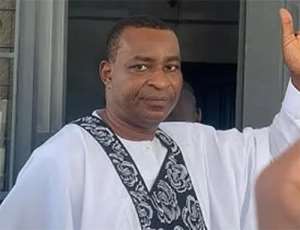
When news broke that Benard Antwi Bosiako, popularly known as Chairman Wontumi, had been incarcerated, the reaction across Ghana split sharply down the middle. In the offices of the New Patriotic Party (NPP), there was outrage. Phones rang, press conferences were called, and loyalists described it as political persecution.
On the streets of Accra, Kumasi, and in mining communities in the Western and Eastern Regions, a different mood prevailed. For many, it was relief. For others, it was cautious hope. The reason: Wontumi’s case has become publicly linked, in the minds of citizens, to galamsey — illegal mining — the environmental crisis that has poisoned rivers, destroyed farmlands, and threatened lives for over a decade.
One arrest. Two narratives. And a government now carrying the burden of expectations it may not be able to escape.
The Divided Room
Inside the NPP, Wontumi is more than a regional chairman. He is a financier, a mobilizer, a voice on radio, and for many party faithful, a symbol of the party’s grassroots strength in the Ashanti Region. His incarceration, therefore, feels personal. To them, it is an attack on the party structure ahead of 2028.
Outside the party, however, the conversation is not about politics. It is about water. About the Pra, Ankobra, and Offin rivers turning brown. About children in communities like Prestea and Obuasi drinking from taps that run orange. About cocoa farms swallowed by excavators.
For that section of Ghanaians, Wontumi’s prosecution represents something rare: accountability reaching high places. Illegal mining in Ghana has long been blamed on “small boys with shovels.” But everyone knows the trade is protected by money, machinery, and political cover. So when a high-profile political figure faces the law and the word “galamsey” is mentioned in the same breath, people pay attention.
“It is about time,” said Ama, a trader in Kumasi. “If they can jail him, maybe they can jail the rest and save our water.”
The Political Cost of Public Approval
Here lies the dilemma for government.
The administration is currently enjoying a wave of public goodwill it has not felt in a long time on this issue. For years, citizens have accused successive governments of talking tough on galamsey while doing little. Task forces come and go. Promises are made. The rivers remain polluted.
Now, with Wontumi’s sentencing, the government has bought itself political capital. The headlines read “Crackdown Begins.” Social media is full of “at least they are trying.” Civil society groups that have marched for years are watching closely, but for now, they are not protesting.
But goodwill is a loan, and loans come due.
By prosecuting a figure of such political stature and economic power, the government has set a new standard for itself. It has told Ghanaians, in effect: “We are serious this time. No one is above the law. Not even the powerful in society.” That message resonates. The problem is, it also creates a contract.
If the water does not get cleaner. If excavators return to forest reserves. If more “Wontumis” are not seen in court. Then the same citizens clapping today will be the ones asking tomorrow: “Was this just for show or political persecution?”
Galamsey: The Problem Bigger Than One Man
To be fair, no single arrest will end galamsey. The trade is an economy. It employs thousands of young men with no other jobs. It is funded by networks that cross party lines, and it is driven by demand for gold both locally and internationally. It is also tied to poverty, weak regulation, and a history of mining in Ghana.
What makes Wontumi’s case different is symbolism. In politics, symbols matter more than statistics. When a chairman is jailed, the message to party foot soldiers is clear: the cover is gone. When a businessman with political ties is prosecuted, the message to financiers is: you can be next.
But symbolism must be followed by systems. That means revoking mining licenses tied to illegal operations, seizing equipment, prosecuting chiefs and officials who lease land, reclaiming land, and providing alternative livelihoods. It means the Minerals Commission, EPA, police, and judiciary all moving in one direction, and staying there after the news cycle moves on.
The Clock Is Ticking
Government officials know this. Privately, they will admit that the Wontumi case has raised the stakes. The public is no longer asking for press releases. They are asking for results they can see, taste, and drink.
The danger is what political scientists call “the expectation trap.” Once you take bold action, anything less than total victory looks like failure. If in six months the Pra River is still polluted, the same newspapers that praised the arrest will ask: “What changed?” And the answer “we are working on it” will not be enough.
That is why the next 12 months are critical. The government must translate this moment of approval into policy wins. Fast-track courts for mining offenses. Publish data on water quality. Arrest and prosecute without regard to party color. And most importantly, communicate consistently so citizens do not feel betrayed again.
What Happens Next
For the NPP, the challenge is to manage internal anger without appearing to defend illegal mining. The party must separate loyalty to a man from loyalty to the law. That will not be easy in an election year.
For citizens, the challenge is to keep the pressure on, but to also be realistic. Galamsey will not end with one jail term. But it also will not end without consequences reaching the top.
And for government, the challenge is the heaviest: turn public support into public trust. Use this moment to prove that the fight against galamsey is not about one man, one party, or one headline. It is about whether the next generation in Ghana will have clean water and land to farm.
Chairman Wontumi’s incarceration has done something no task force has done in years: it has made Ghanaians believe, even for a moment, that change is possible.
Now the government must prove that belief was not misplaced. Because if it fails, the anger that is currently directed at galamsey will turn directly on those in power. And in Ghanaian politics, an angry citizen is the most powerful force of all.
The author is a regular contributor to News Commentary, a GBC current affairs programme, and a columnist with Modern Ghana, an esteemed online news portal.

 The new cocoa laws are unconstitutional, breach property rights — Kofi Bentil
 Barker-Vormawor commends govt for separating Attorney-General from Justice Minis...
 As AU Chair I will push for inclusion of Caribbean in AfCFTA — Mahama
 Petrol pegged at GH¢14.53 as NPA announces new price floors for first pricing wi...
 Overnight rains trigger flooding in Sandema, disrupt traffic
 NDC gov't keeps deflecting when Ghanaians are suffering — Miracles Aboagye
 UAE introduces police clearance requirement for Ghanaians seeking employment vis...
 'Establish independent regulator to handle examination result appeals' — Eduwatc...
 Ukrainian drone strikes on Russia kill at least six, spark fire at Wildberries w...
 25 US states sue Trump administration over sweeping new tariffs

