




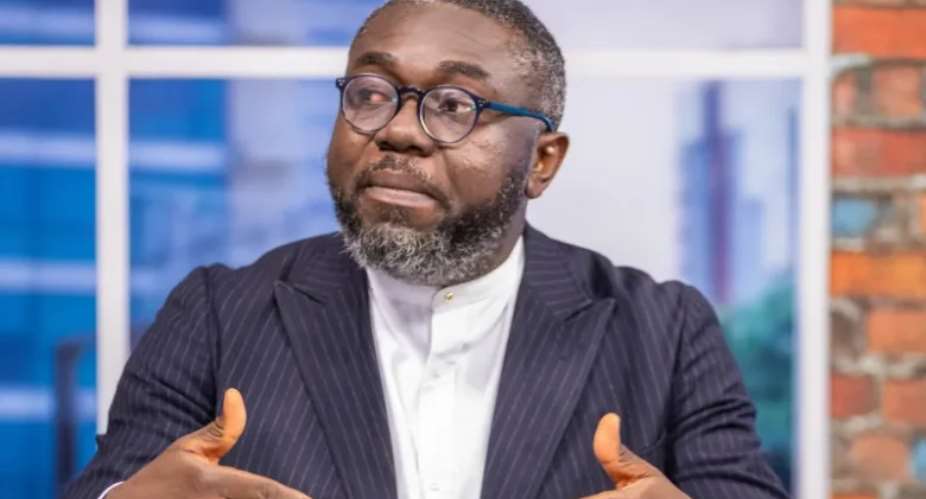
Private legal practitioner Oliver Barker-Vormawor has welcomed the government's decision to separate the Office of the Attorney-General from the Ministry of Justice, describing the proposed constitutional reform as a significant step towards strengthening the independence of the office.
His comments follow the government's acceptance of the Constitutional Review Committee's recommendation to end the long-standing arrangement under which the Attorney-General simultaneously serves as Minister for Justice.
Presenting the government's White Paper on the Constitutional Review Committee's recommendations on Thursday, July 30, Attorney-General and Minister for Justice, Dr Dominic Ayine, announced that Article 88 of the 1992 Constitution would be amended to remove the requirement that the Attorney-General be appointed as a Minister of State.
Under the proposed reforms, a separate Minister for Justice will oversee the justice and legal sector, while the Attorney-General will retain responsibility as the government's principal legal adviser and chief prosecutor.
Speaking in an interview with Bernard Avle on Channel One TV's The Point of View on Monday, August 3, Mr Barker-Vormawor said the government's proposals, in some respects, were more far-reaching than those recommended by the Constitutional Review Committee.
“The other areas I think the government is decidedly a little more progressive than the committee, particularly on the question of the Attorney-General,” he said.
He noted that removing the Attorney-General from Cabinet could help address longstanding concerns about the office's independence and its ability to prosecute high-ranking government officials without conflict of interest.
“So, the government has now removed the Attorney-General from Cabinet. He’s no longer a minister. And that’s something the committee didn’t get into,” Mr Barker-Vormawor said.
He further argued that the proposal appears to respond to concerns that the Attorney-General's position within Cabinet could undermine impartial prosecutions involving fellow ministers.
“I think the government attempted to answer the Office of the Special Prosecutor differently. Because one of the reasons we have talked about the OSP’s office is the concerns that, because the Attorney-General sits in Cabinet, he’s not able to prosecute his colleagues. They have brought this in as another mechanism to deal with that same problem. So I’m surprised by that,” he added.

 The new cocoa laws are unconstitutional, breach property rights — Kofi Bentil
 Barker-Vormawor commends govt for separating Attorney-General from Justice Minis...
 As AU Chair I will push for inclusion of Caribbean in AfCFTA — Mahama
 Petrol pegged at GH¢14.53 as NPA announces new price floors for first pricing wi...
 Overnight rains trigger flooding in Sandema, disrupt traffic
 NDC gov't keeps deflecting when Ghanaians are suffering — Miracles Aboagye
 UAE introduces police clearance requirement for Ghanaians seeking employment vis...
 'Establish independent regulator to handle examination result appeals' — Eduwatc...
 Ukrainian drone strikes on Russia kill at least six, spark fire at Wildberries w...
 25 US states sue Trump administration over sweeping new tariffs

