




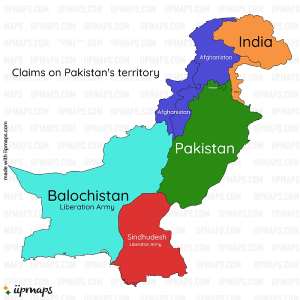
Internal insurgencies are among the most difficult challenges any democracy can face. They test not only a state's security apparatus but also its political institutions, constitutional flexibility, and ability to maintain public trust. South Asia offers two important case studies in this regard. India and Pakistan have each confronted separatist violence, militancy, and regional grievances, yet their approaches have often differed in emphasis, timing, and political engagement.
Pakistan in 2026 faces a complex internal security landscape. Violence linked to militant groups in Balochistan and Khyber Pakhtunkhwa continues to claim the lives of civilians and security personnel alike. At the same time, protests and political disputes in different parts of the country have highlighted growing tensions between provincial demands and the federal government. These developments raise broader questions about governance, centre–province relations, and the balance between security measures and political dialogue.
Many analysts argue that while effective law enforcement is indispensable in confronting armed groups, security operations alone rarely resolve the underlying causes of long-running conflicts. Political exclusion, economic disparities, governance deficits, and questions of representation often become part of the environment in which insurgencies take root. Addressing these factors is therefore frequently presented as a necessary complement to maintaining public order.
Instead of allowing political space to shrink, the state should seriously consider confidence-building measures, including engaging peaceful nationalist voices. Releasing political figures such as Dr. Mahrang Baloch, Sammi Baloch, Ali Wazir, and Manzoor Pashteen—subject to lawful judicial processes—could create an opening for dialogue rather than confrontation. A negotiation process facilitated by experienced politicians such as Mahmood Khan Achakzai could provide a political face to reconciliation.
India's experience with the Khalistan insurgency is often cited in discussions of counter-insurgency. The conflict involved severe violence and significant security operations, but over time it also saw the restoration of electoral politics, greater political participation, and renewed engagement with democratic institutions in Punjab. Scholars continue to debate the relative importance of security measures, political accommodation, and economic recovery in that outcome. While Pakistan's circumstances differ in important historical and constitutional respects, comparative experiences can still provide useful lessons.
Let's take example of 2026 budget on both sides Punjab. Despite being Pakistan's most developed province, Punjab allocates significantly less per person to education and healthcare than Indian Punjab. While subsidies and relief measures are important, long-term stability is built through sustained investment in human development and public services.
This raises an important question: how did Indian Punjab strengthen public trust to the extent that many young Sikhs today identify strongly with the Indian state and see themselves as an integral part of the nation? The answer lies in a combination of political engagement, economic opportunities, education, and institutional development.
Pakistan can draw lessons from this experience. Balochistan, in particular, requires greater investment in infrastructure, educational institutions, technical and vocational training centers, and employment opportunities. When young people have access to skills and livelihoods, they are less vulnerable to recruitment by militant groups such as the BLA or TTP.
At the same time, development alone is not enough. The state must also listen to people's concerns. Sensitive issues, including those related to missing persons, should be addressed through transparent legal and institutional mechanisms to strengthen public confidence. When citizens trust the state and feel included in the national mainstream, they are less likely to provide support or refuge to insurgent groups. Financial independence, political inclusion, and emotional attachment to the state together create resilience against external interference and strengthen national unity.
The central question is not whether one country has succeeded perfectly while the other has failed. Both India and Pakistan continue to face security challenges and criticism regarding civil liberties, governance, and minority rights. Rather, the comparison illustrates that durable stability often depends on combining effective security with credible political institutions capable of hearing grievances, strengthening provincial participation, and building confidence among citizens.
Ultimately, the strength of a democratic state is measured not only by its ability to defeat violence but also by its capacity to reinforce the rule of law, expand political inclusion, and preserve public trust. The long-term success of counter-insurgency lies not merely in restoring order but in ensuring that citizens continue to believe their grievances can be addressed through constitutional and democratic means rather than through violence.
By Engr. Saqlain Abid
Political Commentator and NFPA-Certified Electrical Engineer


 Foreign Affairs Ministry requests special audit of emergency evacuations since 2...
 Germany cuts energy tax to lower petrol prices as Merz faces state key elections
 Trump says son repaid Russian oligarch who funded wedding festivities
 France calls on Moscow to reverse takeover of European assets
 Highly influential people sponsoring Ghana Jollof TikTok activities – CID
 'Ghana Jollof' case: Bawumia's condemnation of nurse's arrest is hypocritical – ...
 Ahafo Ano South West MP involved in road accident
 Constitutional Review alone will not solve Ghana’s problems – Kwesi Pratt Jnr.
 East Legon Football Academy applauds NPA Boss for supporting youth football
 Lawyer challenges two-week remand of Salomey over connection to wanted 'Ghana Jo...


