




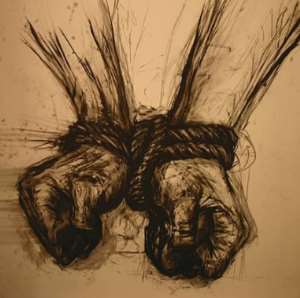
Few documents circulate as widely, or as uncritically, in conversations about Black psychological conditioning as the so-called "Willie Lynch letter" a supposed 1712 speech in which a British slave owner claims to reveal the "secret" method for controlling enslaved Africans by turning them against one another, so effectively that its psychological effects would last, in his words, "at least 300 years."
Versions of this text circulate widely on social media, in sermons, in music, and in everyday conversation across Africa and its diaspora, often cited as the definitive explanation for why some Black people internalize the belief that white people are inherently superior.
The trouble is that the letter is almost certainly fake and understanding why matters, because the real story of how colonialism shaped racial self-perception is well documented and arguably more disturbing than the hoax.
Why the Willie Lynch letter does not hold up
Historians who have examined the speech in detail have found no evidence that a slave owner named Willie Lynch ever existed, and no record of any gathering of planters convened on the banks of the James River in Virginia in 1712 to discuss techniques of psychological control.
The text itself contains anachronisms references and phrasing inconsistent with the period it claims to describe and its earliest documented appearance is not from the 18th century at all, but from the early 1990s, when a librarian at the University of Missouri–Kansas City uploaded it online after it had circulated in print during the 1970s.
When a Baltimore Sun journalist investigated its origins in 1998, the publisher who had first run the piece in a Black community newspaper could offer no evidence of its authenticity, only that it had generated an extraordinary public response. Historians and researchers, including those at Michigan's Jim Crow Museum, have concluded it is a modern fabrication powerful as a symbol, but not a real historical record.
That the letter is fabricated does not mean its central claim is baseless. It simply means the actual explanation for how colonial and slaveholding systems engineered psychological submission lies elsewhere in documented history, not an invented speech.
The real mechanisms: divide-and-rule as documented colonial policy
Deliberate strategies of racial and ethnic division was, in fact, a well-documented feature of both the transatlantic slave system and later European colonial administration in Africa.
Colonial powers across the continent Britain, France, Belgium and others routinely governed through policies that classified and ranked ethnic groups against one another, elevated certain groups for administrative privilege, and structured education and civil service access to reinforce dependence on the colonial hierarchy.
This was not a single secret memo; it was standard imperial governance, documented extensively in colonial administrative records, missionary archives and post-independence historical scholarship across West, East and Southern Africa.
Frantz Fanon: the psychology of colonization
The most rigorous account of how this system shaped Black self-perception comes not from an invented plantation speech but from the Martinican psychiatrist and philosopher Frantz Fanon, whose 1952 book "Black Skin, White Masks" remains the foundational academic text on the subject.
Fanon, drawing on his own clinical psychiatric practice in colonial Algeria, argued that colonialism did not simply subjugate Black people materially it worked to install a "white mask" over Black identity, conditioning colonized people to measure their own worth, intelligence and culture against a European standard imposed as the default marker of civilization.
Fanon's analysis of what he called the "epidermalization" of inferiority the internalization of race-based hierarchy at the level of self-image remains the reference point for virtually all serious academic work on colonial psychological conditioning today.
Carter G. Woodson: education as the instrument
A complementary and equally influential account comes from the American historian Carter G. Woodson, whose 1933 book "The Mis-Education of the Negro" argued that the most effective tool of racial subjugation was not physical force but education systems that taught Black people history, literature and values centered entirely on European achievement, while erasing or diminishing African and Black accomplishment.
Woodson's central argument that a person taught nothing but the greatness of another people's civilization will come to see their own as inferior by default closely mirrors what Fanon later described clinically, and both remain widely taught in African studies and postcolonial scholarship as the credible, evidence-based explanation for the phenomenon the Willie Lynch letter claims, falsely, to have originated in a single 1712 speech.
Why the myth persists anyway
Researchers who have studied the letter's enduring popularity note that its appeal lies precisely in offering a single, dramatic, quotable origin story for a real and painful psychological legacy one that academic works like Fanon's or Woodson's, however rigorous, do not package as neatly.
But relying on a fabricated document to explain a genuine historical wound risks two things: it hands critics an easy way to dismiss the entire subject as myth once the hoax is exposed, and it displaces the far richer, well-documented body of scholarship from Fanon and Woodson to later theorists like Charles W.
Mills, whose 2007 work "The Racial Contract" examines how European political philosophy itself was built on an unspoken agreement that only white humanity would count as fully human that explains the same phenomenon with real historical grounding.
The takeaway for readers
The psychological legacy the Willie Lynch letter claims to explain is real, well documented, and continues to shape questions of identity, education and self-worth across Africa and its diaspora today. But the letter itself is not the source, and continuing to cite it as historical fact however emotionally resonant ultimately weakens the credibility of a case that genuine historical and psychological scholarship can make far more solidly on its own.
Mustapha Bature Sallama.
Medical/ Science Communicator,
Private Investigator, Criminal investigation and Intelligence Analysis.
International Conflict Management and Peace Building.USIP
[email protected]
+233-555-275-880
References
Wikipedia, "William Lynch speech." https://en.wikipedia.org/wiki/William_Lynch_speech
Jim Crow Museum, Ferris State University, "Is Willie Lynch's Letter Real?," 2004. https://jimcrowmuseum.ferris.edu/question/2004/may.htm
Longreads, "The Enduring Legacy of the Willie Lynch Hoax," 19 October 2022. https://longreads.com/2018/05/02/the-enduring-legacy-of-the-willie-lynch-hoax/
Black Excellence, "The Willie Lynch Letter: History or Hoax?," 29 July 2020. https://www.blackexcellence.com/willie-lynch-letter/
Grokipedia, "William Lynch speech," 13 January 2026. https://grokipedia.com/page/William_Lynch_speech
Manu Ampim, "Death of the Willie Lynch Speech." https://manuampim.com/lynch_hoax1.html


 I left radio to join politics not hoping to win — Tamale North MP
 Tamale North MP narrates how newsroom poverty chased him into politics
 ORAL can still pursue civil claims against Sedina Tamakloe despite the acquittal...
 Sedina acquittal: Even the numbering of the charges was wrong – Ivan Kyei
 Medically cleared applicants still under recruitment consideration – Ghana Polic...
 NACOC arrests 10 over alleged cannabis sale at Koforidua Technical University
 AMA fines Tudu traders GH¢450 each for defying National Sanitation Day exercise
 'We can’t fight corruption if governments keep clearing their own' – Kofi Bentil
 Money can’t buy woman’s love – Businesswoman RoseGold
 'I do not hate Godfred Dame, I dislike his tactics' – Franklin Cudjoe

