




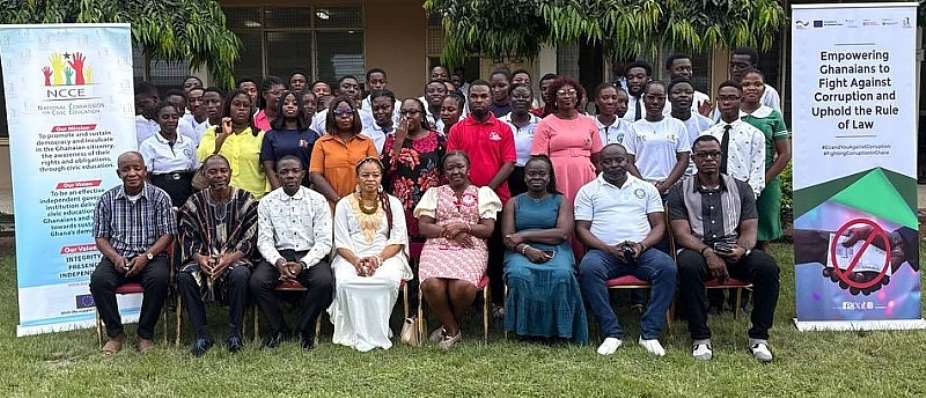
The National Commission for Civic Education, Eastern Regional Secretariat, has charged young leaders in the Eastern Region to take up the mantle of ethical leadership, declaring that the future of Ghana’s democracy depends on their commitment to the rule of law and zero tolerance for corruption.
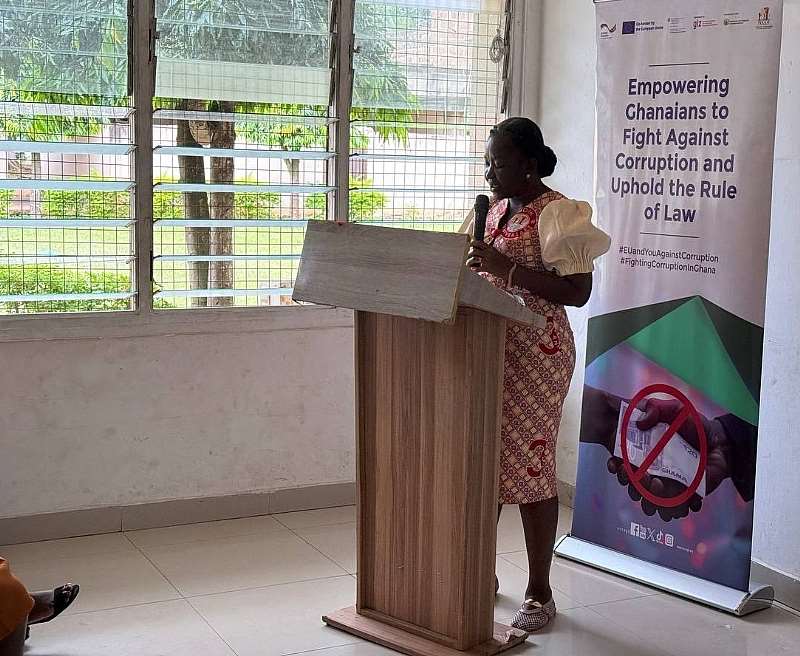
Madam Ophelia Nana Yaa Ankrah, Eastern Regional Director of NCCE, said democratic governance cannot thrive without young people who model ethical conduct in their daily decisions.
“Ethical leadership, transparency, accountability, and respect for the rule of law remain essential pillars for strengthening democratic governance and sustaining public trust in our institutions,” she stated.
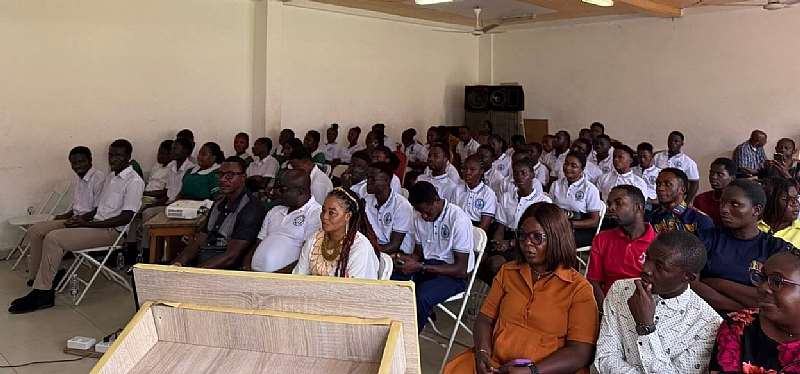
Ms. Ankrah stated at a high-level Youth Leaders’ Empowerment Dialogue held on Saturday, July 26, 2026, at the Koforidua Center for National Culture Auditorium, attended by student leaders from three tertiary institutions, to interrogate how integrity, accountability, and transparency can anchor a resilient democracy.
The dialogue was on the theme "The Rule of Law and the Fight Against Corruption" and forms part of NCCE’s Participation, Accountability, and Integrity for a Resilient Democracy (PAIReD) Programme.
Ms. Ophelia also acknowledged the German Federal Ministry for Economic Cooperation and Development, BMZ; the European Union; and the Swiss State Secretariat for Economic Affairs, SECO, for their partnership and financial support toward the PAIReD Programme.
Other participants include Student Representative Council executives and Civic Education Club members from All Nations University, SDA College of Education, and Koforidua Nurses and Midwifery Training College.
Dignitaries who attended included A.S.P. Augustine Asante Kusi, Eastern Regional Crime Officer; Inspector Justice Abban of the Ghana Police Service; Dr. Dorcas Alhassan, Eastern Regional Director of the Center for National Culture; Mr. Augustine Bosrotsi, Eastern Regional Deputy Director of NCCE, and members of the Graduate Students Association of Ghana, GRASAG.
The NCCE Eastern Regional Director stressed that Ghana’s young people are no longer waiting on the sidelines; the youth are emerging as the most dynamic force in the country’s renewed push for transparency, accountability, and integrity.
“With more than half of Ghana’s population under 35, anti-corruption institutions and civil society groups’ battle against graft will be won or lost with this generation,” she said.
Ms. Ankrah also reiterated that out-of-school youth remain vulnerable to corrupt practices because of limited access to civic education; therefore, through this project, NCCE and partners seek to empower the youth to recognize wrongdoing, report without fear of retaliation, and embrace their civic responsibilities.
She stressed that every cedi lost to corruption is a missed opportunity for better schools, improved healthcare, stronger infrastructure, and decent jobs, adding that the dreams of the youth are constrained when systems meant to serve them are compromised, hence the need to involve them to fight against the canker.
“You are the leaders of today and tomorrow. The decisions you make today, the values you uphold, and the attitudes you demonstrate within your campuses and communities will shape the character of our public institutions,” she noted.
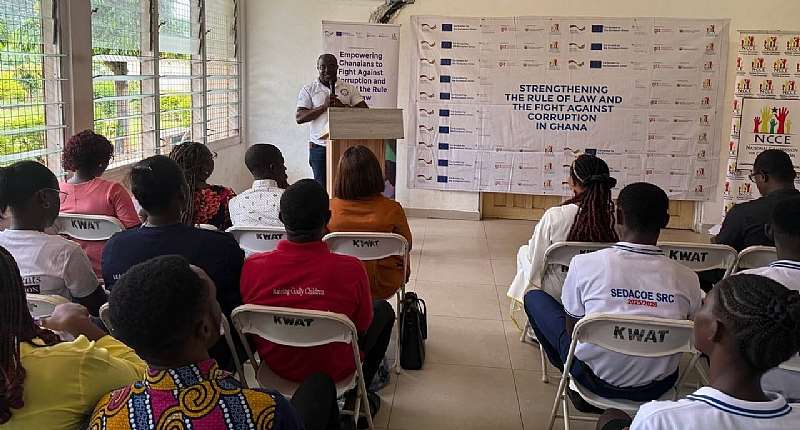
The technical session of the dialogue was led by Mr. Bosrotsi and A.S.P. Kusi, who drilled into practical threats to good governance: conflict of interest, influence peddling, abuse of office, and the centrality of the rule of law.
Mr. Bosrotsi urged current leaders to see youth leadership not as a future responsibility but as an immediate catalyst for accountability and civic responsibility.
“The youth are not just beneficiaries of democracy; they are its guardians. When young leaders reject shortcuts, demand transparency, and speak against abuse of office, they build a culture where corruption finds no breathing space,” he stated.
A.S.P. Kusi grounded the conversation in law enforcement realities, outlining how small compromises on campus and in communities can escalate into systemic corruption.
He called on student leaders to report misconduct and to resist pressure to use influence for personal gain.
The discussion also examined how influence peddling erodes trust and stalls development, with facilitators urging participants to promote integrity in their schools, workplaces, and homes.
The dialogue was highly interactive. Students shared campus experiences, asked tough questions, and proposed campus-based anti-corruption clubs and peer accountability mechanisms.
Closing the session, participants unanimously affirmed their commitment to serve as ambassadors of integrity and the rule of law, pledging to promote honesty, accountability, and responsible leadership within their spheres of influence.
With the PAIReD Programme rolling out across the region, the NCCE says the goal is clear: to equip a new generation of leaders who will not only understand democratic principles but actively defend them.
 Mid-Year Budget Review: 'GH¢30bn in promised projects remain unexecuted' — Oppon...
 'This is the first Mid-Year Review that failed to account for programme executio...
 Police arrest 'fake' pastor over alleged marriage scam and intimate image blackm...
 'Ato Forson is spending prudently, not recklessly' — Titus Beyuo
 Zenith University College Law Faculty ranks among Ghana's top five at Supreme Co...
 Mid-Year Budget Review: 'The Finance Minister was loudly silent on the 24-hour e...
 GES sets August 15 for dispatch of teacher promotion letters
 Mahama welcomes Gabon's President for three-day bilateral talks on trade, securi...
 Multiple deaths in Japan mall collapse after 7.1-magnitude earthquake
 Anglican Church leader visits slave trade project on Africa tour

