




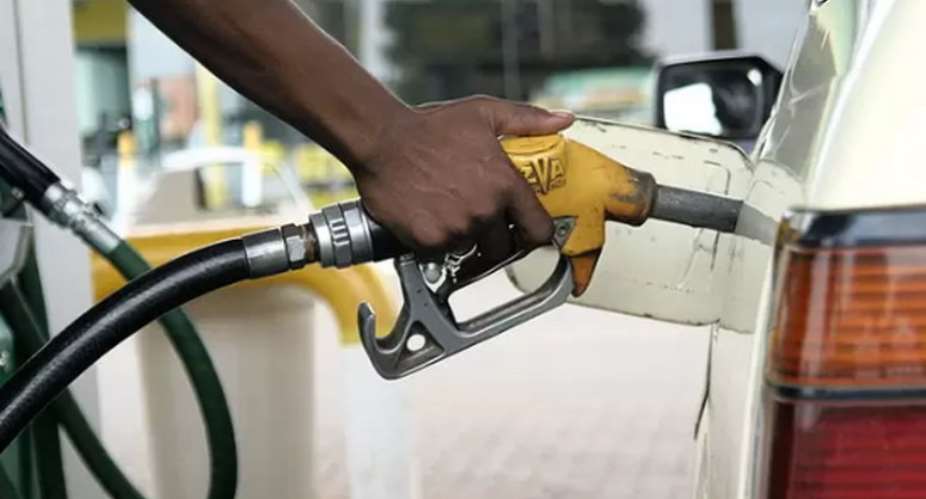
The Chamber of Oil Marketing Companies (COMAC) has appealed to the government to suspend the additional GH¢1 levy on petroleum products, saying the measure would provide immediate relief to consumers facing rising fuel prices driven by global oil market volatility and exchange rate pressures.
The call comes as oil marketing companies (OMCs) continue to increase pump prices, with diesel inching closer to GH¢20 per litre due to rising international refined petroleum product prices and higher import costs.
Speaking on the development, COMAC Chief Executive Officer, Dr Riverson Oppong, said the levy was introduced at a time when fuel prices had dropped considerably and should now be reviewed to ease the burden on households and businesses.
“We have said it many times, but it never happened. This is probably the time for the energy sector levy to be removed so consumers can benefit,” he said.
Dr Oppong argued that the circumstances which justified the introduction of the levy have changed, making its suspension necessary.
“The same reason you brought it because fuel prices had moved from GH¢17 to GH¢10, then you added one cedi. Now we are almost back there again. So take it off and get the praise that you deserve,” he stated.
He noted that taxes and levies now make up a significant portion of the retail price of fuel and maintained that removing the additional GH¢1 charge would cushion consumers without significantly affecting government revenue.
Further increases anticipated
COMAC has also cautioned motorists and businesses to expect another round of fuel price increases in the next pricing window, citing persistent increases in international petroleum prices and the depreciation of the cedi against major trading currencies.
Although the chamber has not released its final projections, Dr Oppong said preliminary market data indicates that fuel prices are likely to rise across all petroleum products.
“It’s too early to give any figure in terms of percentage increase, but for sure we are going to see an increase. Even as it stands, we have seen almost a 10% increase across products,” he said.
He explained that the two major determinants of fuel prices—international petroleum prices and the exchange rate—are both moving in an unfavourable direction.
“The two most important factors increasing fuel prices are all activated and that would be a very big blow to the ordinary Ghanaian,” he warned.
OMCs defend frequent price adjustments
Dr Oppong also defended the recent frequency of pump price revisions by oil marketing companies, explaining that pricing decisions are now largely influenced by replacement costs rather than competition among marketers.
According to him, some Bulk Distribution Companies (BDCs) have been adjusting wholesale prices several times within a single day because of rapidly changing international market conditions.
“I have seen BDCs changing their prices every hour and we cannot continue selling below replacement cost just in the name of price wars. The price war is over. Now let’s face the facts,” he said.
Global market pressures
Dr Oppong attributed the latest fuel price increases to renewed geopolitical tensions and disruptions in global crude oil supply, which have pushed benchmark crude prices sharply higher.
He said the resulting increase in Platts benchmark prices for refined petroleum products has significantly raised the cost of imports for Ghana.
“That is why you see crude oil prices moving from US$80 to US$100 within two weeks, affecting the Platts prices. Therefore, we are bound to see changes at the pumps,” he explained.
Calls for improved forex access
In addition to suspending the GH¢1 levy, COMAC is urging the government to improve access to foreign exchange for petroleum importers to reduce import costs and ease pressure on the cedi.
Dr Oppong noted that as a net importer of refined petroleum products, Ghana remains highly vulnerable to fluctuations in both global oil prices and exchange rates, with any depreciation of the cedi directly increasing the local cost of fuel imports.
“I would advise that the government make dollars available for the importation of crude oil and petroleum products so that we don’t feel the heat from the growing demand for foreign exchange,” he said.
 150 more Ghanaians return from South Africa under government's voluntary evacuat...
 Plea bargain talks in Wontumi's Exim Bank case at advanced stage – Deputy Attorn...
 Parents who send children abroad too early to study don't love them, they will l...
 Doctors remove motorbike key from farmer's skull after attempting to separate fi...
 Ghana's tallest man Sulemana Abdul-Samed 'Awuche' dies at 33
 ‘Help us complete Agenda 111 hospitals’ — Health Minister Akandoh begs churches ...
 About 30 ORAL cases identified, ready for prosecution – Deputy Attorney General
 'There will be some interesting cases coming soon' - Deputy AG Justice Srem-Sai
 Judges are in ‘ambulance mood’ to jail politicians - Atta Akyea
 Even if fuel comes to GH¢4 and dollar is GH¢1 in 2028 NDC will still lose power ...

