




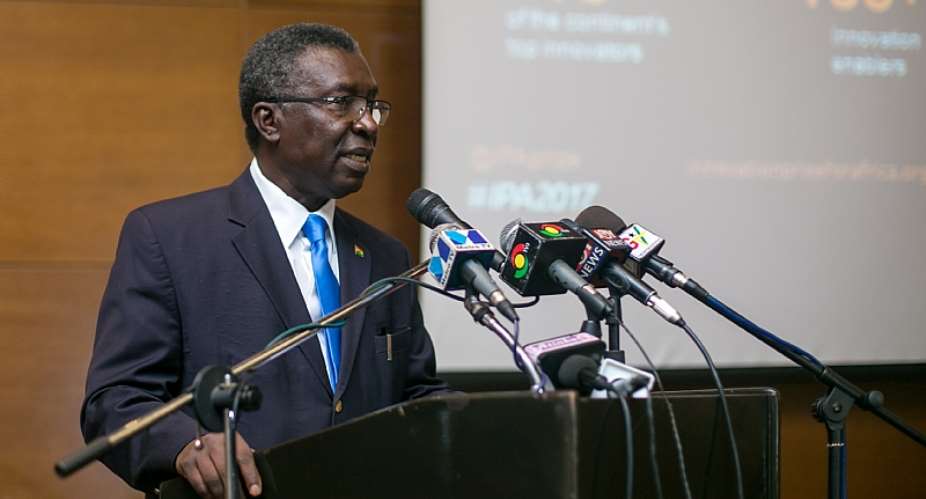
Every July, political leaders gather to praise the late President John Evans Atta Mills, invoking his humility, integrity, and servant leadership. Yet, as Professor Kwabena Frimpong-Boateng made starkly clear in his recent Memorial Lecture, standard tributes have become a comfortable shield. They allow the political class to celebrate the character of a good man while ignoring the hard, uncomfortable truths he understood about statecraft.
Ghana does not suffer from a shortage of speeches, slogans, or four-year manifestos. It suffers from a deep structural crisis: the systematic abandonment of long-term planning, the defunding of vital state institutions, and a refusal to build true technological self-reliance.
If we are serious about national development, three urgent shifts must define our path forward.
1. Stop Forcing Regulatory and Research Bodies to Fund Themselves
One of the most damaging policy missteps of recent decades has been the abdication of state responsibility toward critical public institutions. Research engines like the CSIR and Atomic Energy Commission, along with regulators like the Environmental Protection Agency (EPA), have been told to commercialize their operations to cover basic payroll.
When an environmental regulator must sell permits to pay its staff, oversight transforms into a revenue-generating exercise. The destruction of our rivers and forest reserves by illegal mining (Galamsey) is not merely a failure of law enforcement—it is the direct outcome of turning a state guardian into a fee collector. Science and regulation cannot be subjected to market survival without corrupting their primary mission. The state must fund these bodies generously and hold them accountable for outcomes, not revenues.
2. Close the Technology Gap
The fundamental difference between prosperous nations and struggling ones is not raw natural resources or geographic luck; it is technological capability. As Asian economies demonstrated over the past half-century, sustained progress requires converting state policy into indigenous industrial strength.
Ghana cannot continue measuring progress solely by the ribbon-cutting of imported infrastructure while importing 80% of our agricultural and industrial inputs. True economic sovereignty requires building local foundries, machine-tooling centers, and domestic manufacturing capacity. A university of mines is meaningless if we have no national industrial plan for its graduates; research institutions are useless if their breakthroughs gather dust while government contracts go to foreign importers.
3. End the Electoral Scrap-and-Build Cycle
Every political administration arrives with new branding—whether it is the Better Ghana Agenda, Planting for Food and Jobs, 1D1F, or a 24-Hour Economy framework. Yet, almost every program is designed to launch within one four-year cycle and disappear in the next.
This continuous resetting imposes a heavy economic tax on ordinary citizens. When a worker in Accra spends over two hours in transit covering just a few kilometers, or spends a quarter of their income simply getting to work, it represents a massive drag on national productivity. Development cannot be reduced to four-year electoral marketing. It requires a binding, multi-decade framework that locks in mass transit, affordable housing, and agricultural value chains across successive governments.
Honouring Atta Mills—or any visionary leader—requires more than annual remembrance. It demands the political courage to make choices that outlast an election cycle: funding our institutions, trusting our scientists, and building an economy that can stand on its own feet.
The Author:
Dela Evans is the founder of the Ghana Change Academy, where he brings a rare blend of executive transformation expertise and citizen‑centred development practice—shaping leaders, institutions, and public narratives for Ghana's long‑term renewal.
Contact Email: [email protected]
Website: www.ghanachangeacademy.com

 Sarkodie Warns Gov’t: ‘Explain the 24-Hour Economy or Risk Voter Backlash’
 ‘Ofori-Atta Must Account’: COPEC Boss Warns NPP of 2028 Backlash Over Lingering ...
 Kpebu: Claims of ‘Fast-Tracked’ Political Cases Not New — “Every Gov’t Faces Sam...
 UG Economist Slams Gov’t: “24-Hour Economy Implementation Far From Reality”
 Ghana Flags 1.8m Housing Gap at UN Forum, Says Urban Pressures Demand Urgent Act...
 Ghana, India Set Bold $6bn Trade Target as Ablakwa, New Envoy Deepen Strategic T...
 NDC Draws Red Line: Gov’t Appointees Who Don’t Resign Barred from Executive Elec...
 Kpebu Warns: “Judicial Independence Won’t Come From Law Alone — It Needs Judges ...
 US holds fire against Iran as media reports say Washington's stockpiles are dwin...
 Ga Traditional Council calls for halt to planned Chamba Chief outdooring in Madi...

