




The UNESCO committee, meeting in Busan until Wednesday, also inscribed Japan's ancient capitals of Asuka and Fujiwara, as well as South Sudan's Boma-Badingilo Migratory Landscape — the country's first site on the list and one of the world's largest land mammal migration areas.
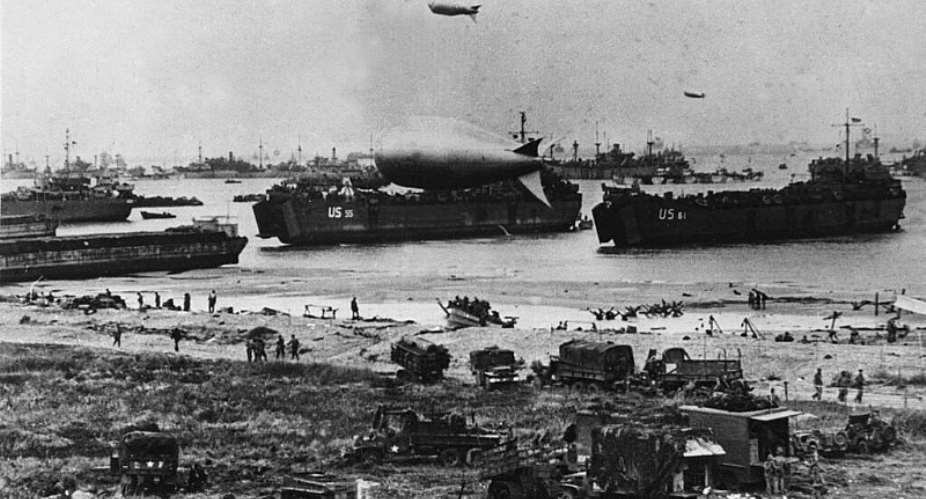
France's designation covers the five Normandy landing beaches — Omaha, Utah, Sword, Gold and Juno — along with the Pointe du Hoc assault site.
More than 150,000 Allied troops landed there on 6 June 1944 in a decisive turning point in the campaign to liberate Western Europe from Nazi occupation during the Second World War. This 06 June, 1944 image courtesy of the National Archives shows US Army troops wading ashore at Omaha Beach in France during the D-Day invasion. 06 June,
The International Council on Monuments and Sites (ICOMOS), which evaluates nominations, said the sites contain extensive remains, including German fortifications, bomb-scarred landscapes, Allied harbour structures and sunken vessels.
It described the landings as “an event widely perceived as having enabled the return of freedom and heralded a lasting peace on the European continent”.
France pushes for Unesco status for D-Day beaches and Carcassonne fortresses
ICOMOS also called for stronger monitoring and preservation, warning of potential threats from tourism, climate change, rising sea levels and nearby wind farm development.
France's permanent delegate to UNESCO, Ahlem Gharbi, said the Normandy landings marked a shift from global conflict towards a post-war order based on peace and security, adding that the designation carries particular weight amid current international tensions.
Historian David Edgerton described the landings as “probably the greatest amphibious landing there's ever been”, saying they deserve recognition on that basis alone.
Greek mythology
Mount Olympus, the mythical home of the twelve Olympian gods, was inscribed following a 12-year campaign by Greece to secure recognition for its highest mountain as a mixed cultural and natural heritage site.
Rising 2,918 metres from near sea level, it is both a symbol of Greek mythology and an area of rich biodiversity. A statue of Alexander the Great holding Nike, the Greek goddess of victory, stands near Litochoro in northern Greece, Tuesday, July 14, 2026, backdropped by Mount Olympus' highest peaks, Mytikas and Stefani.
Evangelos Geroliolios, mayor of Dion-Olympus, said the listing brings greater responsibility to protect the environment, particularly in light of increased tourism.
Greece's UNESCO delegate, Georgios Koumoutsakos, reaffirmed the country's commitment to safeguarding the site for future generations.
(with newswires)


 Sarkodie Warns Gov’t: ‘Explain the 24-Hour Economy or Risk Voter Backlash’
 ‘Ofori-Atta Must Account’: COPEC Boss Warns NPP of 2028 Backlash Over Lingering ...
 Kpebu: Claims of ‘Fast-Tracked’ Political Cases Not New — “Every Gov’t Faces Sam...
 UG Economist Slams Gov’t: “24-Hour Economy Implementation Far From Reality”
 Ghana Flags 1.8m Housing Gap at UN Forum, Says Urban Pressures Demand Urgent Act...
 Ghana, India Set Bold $6bn Trade Target as Ablakwa, New Envoy Deepen Strategic T...
 NDC Draws Red Line: Gov’t Appointees Who Don’t Resign Barred from Executive Elec...
 Kpebu Warns: “Judicial Independence Won’t Come From Law Alone — It Needs Judges ...
 US holds fire against Iran as media reports say Washington's stockpiles are dwin...
 Ga Traditional Council calls for halt to planned Chamba Chief outdooring in Madi...

