




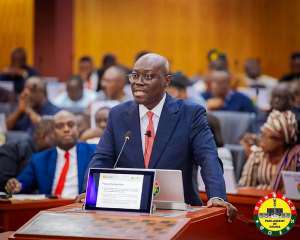
Arriving like a finished manuscript, the mid-year budget review was painted in the hues of hope and bound in the language of progress. It described a country emerging from the darkness of instability into the light of stability, as well as growth and discipline. The Finance Minister's comments conveyed a triumphant rhythm: GDP growth exceeding projections, inflation hitting all-time lows, and reserves growing to safeguard the country's future. It was a story of Ghana reborn, meant to comfort weary citizens and reassure wary investors.
Beneath the slick writing, however, is a more dismal and subdued reality. When manipulated, numbers can sing in tune with political aspirations. When presented carefully, figures can dance to the melody of hope. However, such choreography is resisted by reality, which is obstinate and uncompromising. Despite its grandeur, the mid-year assessment leaves us with unresolved questions, unexplained silences, and unacknowledged shadows.
Foreign Reserves: An Enigma of Abundance
$12.9 billion in reserves, sufficient to cover five months' worth of imports, were announced by the government. Critics, however, speak of a different tale: reserves that fall well short of the prior promise of 8.6 months, barely lasting three months. If a reserve isn't a country's defense against outside threats, what is it? And if a shield's strength is overstated, what is it? Investors deal in faith rather than illusions. While inflated numbers may garner praise in Parliament, they undermine trust in trading floors and boardrooms.
Fiscal Balance: Sleight of Hand or Surplus?
A primary surplus, a purported turning point in budgetary restraint, was praised in the study. However, the enthusiasm wanes when it is discovered that this excess resulted from reclassification expenses and late payments rather than strong revenue. A surplus attained by changing numbers is merely a surplus in name. It is the distinction between a house that is constructed of stone and one that is made to appear sturdy but is situated on sand. Ghana's debt sustainability requires bravery in reform and integrity in accounting, not just showy successes.
Bank of Ghana Losses: The Ledger Is Silent
The Bank of Ghana's $900 million losses from the gold-for-reserves scheme were left out, which may have been the most deafening quiet. Such losses are chapters in the country's financial narrative, not footnotes. To leave them out would be to rip pages out of the book, leaving readers with an unfinished story. Transparency is the cornerstone of credibility, not a luxury. Partners, residents, and investors all want the whole narrative, not just a selected portion.
Inflation: The Data and the Actual Situation
In June 2026, inflation was recorded at 5.3%, the lowest level in years. It is a victory on paper. It is a mirage in homes and markets. Economists point out that volatile goods like food and fuel—the necessities that influence day-to-day existence—were not included in the computation. When mothers are paying more for bread, drivers are paying more for fuel, and families are feeling the strain in every transaction, what solace is a low rate of inflation? The charts may be calmed by numbers, but lived life paints a starker picture.
Taxes: The Unreported Toll
The government declared, "No new taxes," referring to the elimination of levies such as the Betting Tax and E-Levy. However, companies describe a different burden: more stringent enforcement of compliance regulations and reclassification fees that covertly increase expenses. A tax under a different name is still a tax. These unstated costs erode profits and impede growth for businesses and SMEs, making them just as burdensome as overt taxes. The tension that was promised turns becomes a reality.
Conclusion: Transparency's Poetry
The wording used in the mid-year evaluation was optimistic, but optimism without veracity is meaningless poetry. Ghana's economy may be improving, but without openness, it is as brittle as a glass bridge.
The government must embrace the poetry of honesty if it is serious about fostering trust. It must convey the complete narrative, including successes and failures, wins and losses. Transparency is a strength rather than a drawback. It is the verse that uplifts residents, the melody that draws investment, and the rhythm that maintains confidence.
The call to action is very clear: let the figures speak for themselves, let the truth fill the voids, and let Ghana's economic story be told as fact rather than fiction. Only then will optimism transcend hyperbole and become the cornerstone of trust, the framework for advancement, and the anthem of a nation rising with integrity.


 ICC chief prosecutor Karim Khan dismissed over sexual misconduct allegations, so...
 'I shall continue to walk in late President Atta Mills' footsteps' — Mahama mark...
 Flood Mitigation Task Force begins demolition of structures on waterways in Accr...
 Refund GH¢60 deductions in two weeks — Service personnel to NASPA
 Parliament expected to adjourn sine die on July 31
 Police bust motorbike theft cartel, seven suspects arrested in Upper West
 GoldBod suspends Dominic Bonsu Ventures' gold trading licence, secures bench war...
 Being better than the last NPP gov't should never be the standard — Sulemana Bra...
 Migration challenges will not strain Ghana-South Africa relations — Ronald Lamol...
 'You had your priorities wrong' – NPP's Peter Ayinbisa rejects govt's new SHS fo...

