





The High Court in Accra is expected to rule today on an application by the former Chief Executive Officer of the National Food Buffer Stock Company Limited (NAFCO), Hanan Abdul-Wahab Aludiba, seeking to strike out the charge sheet that initiated criminal proceedings against him and his wife.
Mr Aludiba argues that the charges preferred by the Attorney-General are vague, ambiguous and duplicitous, making a fair trial impossible and violating his constitutional right to a fair hearing.
The former NAFCO boss and his wife, Faiza Seidu Wuni, are standing trial over allegations of stealing and causing financial loss to the state amounting to GH¢62.6 million.
Arguing the application, lead counsel for the first accused, Godfred Yeboah Dame, submitted that the charge sheet is the document that invokes the court's criminal jurisdiction and must therefore comply strictly with the law.
According to him, where a charge sheet fails to satisfy the requirements of Article 19(2)(d) of the 1992 Constitution and Sections 109 and 112 of the Criminal and Other Offences (Procedure) Act, 1960 (Act 30), it is legally defective and cannot form the basis of a criminal trial.
Mr Dame argued that the charges against his client do not contain sufficient particulars to enable him understand the nature of the allegations or adequately prepare his defence.
He further contended that the prosecution improperly combined several distinct offences into a single charge, thereby denying the accused a clear understanding of the specific allegations he is required to answer.
“The prosecution has charged offences arising out of the same series of transaction, the same facts and the same sums of money composed of the offences of stealing and defrauding by false pretences which we contend is untenable in law and undermines the right of the first accused person to a fair trial,” he argued.
Mr Dame clarified that the defence was not asking the prosecution to disclose its evidence but rather to provide sufficient particulars of the offences as required by law.
Using the stealing charge as an example, he pointed out that the prosecution alleged the offence occurred over an eight-year period, from February 2017 to February 2025, without identifying the specific transactions that formed the basis of the charge.
He argued that the alleged GH¢50 million theft appeared to be an aggregate of several transactions, a fact he said the prosecution acknowledged in its affidavit in opposition.
“Lumping the charges together into one count without even stating the number of transactions, when each of them occurred, how the stealing of sum occurred and expecting first accused to contest the charges at trial is like folding the eye of a boxer and tying his hands at his back and expecting him to box in the ring. That is unfair,” Mr Dame submitted.
Opposing the application, Deputy Attorney-General Dr Justice Srem-Sai maintained that the defence had misinterpreted the constitutional requirements governing criminal charges.
He argued that Article 19(2)(d) of the Constitution only requires that an accused person be informed of the nature of the offence in a language he understands, a requirement the Supreme Court has interpreted to mean "ordinary language."
According to Dr Srem-Sai, the particulars of an offence are intended to provide adequate notice of the allegations and are not meant to contain the prosecution's evidence.
“It is therefore, completely misconceived to require that particulars of offence or the charge sheet should contain every detail, including how the accused person even committed the offence. Our contention is that every single count has sufficient information to enable the accused person, if he is so capable, to put forward a defence,” he argued.
On the defence's objection to charging both stealing and defrauding by false pretences in relation to the same transactions, the Deputy Attorney-General relied on Section 157 of Act 30, arguing that the law expressly permits prosecutors to bring alternative charges because of the close relationship between the two offences.
“The court is empowered, even when stealing alone is charged to convict on defrauding by false pretences. What it means is that the court cannot convict on both. But that is a different contention that a prosecutor cannot charge him,” Dr Srem-Sai submitted.
The High Court is expected to deliver its ruling on the application later today.

 KMA reports Police Officer over alleged gun threat during vehicle towing dispute
 President Cyril Ramaphosa sent a delegation to me over South Africa xenophobic a...
 Sweeping South Africa xenophobia under the carpet will not resolve root causes —...
 High Court to rule on former NAFCO CEO's bid to strike out criminal charges
 Stop using entrance exams as admission preconditions — GTEC warns universities
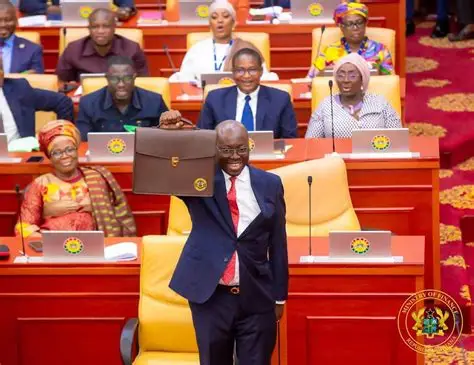 Finance Minister to present 2026 Mid-Year Budget Review to Parliament today
 ‘I forgive you’ - Bawumia tells police to end prosecution of NDC Agona West Orga...
 NDC suspends Awutu Senya East Constituency Chairman
 Kojo Oppong Nkrumah chases Ato Forson to explain $1.2bn international reserves d...
 FDA closes 44 food production facilities over safety and licensing breaches

