




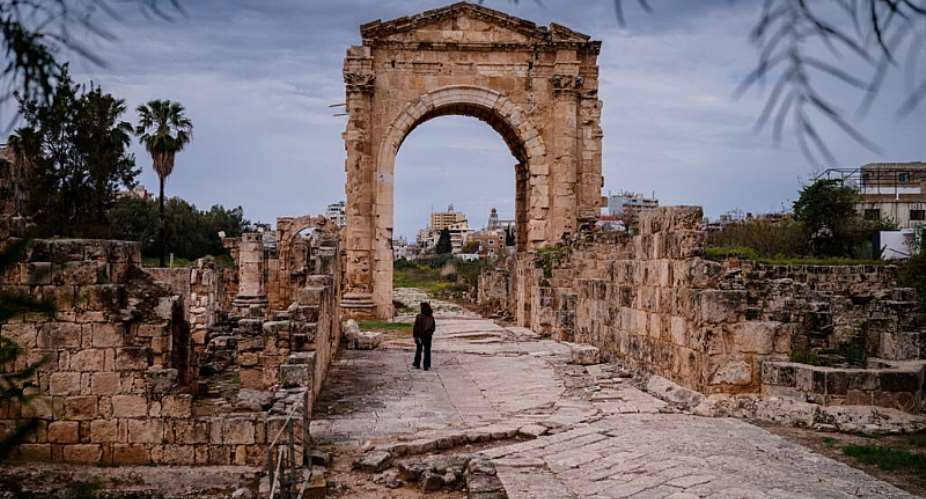
Tyre, an ancient Phoenician city in southern Lebanon hit in recent months by Israeli bombardment, was on Wednesday added to the UNESCO list of world heritage sites in danger.
"The site has been directly hit and has sustained damage. Furthermore, its state of conservation is a cause for growing concern, particularly given the possibility of further impacts," the organisation said.
"Optimal conditions are no longer in place to ensure the conservation and protection of the property's outstanding universal value," said the UN body, adding that it was the Lebanese government that requested its inclusion on the list.
The ruins in Tyre, around 80 kilometres (50 miles) south of Beirut but barely 20 kilometres from the Israeli border, were placed on the UNESCO heritage list in 1984 and contain mainly Roman-era archaeological remains.
The coastal city was caught up in recent months in the conflict between Israel and Hezbollah, and tens of thousands of its residents fled after the Israeli army issued evacuation orders covering districts including some archaeological areas, though most locals have have since returned.
Read more Sidelined by Trump's truce with Iran, Israel pummels Lebanon – then agrees to talks
Lebanese Culture Minister Ghassan Salame welcomed Wednesday's move and said the listing would "focus the attention and concern of UNESCO and member states on a site of great importance in the history of a region currently witnessing conflicts".
Hezbollah drew Lebanon into the Middle East conflict when it fired rockets at Israel to avenge the US-Israeli killing of Iran's supreme leader.
Israel responded with heavy strikes and a ground invasion, killing more than 4,300 people.
The ancient city, founded some 4,700 years ago, is home to two protected areas listed as UNESCO World Heritage Sites and which include a Roman triumphal arch and a hippodrome dating from the second century.
One of the sites suffered a direct hit from an Israeli strike in June.
A Lebanese culture ministry official told AFP at the time that an administrative office was struck and debris from nearby bombardment had impacted archaeological elements including columns, capitals and mosaics.
The city, one of the oldest in the Mediterranean, was variously Phoenician, Persian, Hellenistic, Roman and Byzantine.
Earlier this year, Salame accused Israel of failing to comply with the Hague Convention, which since 1954 has required warring parties to protect cultural sites during armed conflict.
He had also accused Israel of disregarding "blue shields", an internationally-recognised symbolic emblem which a UNESCO-linked committee established to protect cultural sites during armed conflict.
UNESCO's decision to inscribe Tyre on its danger list comes as the organisation holds the 48th session of its World Heritage Committee in Busan, South Korea.
(FRANCE 24 with AFP)


 South Africa evacuation expenditure: Ablakwa harassing Foreign Ministry staff ov...
 Bawumia engages health professionals on sector challenges
 'Backbone of the web': What is PHP and how has it raised AI hacking fears?
 Russian missiles hit Kyiv as Moscow signals readiness for peace talks
 Meta fined $25 billion in New Mexico over Cambridge Analytica scandal
 Health Ministry assures Ghanaians of readiness to manage Ebola cases
 FDA shuts down Arcan Bitters factory again over illegal production in Ashanti Re...
 PAC chair praises NPA CEO Edudzi Tameklo’s performance at committee hearing
 Ghanaian jailed nine months in US for using relative’s social security number to...
 Ukraine war: I'm going to Russia to convince President Putin to ceasefire — Maha...


