




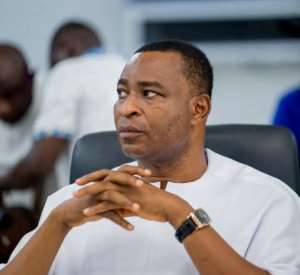
The recent sentencing of Bernard Antwi Boasiako, widely known as Chairman Wontumi, to a 20‑year jail term for his involvement in illegal mining (galamsey) has sent shockwaves through the Ghanaian political landscape.
For many, it is a landmark victory for the rule of law. Yet beneath the surface of this celebration lies a deepening cynicism among the Ghanaian public regarding the selective application of justice in the fight against environmental degradation.
Politics as a Shield
In Ghana’s democratic dispensation, a persistent concern has been the weaponization of the law. Critics argue that political administrations often employ protectionist strategies to shield party cronies from accountability while relentlessly pursuing political opponents.
For years, the average Ghanaian—whose voice is frequently treated with contempt—has observed a troubling pattern: foot soldiers and low‑level labourers are paraded before cameras and whisked off to prison, while the “big fish,” the architects of the destruction, continue to breathe fresh air as innocent citizens.
The imprisonment of the Ashanti Regional NPP Chairman has ironically highlighted this disparity rather than solved it. While a segment of the public hails the Judiciary, the question remains: is this a genuine commitment to justice or a calculated political maneuver?
The Double Standard: The Case of the “Untouchables”
Skepticism surrounding the Wontumi verdict stems from glaring inconsistencies in how the government handles its own officials.
It is an open secret that various Municipal and District Chief Executives (MCEs/DCEs) have been implicated in galamsey activities—some cases even documented in public records.
A striking example is the Atiwa East Municipal Chief Executive, Ernest Ntim. Despite court convictions and public scandals, including reported threats against the bench that convicted him, Ntim remains in office and continues to participate in the very activities the government claims to be eradicating.
The state’s failure to remove or prosecute such officials—at a time when millions of cedis are poured into the fight against galamsey—speaks volumes.
Why do the Minerals Commission and other regulatory bodies, which claim to have the mandate to police natural resources, turn a blind eye to these state‑sanctioned environmental crimes?
Many believe the answer is simple: a lack of political will.
A Scapegoat for a Failed Crusade?
For many observers, the Wontumi case appears to be a classic scapegoat strategy.
By sacrificing a high‑profile figure, the government aims to portray the crusade against illegal mining as active and genuine—effectively diverting public attention from the broader failures of the administration.
It provides a convenient narrative to silence critics who point out that the state’s multimillion‑cedi investment in the anti‑galamsey fight has yielded nothing but destroyed water bodies and barren lands.
If the government is truly committed to saving the environment, why are other implicated officials still in their seats, exercising power and continuing their operations?
The Question Remains: Who Is Next?
While the Judiciary’s decision is binding and must be respected, the court of public opinion remains skeptical.
If 20 years is the price for illegal mining, then the law must be blind to political party colours.
Ghanaians are now watching with unabated breath.
Is the Wontumi verdict the beginning of a systemic purge of illegal miners—regardless of political standing—or is it an isolated incident designed to pacify a frustrated electorate?
As MCEs and DCEs continue to engage in illegal mining with apparent impunity, the integrity of the entire crusade hangs in the balance.
Ghanaians are asking: after Wontumi, who sits in the dock? Or are we simply witnessing a political theatrical performance while the nation’s natural resources are auctioned off to the highest bidder?
The fight against galamsey will never be won until the law applies as much to those in power as it does to the desperate labourer in the pit.
The nation waits to see whether justice will truly be served—or whether the “Galamsey Paradox” will continue to consume our future.
Stay tuned.

 CAF chief Motsepe backs Infantino despite criticism
 Afia Schwarzenegger Fires Shots: Wontumi’s 20‑Year Sentence Is a Warning to All ...
 6,000 Africans in diaspora traces their root back to Paga – DNA study reveals
 Africa has reduced HIV infections by 40%, but health systems remain fragile — WH...
 Terrorism in Sahel demands coordinated response — African Union
 GMET forecasts thunderstorms in Northern Ghana as Southern areas expect cloudy w...
 NDC Branch Organiser granted GH¢200,000 bail over alleged false claims against B...
 Wontumi 20-year sentence is like freeing an armed robber and jailing the victim ...
 Mahama, former Presidents, dignitaries to attend Apostle Kwadwo Safo's funeral
 'We are not satisfied with Wontumi's plea bargain proposal in EXIM Bank case; so...

