




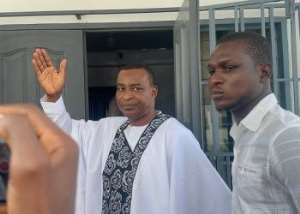
By all accounts, the rise and apparent fall of Chairman Bernard Antwi-Boasiako, popularly known as Chairman Wontumi, presents one of the most compelling political stories in Ghana's Fourth Republic. It is a story that touches on power, influence, accountability, and the enduring truth that no public officeholder remains politically invincible forever.
For years, Chairman Wontumi occupied a position of immense authority within the New Patriotic Party (NPP) as its Ashanti Regional Chairman. His political style was unmistakable—bold, confrontational, and unapologetic. To supporters, he embodied confidence and loyalty to his party. To critics, he represented the excesses that can accompany prolonged political dominance.
His public display of wealth, including widely circulated images and videos of gold bars, coupled with his frequent attacks on political opponents, helped cultivate an image of a man who believed his influence was beyond challenge. Whether intentional or not, these actions reinforced the perception that political power and personal privilege had become inseparable.
The broader lesson, however, extends beyond one individual. History repeatedly demonstrates that political power is temporary. Governments change. Public sentiments evolve. Institutions endure. Those who fail to appreciate this reality often find themselves unprepared when circumstances shift.
The NPP's loss of power in the 2024 general elections fundamentally altered Ghana's political landscape. For many political actors, it was a reminder that electoral victories are not permanent mandates but temporary trusts granted by the people. In democratic societies, today's officeholder may become tomorrow's opposition figure, and today's celebrated leader may one day be required to answer difficult questions before the law.
Reports indicate that Chairman Wontumi has been convicted and sentenced in connection with illegal mining-related offences. If these reports are ultimately sustained through all available legal processes, the implications will be significant—not only for him personally but also for the national conversation surrounding illegal mining and environmental destruction.
Illegal mining, or galamsey, remains one of Ghana's most pressing challenges. The destruction of forests, pollution of rivers, and long-term environmental degradation have affected countless communities across the country. Consequently, many citizens view any successful prosecution in this area as a signal that accountability is finally taking root.
That said, justice must never be celebrated solely through a partisan lens. The strength of a democracy is measured not by the punishment of political opponents, but by the consistent application of the law irrespective of political affiliation. If accountability is to have meaning, it must apply equally to all—past, present, and future public officials.
Public reaction to the developments has been mixed. While some citizens regard the case as a triumph for the rule of law, others have urged caution, emphasizing the importance of respecting the appellate process and avoiding premature conclusions. Such differences in opinion are healthy and expected in any democratic society.
Perhaps the most enduring lesson from this episode is one that transcends politics: humility remains an indispensable virtue in public service. Political influence can open doors, but it cannot suspend the operation of time, public judgment, or the law. Leaders who recognize the temporary nature of power are often better positioned to navigate its inevitable transitions.
Hmmm, the Chairman Wontumi story—regardless of how the legal process concludes—should serve as a cautionary tale for all public officials. Authority is entrusted, not owned. Political fortunes rise and fall. Institutions outlive individuals. And in the end, accountability remains one of democracy's most powerful equalizers.
Michael Agbesi Kelly

 South Africa evacuation expenditure: Ablakwa harassing Foreign Ministry staff ov...
 Bawumia engages health professionals on sector challenges
 'Backbone of the web': What is PHP and how has it raised AI hacking fears?
 Russian missiles hit Kyiv as Moscow signals readiness for peace talks
 Meta fined $25 billion in New Mexico over Cambridge Analytica scandal
 Health Ministry assures Ghanaians of readiness to manage Ebola cases
 FDA shuts down Arcan Bitters factory again over illegal production in Ashanti Re...
 PAC chair praises NPA CEO Edudzi Tameklo’s performance at committee hearing
 Ghanaian jailed nine months in US for using relative’s social security number to...
 Ukraine war: I'm going to Russia to convince President Putin to ceasefire — Maha...


