




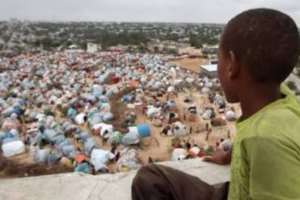
A region emptying out under pressure
Across West and Central Africa, the number of people forced from their homes keeps climbing, and the pace of that climb has become the story in itself. UNHCR's most recent regional trends report put the total number of forcibly displaced and stateless people across West and Central Africa at nearly 20 million as of April 2026, with more than 14 million of them internally displaced within their own countries. Nigeria, Burkina Faso and Cameroon together account for over four-fifths of the region's internally displaced population, a concentration that reflects where jihadist violence, banditry and communal conflict have hit hardest and longest.
The Sahel core is still the epicenter
Nowhere illustrates the trend better than the Central Sahel. The International Organization for Migration's Liptako-Gourma crisis dashboard recorded 3.48 million people displaced from that zone as of February 2026, made up of roughly 2.75 million internal displaced and 732,000 refugees. Burkina Faso alone carried three-quarters of that IDP burden, at just over 2 million people, while Mali's internally displaced population grew 10 percent and Niger's grew 8 percent compared to a year earlier.
UNHCR's own projections for the broader Sahel Plus region, covering Burkina Faso, Mali, Niger, Mauritania and the coastal states, forecast the total forcibly displaced and stateless population would reach 5.7 million by the end of 2026, up from 4 million in September 2025, with internal displacement alone rising 16 percent and refugee numbers rising 17 percent over that period.
The coast is no longer insulated
What has changed most sharply in the past two years is the spillover into countries that once sat outside the conflict zone. IOM's dashboard recorded 53,228 people internally displaced across Benin, Côte d'Ivoire, Ghana and Togo by February 2026, a figure still small next to the Sahel's core numbers but moving fast: displacement in Benin alone jumped 219 percent year-on-year.
Ghana's own IDP count, while modest at just over 3,000, sits inside a security architecture that regional analysts have repeatedly warned is only as strong as its weakest northern border crossing. This is the same jihadist expansion, driven by JNIM and ISWAP-affiliated networks operating across the Sahel and Lake Chad Basin that this column has tracked moving steadily southward toward the Gulf of Guinea states over the past two years.
Hunger and displacement are now the same crisis
Displacement in the region is inseparable from the food emergency it produces. The World Food Programme has warned that roughly 55 million people across West and Central Africa faced crisis levels of hunger or worse during the June to August 2026 lean season, with more than 13 million children expected to suffer malnutrition this year.
The Cadre Harmonizer’s regional food security analysis put the figure at 52.8 million people facing acute food insecurity during the same window, driven by conflict that has cut farmers off from their land and markets across the Lake Chad Basin, the Liptako-Gourma zone and Nigeria's northwest and central states. Displacement and hunger reinforce each other: people fleeing violence lose access to farmland and livelihoods, and worsening food insecurity in turn pushes more households to move.
A humanitarian system running on empty
The response capacity meant to absorb this movement is shrinking rather than growing. UNHCR's regional director for West and Central Africa, Abdouraouf Gnon-Konde, has said displacement in the region is not only deepening but changing character, with protection risks rising sharply for women and children, who make up roughly 80 percent of those displaced. The World Food Programme has attributed part of the deepening crisis directly to humanitarian aid cuts colliding with rising violence and population movement, a combination that leaves fewer resources chasing a faster-growing caseload.
There is a partial counterweight: governments reported over 3.2 million IDP returns in 2025 and a further 389,000 in the first four months of 2026, concentrated in the Central African Republic, the Democratic Republic of Congo and Mali, but UNHCR itself has cautioned that these returns reflect improved conditions in specific pockets rather than a region-wide reversal, and that insecurity, weak services and lingering protection risks still limit how safe and sustainable those returns actually are.
What the numbers demand
The daily arithmetic of this crisis, new displacement recorded in dashboards updated month by month, refugee counts revised upward faster than they are revised down, should not be allowed to become background noise. West Africa's coastal states, Ghana included, are watching a crisis that once felt confined to the Sahel move steadily toward their own borders, carried by the same armed groups, the same climate shocks and the same funding shortfalls that have already overwhelmed Burkina Faso, Mali and Niger.
Sustained investment in livelihoods, governance, social cohesion and basic services, the same prescription UNHCR has offered for returns to be safe and durable, applies equally to prevention. The alternative is watching displacement figures that are already measured in the tens of millions climb further before the region's coastal states fully grasp that the crisis is no longer someone else's.
References
IOM Displacement Tracking Matrix, "West and Central Africa Liptako Gourma and Central Sahel Crisis Dashboard 65 (February 2026)," https://dtm.iom.int/reports/west-and-central-africa-liptako-gourma-and-central-sahel-crisis-dashboard-65-february-2026
UNHCR US, "Sahel emergency," https://www.unhcr.org/us/emergencies/sahel-emergency
UNHCR, "Sahel+ Global Appeal 2026 situation overview," https://www.unhcr.org/sites/default/files/2025-12/Sahel%20Situation%20overview%20-%20Global%20Appeal%202026.pdf
UNHCR Africa, "UNHCR highlights forced displacement trends, protection risks, and solutions in West and Central Africa," https://www.unhcr.org/africa/news/press-releases/unhcr-highlights-forced-displacement-trends-protection-risks-and-solutions-west
UNHCR Africa, "Forced Displacement in West and Central Africa remains high despite increased returns," https://www.unhcr.org/africa/news/press-releases/forced-displacement-west-and-central-africa-remains-high-despite-increased
World Food Programme, "Humanitarian aid cuts push millions deeper into hunger amid rising violence and population displacement in West and Central Africa," https://www.wfp.org/news/humanitarian-aid-cuts-push-millions-deeper-hunger-amid-rising-violence-and-population
FAO Regional Office for Africa, "West Africa and the Sahel: Nearly 52.8 Million People Could Face Acute Food Insecurity During the 2026 Lean Season," https://www.fao.org/africa/news-stories/news-detail/west-africa-and-the-sahel--nearly-52.8-million-people-could-face-acute-food-insecurity-during-the-2026-lean-season-(june-august)/en
fundsforNGOs News, "52.8 Million People in West Africa and Sahel Could Face Severe Food Insecurity in 2026," https://news.fundsforngos.org/2026/01/28/52-8-million-people-in-west-africa-and-sahel-could-face-severe-food-insecurity-in-2026/
UNHCR Operational Data Portal, "Situation Sahel Crisis," https://data.unhcr.org/en/situations/sahelcrisis
WARWATCH Analysis, "Sahel Region Instability Coups and Jihadist Expansion 2026," https://warwatchlive.com/analysis/sahel-instability-2026.html


 Failing one or two BECE core subjects does not remove student from placement – E...
 Spiritualist found dead in suspected suicide at Assin-Amoabeng
 ‘Bunkpurugu must choose development over violence’ – MP tells residents
 Court orders Ghana Police to file disclosures in Labone robbery case
 Mahama inaugurates five-member Independent Fiscal Council, demands objective ove...
 Trump tells Putin he wants swift end to Ukraine war, Kremlin says
 Poor refereeing destroying Ghana's football — Mahama
 No businessman will sponsor NPP again because of its ‘evil and greedy nature’ – ...
 Failure to jail corrupt NPP officials will haunt NDC in election 2028 – Hopson A...
 Illegal miner who posed as pastor to defile student jailed 15 years

