




"Indeed, they plan, and Allah plans. And Allah is the Best of Planners." > — Qur'an 8:30
There are rare, heavy moments in the life of a people when history seems to pause. This pause is not because time itself has ground to a halt, but because an institution vastly larger than any single human life has entered a period of solemn, sacred transition. The passing of a Ya Na, the Overlord of the ancient Kingdom of Dagbon, is precisely one of these moments.
To an outside observer, the event may register simply as the passing of a prominent traditional ruler in West Africa. But to the people of Dagbon, and indeed to anyone who understands the intricate tapestry of Ghanaian heritage, this is the departure of the supreme custodian of a civilization. It is a moment where the modern world recedes, and the deep, resonant echoes of history, custom, and ancestral reverence take center stage.
As the kingdom enters a period of deep mourning and prepares for the customary processes of transition, Dagbon is once again demonstrating a timeless truth. While kings are mortal, the institution of the Yendi Skin is eternal.
The Deep Roots of the Yendi Skin
To understand the weight of this moment, one must travel back through the centuries. The history of Dagbon does not begin with modern national borders, nor does it find its origins in colonial administration. Its roots stretch back to the legendary Naa Gbewaa, the revered patriarch and founder of the Great Mole-Dagbani states, who established a state system defined by sophisticated political structures, military prowess, and a rich oral tradition.
At the spiritual and political heart of this kingdom lies the Yendi Skin. Unlike Western monarchies that utilize crowns and thrones, the symbol of sovereign authority in Dagbon is the physical and metaphysical "Skin." To sit upon the Yendi Skin as the Ya Na is to become the living vessel of the ancestors, the protector of the land, and the ultimate arbiter of custom.
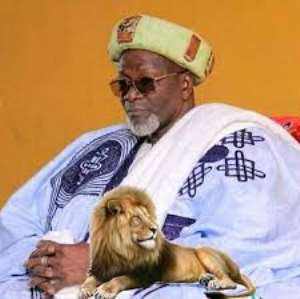
When a Ya Na passes, the language used to describe the event is intentionally steeped in metaphor. In Dagbon custom, a king does not simply die; rather, "a lion has fallen," or "the forest has lost its greatest tree." These euphemisms are not merely poetic; they are protective and sacred, signaling that even in physical departure, the spiritual essence of the kingship remains unbroken.
A Reign Born of Necessity and Reconciliation
To fully appreciate the legacy of the late Ya Na, one must revisit the extraordinary, fragile landscape of January 2019, when he ascended the skin.
For nearly two decades prior, Dagbon had carried the painful, visible scars of a protracted chieftaincy dispute. The tragic events of March 2002, which led to the demise of Ya Na Yakubu Andani II, had cast a long, suffocating shadow over the kingdom. The rivalry between the two royal gates --- the Abudu and the Andani ---had deeply fractured communities, divided families, disrupted local economies, and stalled the developmental potential of the entire Northern Region.
The road to peace was long, tedious, and often seemed impossible. It required the patient, decade-long mediation of the Committee of Eminent Chiefs, led by the Asantehene, Otumfuo Osei Tutu II, alongside the Nayiri (Overlord of Mamprugu) and the Yagbonwura (Overlord of the Gonja Kingdom). When the dust of mediation finally settled, the enskinment of the late Ya Na emerged as a monumental consensus.
Rather than pulling directly from the immediate, deeply entrenched rival lines, his accession was viewed by many as a masterstroke of traditional diplomacy. He was a stabilizing force --- a leader whose maturity, lineage, and temperament made him uniquely suited to act as a bridge over troubled waters.
His reign did not begin with the simple luxury of status; it began with a profound, almost crushing mandate: to heal a broken kingdom.
Evaluating a Legacy: The Healer of Wounds
Did the late Ya Na achieve everything expected of him? That is a question that history, in its slow and deliberate manner, will answer.
No leader, traditional or political, operates in a vacuum. Every reign is a complex mixture of historic breakthroughs, quiet disappointments, and unfinished business. In a kingdom as politically vibrant and historically complex as Dagbon, perspectives on any ruler’s tenure will naturally vary.
Yet, several achievements remain completely beyond dispute:
- The Restoration of Stability: His enskinment brought an end to a protracted vacuum on the Yendi Skin, restoring a sense of normalcy and pride to the traditional capital of Yendi.
- The Return of Coexistence: Under his watch, festivals that had been suspended for years out of security concerns were celebrated once more. People from different royal gates began to sit, converse, and farm together without the looming fear of violence.
- A Platform for Development: By stabilizing the traditional leadership, the late Ya Na opened the doors for increased governmental and non-governmental investments in the region, proving that peace is the ultimate prerequisite for progress.
His greatest legacy was perhaps not a single decree, but the gift of time --- the quiet, crucial years of peace that allowed a new generation of Dagbamba to grow up without the visceral trauma of active conflict.
The Anatomy of Transition: The Regent and the Drum
With the passing of the Overlord, the ancient machinery of Dagbon custom has smoothly roared into motion. This transition is a masterclass in institutional resilience.
Immediately following the announcement of the Ya Na’s passing, steps were taken to install the Gbon-Lana (the Regent). The Regent, typically the eldest surviving son of the deceased king, does not become the permanent Ya Na. Instead, he acts as a temporary custodian of the Skin, holding the kingdom in trust while the elaborate funeral rites are prepared and executed.
During this period, the kingdom relies heavily on its oral historians, the Lunsi (drummers). In Dagbon, drumming is not merely entertainment; it is the archive of the state. The Lunsi hold the genealogy of every king, reciting the deeds, the triumphs, and the warnings of the past. Through their rhythmic poetry, they remind the living that this present grief is but a single chapter in an epic that has survived wars, colonialism, and political upheavals.
This highly structured process of transition is a powerful reminder of a core truth. The institution is greater than the individual. While the seat may momentarily be empty of its permanent occupant, the authority, the laws, and the spiritual framework of the Yendi Skin remain entirely intact.
Looking to the Horizon: The Future of Dagbon
As the people of Dagbon mourn, they must also look forward. The true test of a kingdom's maturity does not lie in how it celebrates its peace, but in how it manages its transitions.
The coming months will require immense wisdom, patience, and patriotism from all stakeholders --- including the royal families, the kingmakers, the youth, and the political establishment.
Three key areas will define the future of the kingdom:
- Sustaining the Peace of 2019 --- The peace achieved in 2019 was hard-won and expensive. It must not be treated as a temporary truce, but as the permanent foundation of modern Dagbon. The succession process to find the next Ya Na must be guided strictly by custom, fairness, and a mutual desire to keep the kingdom united.
- Empowering the Youth --- Northern Ghana has a young, vibrant, and increasingly educated population. The next era of Dagbon must channel this youthful energy away from historical grievances and toward economic empowerment, technological literacy, and sustainable agriculture.
- Bridging Tradition and Modernity --- The incoming leadership will face the ongoing challenge of defining the role of traditional authority in a 21st-century democratic state. The Yendi Skin must continue to serve as an ally to development, healthcare, education, and environmental preservation.
My Thoughts: The Kingdom Endures
The mourning of a Ya Na is a period of profound sadness, but it is also a celebration of survival. It is a testament to a people who refuse to let the modern world erase their identity, and who understand that their strength lies in their unity and their respect for the sacred ways of their ancestors. The lion has indeed fallen, and the forests of Dagbon are quiet with grief. But as the drums beat in Yendi, carrying the ancient rhythms of Naa Gbewaa through the dusty savannah air, they deliver a message of hope, resilience, and continuity:
The King is gone, but the Skin remains. The Lion has fallen, but the Kingdom endures.
FUSEINI ABDULAI BRAIMAH
+233208282575 / +233550558008
[email protected]


 Baffour Awuah may spend night in EOCO custody — Lawyer
 Suspend Ghana-Colombia port and visa deals over cocaine seizures — Minority
 Ghana Law Society proposes National Service for fresh lawyers
 'We cannot continue to be a Bar of Accra, by Accra, for Accra' — Ghana Law Socie...
 Stop speculation, premature conclusions; allow investigation to determine Baffou...
 Judge halts Ex-NAFCO CEO's trial until ruling on seized phones
 Manhyia South MP who resisted arrest reports to EOCO a day after arrest warrant ...
 "Show us evidence" —Upper West teacher unions demand proof of payment before end...
 Adenta: Bolt driver jailed 25 years for cutlass attack and robbery of beautician...
 EOCO drags Manhyia South MP to former law firm, residence for search


