




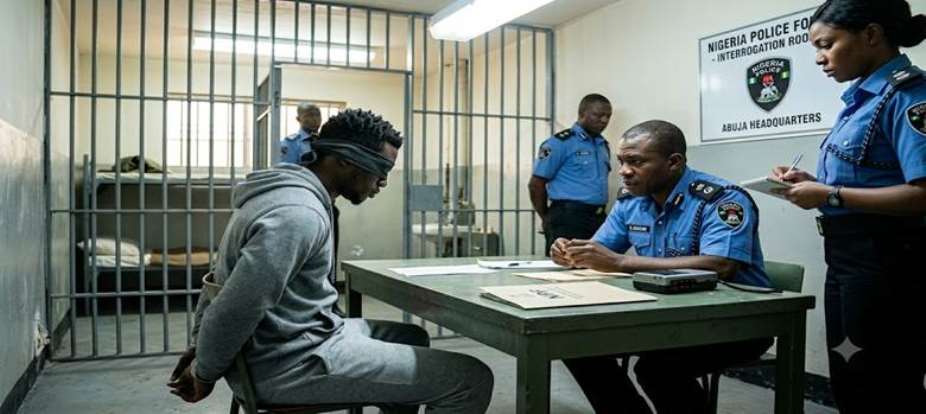
Few images evoke stronger emotions than that of a suspect being led away by security operatives with a cloth tied across the eyes. In many African countries, such scenes have become familiar in news reports, television broadcasts and social media videos. Whether the suspect is accused of kidnapping, terrorism, armed robbery, banditry or other serious offences, blindfolding has become a visible feature of arrests and detention by some security agencies. Yet, despite its prevalence, the practice receives little public scrutiny. Citizens often assume it is a normal or even necessary aspect of law enforcement. The reality is more complex.
While there may be legitimate security reasons for temporarily obscuring a suspect's vision, blindfolding should never become a routine practice or a substitute for lawful policing. It should always be subject to strict legal safeguards, oversight and accountability.
Security agencies generally defend the practice on operational grounds. Intelligence services, military units and specialized police formations often handle cases involving organized crime, terrorism and kidnapping syndicates. They argue that suspects should not be allowed to identify the locations of sensitive facilities, safe houses or operational bases. In some cases, blindfolding is also intended to prevent suspects from identifying undercover officers, intelligence personnel or informants whose lives could be endangered if their identities become known. During transportation, authorities may also contend that restricting a suspect's vision reduces the risk of escape or coordinated attacks by accomplices.
These explanations are not unique to African countries. Similar justifications have been offered by security agencies in different parts of the world, especially during counterterrorism operations. However, the existence of legitimate security concerns does not automatically justify every instance of blindfolding. The central legal question is whether the measure is necessary, proportionate, limited in duration and carried out in a manner that respects the dignity and rights of the suspect. Nigeria provides perhaps the most familiar example of the practice on the African continent.
Over the years, television audiences have repeatedly watched terrorism suspects, alleged kidnappers, armed robbery suspects and cybercrime suspects presented before the media with blindfolds covering their eyes. During the fight against Boko Haram, military authorities occasionally transported detainees with their eyes covered before transferring them to secure facilities. In high-profile kidnapping investigations, including cases involving notorious kidnapping gangs, suspects have similarly appeared blindfolded while in security custody.
Although such images are often intended to reassure the public that dangerous criminals have been apprehended, they also raise important questions about due process and the treatment of persons who remain legally presumed innocent until proven guilty by a competent court of law.
In some parts of the continent, comparable practices have occasionally been reported. Security operations in countries confronting insurgencies or violent extremism, including Somalia, Mali and parts of the Sahel region, have involved suspects being hooded or blindfolded during military or intelligence operations. In Egypt, local and international human rights organisations have documented allegations of detainees being blindfolded during interrogation or periods of detention. Reports concerning anti-terror operations in Kenya have also referred to suspects being transported while their vision was obscured. Although the circumstances differ from one country to another, the common thread is the tension between operational security and the protection of individual rights.
International law does not absolutely prohibit temporary blindfolding in every circumstance. What it prohibits is treatment that amounts to torture or cruel, inhuman or degrading treatment. The United Nations Convention Against Torture, to which many African states are signatories, requires governments to prevent acts that inflict severe physical or psychological suffering. The African Charter on Human and Peoples' Rights similarly guarantees respect for the dignity of every individual, and prohibits degrading treatment. These principles recognize that even individuals accused of the gravest crimes retain fundamental rights that governments are obliged to respect.
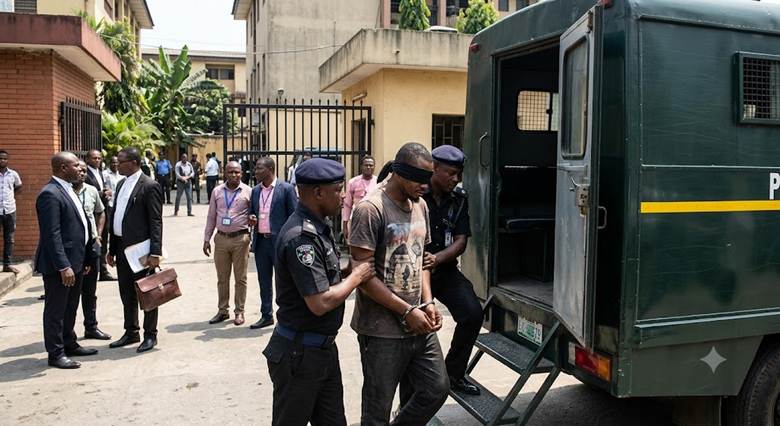
The danger lies in the potential abuse of blindfolding. A temporary blindfold during transportation for genuine operational reasons is fundamentally different from keeping a detainee blindfolded for prolonged periods, using the blindfold to create fear, facilitate coercive interrogation or conceal acts of physical abuse. Numerous international investigations have shown that prolonged sensory deprivation can produce intense psychological distress. A detainee who cannot see where they are, who is uncertain of the passage of time and who fears what may happen next may experience severe anxiety and emotional trauma even without physical violence.
History provides sobering lessons. During apartheid-era South Africa, some detainees reported being hooded or blindfolded during interrogation. Similar allegations emerged in authoritarian periods in several African states where security agencies operated with minimal oversight. More recently, international human rights organisations have documented complaints from detainees in various countries alleging that blindfolds were used alongside beatings, threats or other forms of coercion. Such allegations highlight why transparency and accountability have become indispensable. The issue is not whether security agencies should be prevented from protecting legitimate operational secrets. Rather, the issue is whether there are clear legal limits governing how and when such powers may be exercised.
Democratic societies recognize that exceptional powers also require exceptional safeguards. Blindfolding, if genuinely necessary, should be authorized only for specific operational purposes, should last no longer than absolutely necessary and should never occur during routine detention or questioning unless compelling security reasons exist. National legislation can play a decisive role. Laws governing arrest, detention and interrogation should expressly regulate any use of blindfolds or hoods. Security agencies should be required to record when such measures are used, who authorized them, the reasons for their use and their duration. Independent oversight bodies, courts and national human rights institutions should have authority to review whether the measure complied with legal standards. Detainees should also have prompt access to lawyers, medical personnel and judicial review to minimize the risk of abuse.
Training is equally important. Officers should understand that maintaining security and respecting human rights are complementary objectives rather than competing ones. Professional law enforcement depends not only on catching offenders but also on ensuring that evidence is obtained lawfully and that suspects are treated humanely. Public confidence in security institutions is strengthened when citizens know that officers operate within clearly defined legal boundaries.
The media also has an important responsibility. News organisations should avoid presenting blindfolded suspects in ways that imply guilt before trial. The presumption of innocence remains a cornerstone of justice. Sensational images may satisfy public curiosity, but they can also prejudice public opinion and undermine confidence in fair judicial processes. Responsible journalism should focus on verified facts while encouraging informed discussion about the balance between security and civil liberties.
Ultimately, every society must confront a difficult question: how can governments effectively combat dangerous crime while preserving the values that distinguish the rule of law from arbitrary power? The answer is not to deny security agencies the tools they genuinely need, nor is it to grant them unrestricted discretion. It is to ensure that every extraordinary measure is grounded in law, subject to independent oversight and exercised with restraint.
Blindfolding suspects may sometimes serve a legitimate operational purpose, but without clear legal safeguards it can easily become a symbol of secrecy, abuse and impunity. African democracies have an opportunity to demonstrate that effective security and respect for human dignity are not mutually exclusive. By placing blindfolding within a transparent legal framework, governments can protect both public safety and the rights that define a just society.

 Govt releases GH¢400million capital for Women's Development Bank
 President Mahama orders activation of six idle Zoomlion transfer stations to col...
 July 13: Cedi sells at GHS12.25 on forex market, GHS11.49 on BoG interbank
 Dagbon Overlord Ya-Na Abukari II passes on
 Okatakyie Afrifa, four supporters sustained gunshot injuries during arrest — Cam...
 South Korea court sentences ex-president Yoon to two years in illegal polling ca...
 EOCO must exercise its powers transparently to preserve public trust — Kwaku Aza...
 NPP completes constituency elections in 245 constituencies, assures resolution i...
 NPP demands Miracles Aboagye's release, condemns EOCO detention
 Dennis Miracles Aboagye arrested by EOCO at Accra International Airport

