




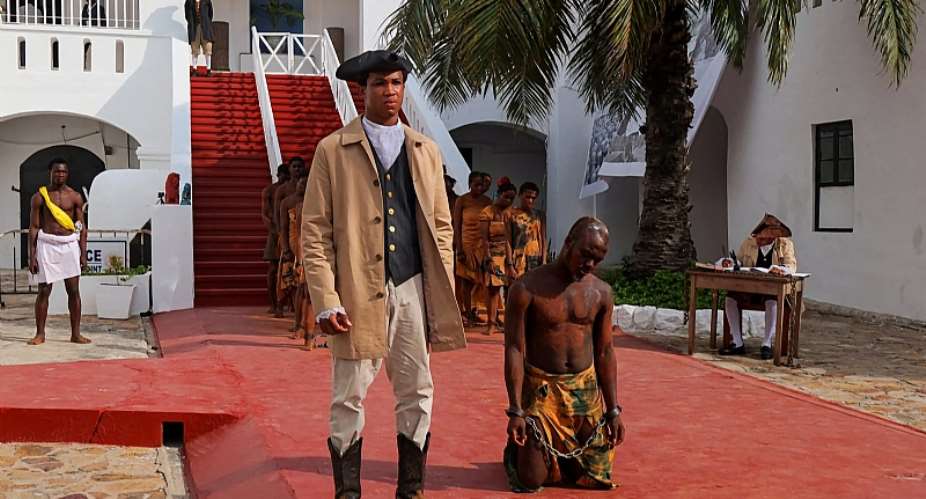
For many descendants of enslaved Africans, a formal apology for the transatlantic slave trade falls far short of justice. As momentum builds behind global reparations campaigns, they insist that acknowledgement without concrete action cannot undo generations of loss, displacement and exploitation.
The debate has resurfaced following the three-day Next Steps conference on slavery and reparatory justice held in Accra from June 17 to 19, which drew heads of state, policymakers, legal experts, civil society groups and diaspora representatives. The gathering followed the United Nations General Assembly's adoption, months earlier, of a resolution backed by 123 countries recognizing the transatlantic slave trade as among the gravest crimes against humanity.
Participants at the conference adopted a nineteen-point framework calling for formal apologies from countries and institutions that profited from slavery, alongside reparations mechanisms, debt relief, the return of cultural artefacts and human remains, educational initiatives and deeper international cooperation.
Yet for many descendants, a formal apology, however sincerely worded, does not go far enough. Yaw Owusu Akyeaw of African Diaspora 126+, a lobbying group that facilitates residency and citizenship pathways for diaspora members in Ghana, told Al Jazeera he was reluctant to accept an apology for crimes of such magnitude, arguing that a verbal apology symbolically acknowledges wrongdoing while doing nothing tangible to repair the damage or compensate those affected.
He likened the gesture to a convicted offender apologizing primarily to reduce punishment, describing it as a manoeuvre some see used to sidestep accountability, deflect compensation demands, or escape consequences altogether.
Marvin Walker, a Guyanese entrepreneur who relocated to Ghana to reconnect with his ancestral roots and invest locally, expressed similar scepticism, characterizing such apologies as shallow gestures rather than genuine expressions of remorse.
Beyond those taken
The transatlantic slave trade's damage extended well beyond those forcibly transported across the Atlantic. It tore family’s apart, destabilized communities, and stripped the continent of generations of people, labour and knowledge. David Adofo of the African Chamber of Content Producers, a pan-African body with observer status at the African Union's Economic, Social and Cultural Council, said the trauma experienced by those left behind has been passed down through successive generations, disrupting trust and interrupting Africa's developmental trajectory at the time.
He pointed to colonial-era programmes such as the Bantu Educational Kinema Experiment, a British film initiative run in East and Central Africa between 1935 and 1937 to promote colonial values through paternalistic depictions of African life, arguing that its legacy still shapes mindsets today and that reversing that damage deserves sustained, Western-funded, African-led investment in educational content.
A legacy that still lives
For some, the wounds are too deep for any apology to heal. One descendant of enslaved laborers left behind after abolition, who could not trace his ancestral origins and spoke to Al Jazeera anonymously given how sensitive servile ancestry remains in his community, said he has no way of knowing where his family originally came from and that no apology could offer him closure.
Historical accounts trace how captives from present-day Ghana and neighboring parts of West Africa were marched along inland trading routes from centers such as Salaga and Pikworo to coastal slave forts including Cape Coast Castle and Elmina Castle, with many taking their so-called "last bath" at Assin Manso before being shipped across the Atlantic. In Ghana's Central Region today, including Assin Manso, Cape Coast and Elmina, silence still surrounds families descended from those left behind, with many younger people avoiding the subject because of longstanding taboos.
Beyond symbolism
The broader reparations movement remains divided on this question: some regard formal acknowledgement as an essential starting point, while others see little value in it without measures addressing slavery's enduring consequences. Ghanaian President John Dramani Mahama, a key architect of the UN resolution, has said the Accra conference was designed to push the conversation beyond symbolism toward concrete action, announcing the creation of three international bodies focused on reparatory justice, cultural restitution and legal affairs.
For many descendants, however, justice will not be measured in official statements alone. As one Ghanaian voice close to the debate put it, they have suffered a loss of identity, been separated from their ancestral land and had their spirituality replaced, and would rather see what is morally owed delivered alongside compensation than accept an apology on its own.
Mustapha Bature Sallama.
Medical/ Science Communicator,
Private Investigator, Criminal investigation and Intelligence Analysis.
International Conflict Management and Peace Building.USIP
[email protected]
+233-555-275-880
Reference:
Al Jazeera, "," by Dwomoh-Doyen Benjamin, July 12, 2026 https://www.aljazeera.com/news/2026/7/12/ghana-slavery-apology-why-many-descendants-say-words-are-not-enough

 DVLA to introduce smart number plates to boost security, improve vehicle traceab...
 Maame Grace petitions Mahama to investigate Mosquito Lab Ghana at University of ...
 Passage of Community Service Bill not enough, Ghana must modernise prisons — Mar...
 June 29 floods a clear case of Mahama's incompetence — Egyapa Mercer
 Nkoko Nkitinkiti policy will fail, can't solve Ghana's poultry problem — Kofi Be...
 Ghana's tallest man spared leg amputation after Ibrahim Mahama's intervention
 Iran strikes Gulf neighbours after new US attacks
 US senator and Trump ally Lindsey Graham dies after 'brief and sudden illness'
 Trump and Iran's supreme leader trade threats as mediators try to save deal
 More than 1 million evacuated as Typhoon Bavi makes landfall in China

