




In the past centuries, there have emerged insightful leaders who were very gifted enough to influence people to achieve goals to change the course of history. These rare individuals have been defined not by their titles or good fortunes, but by their commitment to the betterment of the society they served.
They championed causes even in the face of intense adversity; unyielding to pressure when the path became unpredictable. Most importantly, however, they were profoundly committed to the lives of everyday people and that is what made them so successful in overcoming for example political polarisation to bring together two societies which were deeply divided.
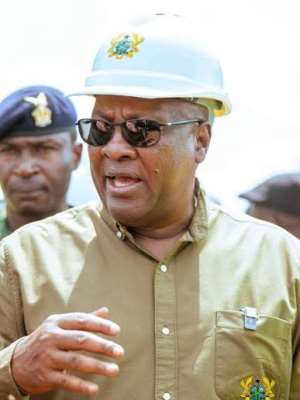
President John Dramani Mahama exhibited this kind of leadership recently. After the devastating floods that killed people and destroyed properties on Sunday, July 5, 2026, the country was left reeling. The disaster was largely caused by years of indiscriminate waste disposal and building on water ways; and the city streets became desiccated rivers of debris. In those cases, when there is lack of leadership, finger-pointing is more likely, accompanied with disillusionment. But President Mahama went the route of the visionary servant-leader.
Instead of issuing orders from the safety of a mahogany desk at the Jubilee House, President Mahama was at the front lines. He was in charge of a huge national clean-up campaign, and physically joined the good people of Ghana to save the city from the ruins of the disaster. This wasn’t attention seeking; it was solidarity. When a leader starts to sweep up the refuse of a national crisis, he is declaring that the struggle of the common citizen is, in fact, the struggle of the state itself.
The effect was far larger than the immediate clean-up of waste. It was a catalyst for a rebirth of patriotism. In a healthy democracy the air is usually thick with partisan friction. But on that Friday it changed. People from all walks of life—market traders, students, professionals and, much to the surprise of many, those from different political parties joined the national cleaning exercise. In the latest manifestation of the kind of unity that is increasingly rare in modern governance, these former foes worked together, on the basis of a common belief that the survival of the nation is greater than the election of any one party.
With such passion, they worked so hard that they would not limit themselves to the simple job of cleaning the streets. In effect, they were building a more unified national identity. And in creating a situation where opposition figures were willing to unite and get involved in the campaign, President Mahama embodied the very nature of a historical leader who made everyone feel part of the national project.
The success of the July 10th national clean-up exercise is proof that when leadership is genuine and not only service-oriented, citizens respond. The floods did damage, but they also created a new era of civic duty.
President Mahama’s action is a masterclass in governance, and showed us that the best way to solve the problems of a country is to unite people around the core truth: we are one in the end. For the country, that day will be remembered forever, as a lesson from the leader who chooses to serve, heal and unite, even when the currents from the floods are at their most turbulent.
Anthony Obeng Afrane

 Stop the Sermon Before the Engine Starts: Why Ghana Regulates Preaching on Movin...
 Don’t let speed of information become your judgement — Chief Justice tells new l...
 ‘Big Push’: Government assures contractors of prompt payments
 GES to develop plan to recover teaching time lost during teachers’ strike – Clem...
 Fire guts Kumasi Central Market near Aboabo Station
 'All human emotions': French astronaut Sophie Adenot's first words since returni...
 French astronaut recounts 'astonishing' emotions after return to Earth
 India's 'cockroach' movement chief detained ahead of major protest
 CSA rejects FBI claims, insists Ghana led cybercrime operation
 Govt suspends enforcement of ban on preaching in moving vehicles


