




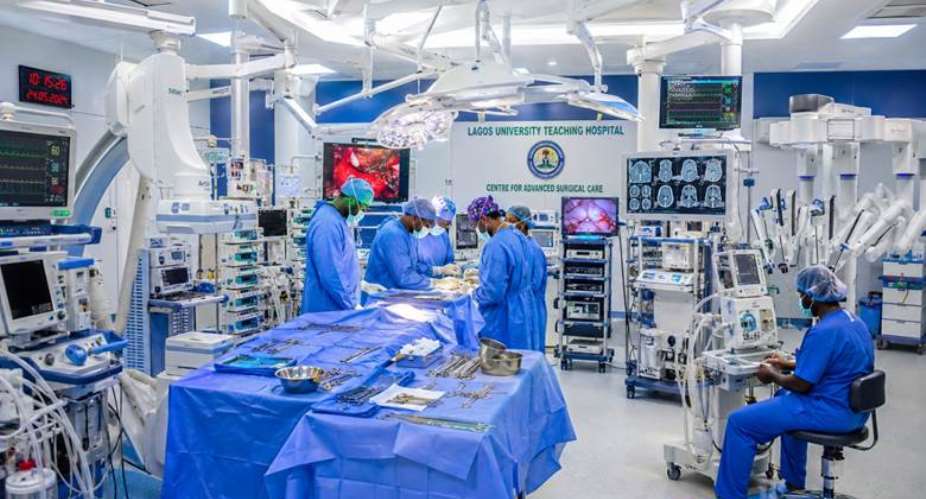
Nigeria's healthcare system has long been defined by a troubling contradiction. Africa's most populous nation boasts of one of the continent's largest economies, an expanding pharmaceutical industry and a growing pool of medical professionals, yet it continues to depend heavily on imported medicines, medical equipment and essential health commodities. Every fluctuation in the exchange rate, every disruption in global supply chains and every shortage of foreign exchange quickly translates into higher costs for hospitals, pharmacies and patients.
Against this backdrop, the Federal Government launched the Presidential Initiative for Unlocking the Healthcare Value Chain (PVAC), an ambitious programme aimed at transforming Nigeria from a predominantly import-dependent healthcare market into a country capable of producing a significant share of its medicines, vaccines, diagnostics and medical devices. But the initiative raises an important question: could PVAC become the solution to Nigeria's health challenges? The answer is neither a straightforward yes nor a simple no. While the initiative represents one of the most comprehensive attempts to strengthen the country's healthcare manufacturing ecosystem, it cannot by itself resolve every problem confronting the health sector.
Nigeria's healthcare challenges are rooted in decades of underinvestment, weak infrastructure, inadequate funding, workforce shortages and uneven access to care. Nevertheless, PVAC offers an opportunity to address one of the most persistent structural weaknesses in the system, the country's overwhelming dependence on imported healthcare products. The country already has a stronger pharmaceutical manufacturing base than many observers seem to realize. Industry estimates indicate that between 120 and 170 pharmaceutical manufacturers operate across the country, making Nigeria home to one of the largest pharmaceutical industries in sub-Saharan Africa outside South Africa. Local manufacturers produce a range of finished pharmaceutical products which includes intravenous fluids, tablets, capsules, syrups, creams, antibiotics, antimalarial drugs, pain relievers and vitamins. Yet these companies satisfy only about 30 per cent of national demand, leaving approximately 70 per cent of medicines and equipment to be imported.
The dependence extends even further beneath the surface. For example, even when medicines carry Nigerian labels, the overwhelming majority of active pharmaceutical ingredients, specialized packaging materials and the manufacturing equipment used to produce them are being automatically imported from abroad. In practical terms, many pharmaceutical companies in Nigeria formulate and package medicines rather than manufacture the chemical ingredients that give drugs their therapeutic value. This reliance exposes the industry to exchange-rate volatility, rising import costs and disruptions in global supply chains.
The situation is even more pronounced in the production of medical equipment. Nigeria imports more than 95 per cent of sophisticated medical devices, including magnetic resonance imaging scanners, computed tomography scanners, ultrasound systems, X-ray equipment, laboratory analyzers, surgical instruments and patient monitoring systems. Domestic manufacturing remains concentrated in relatively such basic products as syringes, personal protective equipment, hospital furniture and selected laboratory consumables. During the COVID-19 pandemic, the dangers of this dependence became painfully clear as countries around the world competed for scarce medical supplies.
PVAC seeks to confront these vulnerabilities by encouraging domestic production across the healthcare value chain. The initiative aims to stimulate investment in pharmaceutical manufacturing, vaccine production, diagnostics, medical devices and related industries while creating jobs, attracting capital and reducing Nigeria's reliance on imports. Its short-term aspiration of producing roughly 70 per cent of healthcare products locally by 2030 reflects an understanding that healthcare security is inseparable from industrial development.
If implemented successfully, the initiative could deliver benefits extending well beyond the health sector. Local production has the potential to improve medicine availability, reduce supply interruptions, create thousands of skilled jobs, conserve foreign exchange and stimulate technological development. Greater domestic manufacturing could also position Nigeria as a regional supplier within West Africa, taking advantage of the African Continental Free Trade Area to expand exports and strengthen economic integration.
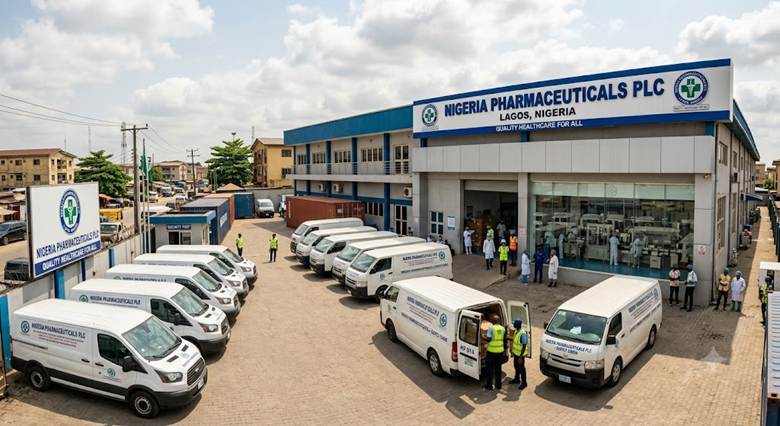
There are encouraging signs that Nigeria possesses the entrepreneurial capacity to build on this foundation. Several indigenous pharmaceutical companies have demonstrated the ability to manufacture quality generic medicines that meet national regulatory standards. Investments in syringe manufacturing, oxygen production and selected medical consumables have also shown that local industry can respond when appropriate incentives and market conditions exist. The experience gained during the pandemic further reinforced the importance of building resilient domestic manufacturing capacity rather than relying almost exclusively on overseas suppliers.
Yet optimism must be tempered by realism. Manufacturing medicines is among the most technically demanding industrial activities in the world. It depends on reliable electricity, efficient transport networks, stable access to foreign exchange, affordable financing, skilled scientists and engineers, rigorous quality assurance systems and predictable government policies. Nigeria continues to face significant constraints in nearly all these areas.
Power supply remains one of the greatest obstacles. Pharmaceutical manufacturing requires uninterrupted electricity to maintain production standards, operate sophisticated equipment and preserve product quality. Frequent power outages compel manufacturers to rely on diesel generators, dramatically increasing production costs. Transport infrastructure, port congestion and logistics bottlenecks further raise the cost of moving raw materials and finished products across the country. In addition to that, financing presents another challenge. Establishing pharmaceutical manufacturing facilities, particularly those capable of producing active pharmaceutical ingredients or vaccines, demands substantial long-term investment. Many Nigerian manufacturers struggle to obtain affordable credit, while high interest rates discourage expansion and technological upgrading. Without sustained financial support from both government and private investors, the ambitious targets set by PVAC may prove difficult to achieve.
Another critical issue is regulatory capacity. Producing medicines locally can be valuable only if quality and safety are consistently maintained. Nigeria's regulatory authorities have made notable progress in strengthening oversight and combating counterfeit medicines, but expanding domestic production will require continued investment in laboratory infrastructure, inspection systems and internationally recognized quality standards. Building public confidence in locally manufactured products depends on maintaining uncompromising regulatory vigilance. The initiative also cannot succeed in isolation from broader health system reforms. Manufacturing more medicines does not automatically guarantee that patients in rural communities will receive timely treatment. Many primary healthcare centres remain poorly equipped, understaffed or inaccessible. Health insurance coverage remains limited, forcing millions of Nigerians to pay directly for healthcare services. Medical professionals continue to leave the country in search of better working conditions, creating shortages that affect service delivery. Local production of medicines, however important, cannot substitute for investments in healthcare infrastructure, workforce development and universal access to affordable care.
There is also the question of competitiveness. Imported medicines from countries with highly developed pharmaceutical industries often benefit from economies of scale that enable lower prices. Nigerian manufacturers must compete not only on cost but also on quality, reliability and innovation. Achieving this balance requires policies that encourage local production without creating excessive protectionism that could reduce competition or increase prices for consumers. Well-designed procurement policies, targeted tax incentives and support for research and development may prove more effective than blanket import restrictions alone.
Perhaps the greatest significance of PVAC lies in its recognition that healthcare should no longer be viewed solely as a social service but also as an industrial and economic priority. Countries that manufacture essential medicines and medical equipment are generally better positioned to respond to health emergencies, manage supply disruptions and ensure long-term access to critical products. Nigeria's large domestic market provides a strong commercial foundation upon which such an industry can be built.
Success, however, will depend on consistent implementation rather than ambitious declarations. Previous industrial policies have often faltered because of policy reversals, inadequate coordination among government agencies and insufficient funding. PVAC will require sustained political commitment that extends beyond electoral cycles. It will also require close collaboration between government, manufacturers, research institutions, healthcare providers, financial institutions and international development partners.
Ultimately, the Presidential Initiative for Unlocking the Healthcare Value Chain is not going to be viewed as a magic solution to Nigeria's healthcare problems. It will not, on its own, eliminate preventable diseases, stop the migration of health professionals or guarantee universal access to quality healthcare. Those challenges require comprehensive reforms spanning financing, governance, education, infrastructure and service delivery.
What PVAC can do is address one of the structural weaknesses that has undermined Nigeria's health sector for decades: excessive dependence on imported medicines, vaccines and medical equipment. If the initiative succeeds in strengthening domestic manufacturing, encouraging innovation, improving supply chain resilience and attracting sustained investment, it could become a cornerstone of a more self-reliant and resilient healthcare system. But if implementation falters, the country risks remaining vulnerable to the same external shocks that have repeatedly exposed the fragility of its healthcare supply chain.
The future of Nigeria's healthcare sector therefore depends not on whether PVAC exists, but on whether it is executed with discipline, transparency and long-term vision. The initiative offers a promising pathway rather than a guaranteed destination. Its true measure of success will not be found in policy documents or investment announcements, but in the day quality medicines are consistently made affordable, hospitals are equipped with dependable locally produced supplies, manufacturers compete successfully across Africa, and every Nigerian, regardless of income or location, enjoys access to the healthcare they deserve.


 Abuakwa South MP Demands Tax Reliefs for Insurers as Flood Claims Hit GH¢500m
 Otumfuo Unveils New Asantehemaa Nana Ama Bonsu in Majestic Manhyia Ceremony
 NPP Sets September 19 for Crucial National Delegates Conference in Kumasi
 GUTA Hails Cedi Stability as Exchange Rate Gap Narrows; Businesses Report Renewe...
 Gov’t Launches Nationwide Clean-Up After Deadly June 29 Floods; Markets, Shops t...
 “Debt Is Draining Ghana’s Development Funds”— Veep Jane Naana Warns, Calls for S...
 Iran had 'specific' plan to kill Trump, US media report citing Israeli intel
 Shops, businesses must close for national clean-up exercise — Ga Mantse orders
 Former Deputy Upper West Regional Minister raises concerns over mode of fertiliz...
 Mahama orders demolition of old Korle Bu maternity block, describes facility as ...

