




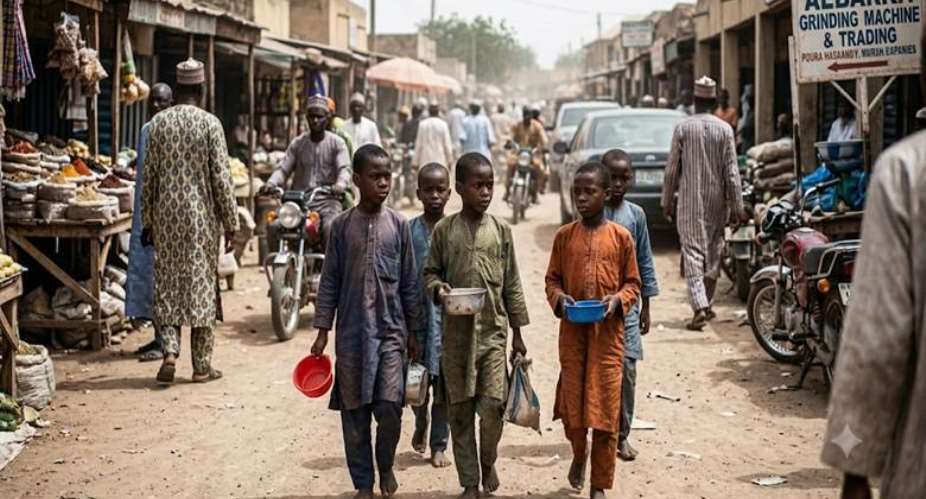
When the future of a country is deeply tainted by the sheer volume of its children who keep wandering the dusty margins of its streets rather than sit and learn within the safe confines of their classrooms, that country must be flirting with an existential precipice. Today, Nigeria sits precariously on that edge. The country is currently home to a staggering out-of-school population that independent observers place at well over eighteen million, while official governmental estimates hover around fifteen million. Whichever metric one chooses to accept, the reality remains unvarnished, stark, and tragic. What was once viewed as a challenge to localized development or a temporary systemic hiccup has continued to be allowed to mutate into a full-blown national emergency.
Across the length and breadth of the country, from the deeply troubled agrarian communities of the North-West to the bustling, hyper-commercial hubs of the South, the foundational right of the Nigerian child to basic education is being systematically dismantled. The primary driver of this educational collapse is a profound breakdown in basic security, a crisis so pervasive that it has shattered the sacred trust that always existed between parents, schools, and the state. There was a time in Nigeria’s history when sending a child to school was a moment of immense communal pride, a celebrated stepping stone toward socio-economic mobility. Today, that aspiration has been replaced by a systemic fear of parents risking their children to go to school.
Over the past decade, schools have been transformed from sanctuaries of learning into prime targets of predatory criminals. A relentless wave of mass abductions, coordinated school invasions, and targeted assassinations carried out by bandits, insurgents, and heavily armed syndicates of so-called Fulani herdsmen has fundamentally altered the psychological landscape of parenthood in Nigeria. For a mother in Kebbi, Sokoto, or Kaduna, the calculation is no longer about whether she can afford uniforms or textbooks, but whether her child will return home alive at the end of the school day. When the choice is between structural illiteracy and the very real threat of a child being dragged into the forest by kidnappers, survival dictates the outcome. Consequently, millions of parents have chosen to keep their children home, preferring their safety to the insecure vulnerable environment of a local government primary school.
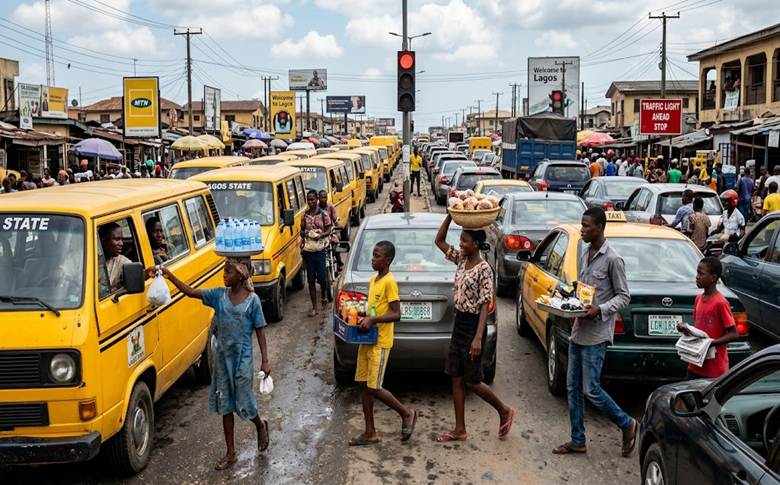
This collective retreat from the classroom has inevitably triggered a massive, highly visible socio-economic fallout, most visibly manifested in the explosive rise of child labour. Walk through the fractured streets of Lagos, Kano, Onitsha, or Abuja during school hours, and the human cost of this crisis becomes immediately apparent. Children as young as eight years, who should be mastering basic arithmetic and reading comprehension at school, are instead seen weaving dangerously through chaotic traffic grids, navigating dusty rural roads, and standing on baking asphalt highways. There, they hawk everything from sachet water and cheap plastics to seasonal fruits and imported trinkets. This is not casual, after-school assistance. It is full-time, grinding survival labour.
In many households that have been crushed by the weight of hyper-inflation and economic stagnation, the child has ceased to be viewed as a student to be nurtured and has instead been converted into an essential economic unit, a daily breadwinner. The long-term consequences of this shift are devastating. Street hawking exposes these incredibly vulnerable minors to severe physical dangers, vehicular accidents, psychological trauma, and predatory sexual abuse. More fundamentally, it locks them into an inescapable cycle of generational poverty. By intellectualizing survival at the expense of formal education, the country actively cultivates a massive, unskilled, and deeply resentful underclass, providing a highly fertile recruiting ground for the very insurgent groups and criminal enterprises that are currently tearing at the fabric of the nation-state.
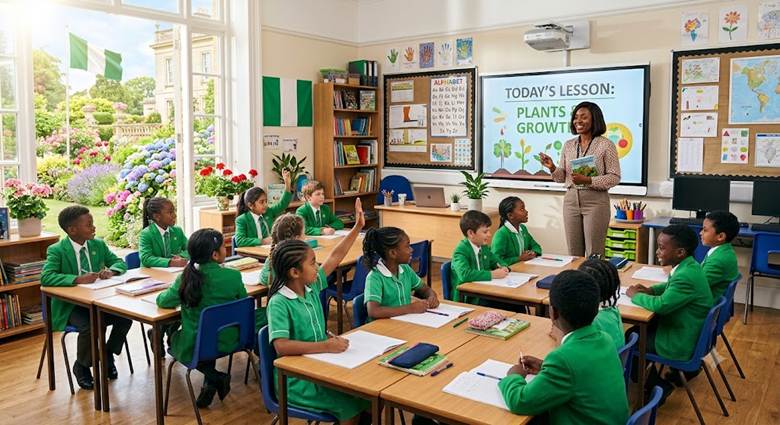
Faced with this monumental crisis, the administration of President Bola Tinubu has found itself grappling with a complex, historically entrenched quagmire. Since he assumed office, the government has attempted to project an aura of aggressive intervention, rolling out a series of macro-reforms intended to steady the listing ship of state. Yet, the administration's trajectory in the educational sector has been defined by a tense dialectic between bold institutional restructuring and public criticism.
In a bid to reshape the learning landscape, the administration, through the Federal Ministry of Education, has now proposed a sweeping structural overhaul: replacing the decades-old 6-3-3-4 educational framework with a continuous, uninterrupted twelve-year basic education model. The stated objective of this structural policy pivot is to eliminate the severe attrition and high dropout rates traditionally observed during the transition from primary to junior secondary school. Alongside this structural reimagining, the administration has intensified its reliance on data-driven interventions. The government has, consequently, created and deployed the National Commission for Almajiri and Out-of-School Children’s Education and it represents a highly targeted institutional effort to map, profile, and integrate hundreds of thousands of vulnerable, non-traditional learners into standardized alternative learning pathways and modernized community learning centres. Furthermore, the administration has pointed to increased financial mobilization, noting that billions of Naira in the Universal Basic Education Commission Matching Grants have been accessed by state governments to rehabilitate collapsing infrastructure and expand institutional capacity.
However, the governance of these reforms has been anything but smooth and has in fact drawn sharp rebukes from educational experts, civil society organizations, and policy analysts who argue that the administration is prioritizing cosmetic structural adjustments over deep, systemic funding. Critics argue that changing the nomenclature of the school system does absolutely nothing to address the severe, structural deficit of physical classrooms, the profound shortage of qualified, adequately compensated teachers, or the complete absence of modern pedagogical tools. The mass retirement of teachers across various states without corresponding recruitment cycles has left the public school system hollowed out, boasting unsustainable teacher-to-student ratios that make genuine learning practically difficult, if not impossible.
Many analysts contend that the Tinubu administration’s efforts, while well-intentioned on paper, have frequently resembled bureaucratic rigmarole rather than an existential, fully funded assault on illiteracy. The allocation to the educational sector, though nominally increased in recent budgetary cycles, still falls tragically short of the internationally recommended benchmarks, leaving the state structurally dependent on international donor agencies and fragmented interventions. The underlying sentiment among many Nigerians is that the federal government is attempting to build a new curriculum on a fundamentally broken and deeply insecure foundation. And so, to arrest this downward spiral and ensure that education transitions from an elite, heavily guarded privilege to an inalienable, universally protected right of every single Nigerian child, a radical, uncompromising paradigm shift will be absolutely necessary.
The first and most critical step must be the absolute prioritization of the National Safe Schools Declaration. The state cannot expect parents to return their children to classrooms that resemble indefensible outposts. Government must invest heavily in securing learning environments through the installation of robust physical barriers, the deployment of community-centred security personnel, and the integration of early-warning communication technologies in highly vulnerable rural communities. Schools must be transformed back into secular sanctuaries where the physical safety of the student is absolutely guaranteed by the full authority and might of the Nigerian state.
Beyond physical security, the operational funding model of public education in Nigeria requires a complete democratic revolution. The structural loopholes that allow state governments to neglect their basic educational obligations must be closed. Accessing Universal Basic Education funding must be strictly tied to transparent, verifiable institutional performance and direct infrastructure delivery. Concurrently, the state must aggressively enforce the provisions of the Child Rights Act across all thirty-six states of the federation.
It must be made a clear, heavily penalized criminal offense for any parent, guardian, or employer to utilize a school-age child for full-time commercial labour or street hawking during official school hours. However, this enforcement cannot be purely punitive. It must be intelligently coupled with targeted, conditional cash transfer initiatives and robust school feeding programmes, designed to offset the immediate economic survival needs of the country's most impoverished households.
Ultimately, the out-of-school children crisis is not merely a statistical anomaly to be debated in academic journals or glossed over during political boot camps. It is a profound moral and developmental stain on the conscience of the nation-state. Realistically, the country cannot engage with economic consolidation, technological advancement, or long-term national security while it simultaneously abandons millions of its youngest citizens to the realities of its unpredictable streets and the dark prospects of perpetual illiteracy.
Education must be rescued from the realm of political rhetoric and re-established as the fundamental, non-negotiable bedrock of citizenship. The drive for urgent, deep-seated institutional reform must transcend bureaucratic inertia and become a sustained, fully funded national crusade. If Nigeria fails to educate its children today, it must prepare to build more prisons, deploy more battalions, and yet watch its collective future vanish down the very roads its children currently hawk for survival.


 Trump signs order to rename Lake Ontario to 'Lake America' as Carney pushes back
 Police restrict concrete mixer trucks on Accra, Tema roads from August 28
 Supreme Court nominee Anthony Forson Jnr. opposes proposal to cap number of just...
 Justice Bernasko Essah explains why Supreme Court may depart from its previous d...
 Two NDC MPs whose ‘secret’ marriages have shocked Ghanaians
 All you need to know about Hon. Millicent Yeboah-Amankwa, wife of Hon. Mahama Ay...
 ‘A true trailblazer and cultural icon’ – Bawumia mourns Grace Nortey
 Vetting: 'Suspects should sue police if detained beyond 48 hours' - Supreme Cour...
 Speaker Bagbin outdoors uniforms for new parliamentary security guards
 Minority NPP boycotts vetting of three Supreme Court nominees over rushed timeta...

