




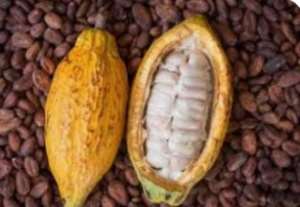
The cocoa boom that made headlines in 2024 has become a bust that is now driving West Africa's farmers into crisis, with world prices collapsing by more than 75% in just over a year and the region's roughly 2.5 million smallholder growers absorbing the brunt of the shock.
From Historic Highs to Historic Lows
Cocoa futures surged to an unprecedented near $13,000 per metric ton in 2024, fuelled by poor harvests, disease, ageing trees and years of underinvestment. By early April 2026, however, the world market price had fallen to as low as $3,000 a ton. The World Bank has confirmed prices fell by more than 30% in early 2026 alone, driven by improving supply prospects and weakening global demand with cocoa grindings in Asia collapsing by an outsized margin as chocolate manufacturers pulled back on purchases.
Côte d'Ivoire and Ghana, which together produce roughly two-thirds of the world's cocoa, have both been forced to slash the guaranteed prices paid to farmers. Côte d'Ivoire cut its 2026 farmgate price by more than half, to 1,200 CFA francs (about $2.13) per kilogram. Ghana's Cocoa Board (COCOBOD) also lowered its government-set producer price in February, after having locked in roughly 85–90% of the 2025/26 harvest before the crash hit a hedge that softened, but did not eliminate, the blow.
The Human Cost
The price collapse is reshaping daily survival calculations for farming families across the region. In Côte d'Ivoire, farmers describe being forced to choose between keeping children in school and bringing in enough harvest to feed their households. In Ghana, cocoa farmer Mercy Amponsah, who joined fellow farmers protesting the price cut in Accra in January, said accepting the new price would mean her son dropping out of school.
Beyond the price crash itself, structural decline is compounding the pain. Many Ghanaian smallholders are now harvesting just 300–400 kilograms per hectare far below the crop's agronomic potential of 800–1,000 kg/ha as trees aged 25 to 40 years succumb to disease and erratic rainfall. One Ghanaian farmer described annual yields falling from 300 bags in past years to just 50 bags in 2025. Facing collapsing income, some farmers have turned to illegal sand mining on their land to survive, despite the practice rendering the soil infertile for future cocoa cultivation.
A Market Standoff
Part of the crisis stems from a standoff between farmers, governments and global buyers. With Ivorian and Ghanaian regulators fixing minimum prices to protect farmers from volatility, large trading companies reluctant to buy at those fixed terms once world prices crashed have sharply cut purchases instead. The result: over $487 million worth of cocoa remains unsold in Côte d'Ivoire alone, while more than 700,000 metric tons is reportedly stuck with farmers who have nowhere to sell it. Beans are piling up and rotting in warehouses across the region even as chocolate manufacturers globally continue raising retail prices.
What Comes Next
Analysts remain divided on the road ahead. J.P. Morgan's medium-term forecast holds prices near $6,000 a ton as the market rebalances, while other analysts point to a forecast global surplus for the coming season. But most agree the underlying fragility hasn't gone away: West Africa's ageing tree stock, chronic underinvestment in replanting and irrigation, and exposure to erratic rainfall mean a single bad season could send prices spiking again just as quickly as they crashed. Meteorologists have also flagged an elevated chance of El Niño conditions later in 2026, which could disrupt rainfall across both West Africa and Latin America.
For now, though, it is farmers not traders or chocolate makers absorbing most of the downside. As one Ivorian cocoa farmer put it: producers are watching their harvests rot in poverty, unable even to afford medicine or food for their families.
Mustapha Bature Sallama.
Medical/ Science Communicator,
Private Investigator, Criminal investigation and Intelligence Analysis.
International Conflict Management and Peace Building.USIP
[email protected]
+233-555-275-880
Sources
PBS News / AP, "Rotting cocoa and a commodity crash push West African farmers to seek other options," March 2026
allAfrica.com (DW), "How the Cocoa Price Crash is Crushing West African Farmers," July 2, 2026
World Bank cocoa price data, cited via RankiaPro, "What is the situation of cocoa in 2026?"
J.P. Morgan Global Research, "Why are Cocoa Prices Falling?"
Cocoa Runners, "Cocoa prices 2026 update," February 2026


 I accept Israel Kwadwo Safo as leader of Kristo Asafo and Kantanka family – Adwo...
 Govt to launch $18.8m REWARD project to boost rice production in November, cut $...
 Ghanaian doctor makes history as first African inducted into world's highest avi...
 Ibrahim Mahama urges stronger support for Ghanaian entrepreneurs as Dzata Cement...
 PAC orders CWSA to engage IGP over GH¢300,000 police water debt
 CPP launches nationwide membership drive, targets Ghanaian youth and professiona...
 Study reveals how climate disasters fuel child marriage, teenage pregnancy
 GJA gives Armed Forces 14 days to probe alleged assaults on journalists at La Pl...
 'Law should not hasten the death of an enterprise which proper intervention may ...
 Government spends GH¢917m on No-Fees-Stress support for 321,807 students


