




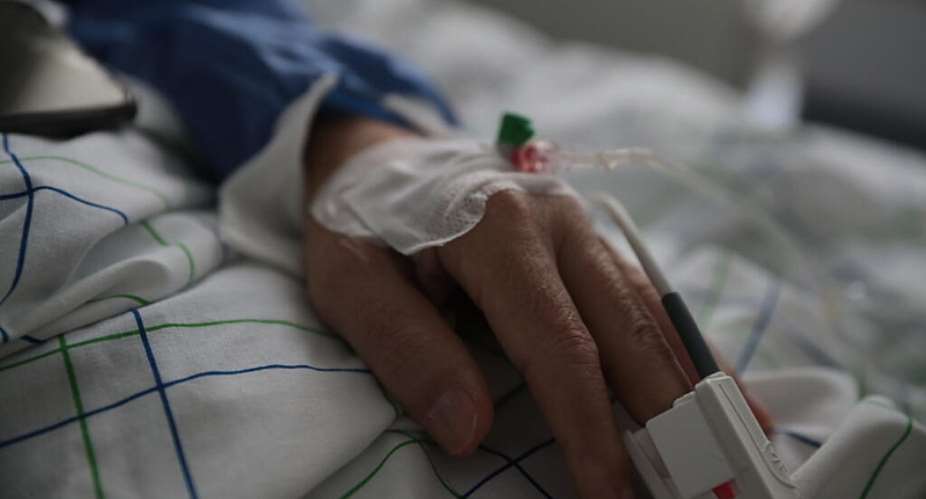
While supporters say the bill – approved on Tuesday after a lengthy legislative process – would give seriously ill patients a final choice, opponents warn it remains too permissive.
Expected to receive final adoption on 15 July, the bill would create a "right to assisted dying", allowing eligible people who request it to use a lethal substance with medical support.
Under current legislation, known as the Claeys-Leonetti law, patients in France can refuse or stop medical treatment.
In certain cases, they can also receive deep and continuous sedation with pain relief until death. However, healthcare professionals cannot provide or administer a substance to cause death.
The words "assisted suicide" and "euthanasia" do not appear anywhere in the text.
French Senate rejects assisted dying law after heated debate
A new legal right
"It is the patient who asks. Nobody is forced and nobody is encouraged," Philippe Vigier, an MP from the Democratic Movement, a centrist party which supports the bill, told RFI.
The Association for the Right to Die with Dignity, a campaign group known as ADMD, says the bill would shift decision-making towards seriously ill patients.
"It will bring a real change to healthcare democracy by putting the sick person back at the centre of the decision," siad ADMD head Jonathan Denis, adding the text would create a "final option" for seriously ill people facing unbearable suffering.
The French Society for Palliative Care and Support, a professional organisation representing palliative care workers, however, strongly opposes the proposed new right.
The bill took account of "none of the concerns, none of the warnings" raised by palliative care professionals, the group's president, Ségolène Perruchio, told RFI.
'My life, my death': French woman battles for right to die with dignity
Access conditions
To qualify for assisted dying, patients would have to meet five conditions. They would have to be adults who are either French citizens or legal, long-term residents of France.
They would also need to have a serious and incurable illness that threatens their life and has reached an advanced or terminal stage. The bill defines an advanced stage as entry into an irreversible process marked by worsening health that affects the person's quality of life.
Patients would also have to experience suffering linked to that illness that cannot be adequately relieved by treatment, or suffering they consider unbearable after choosing not to receive or to stop treatment. Psychological suffering on its own would not qualify.
Applicants would also have to be able to express a free and informed decision, even if they had previously written advance directives.
This would exclude some people with neurodegenerative diseases such as Charcot disease, a progressive condition that weakens muscles and gradually paralyses the body, if cognitive problems prevent them from confirming a request they had made earlier in writing, Denis said.
Opponents say the criteria leave too much room for interpretation. They are "extremely broad" and "extremely vague" and "leave an enormous role for the doctor's own subjectivity", Perruchio warned.
'Right to die' activists on trial in France as lawmakers debate end of life bill
Making the request
Patients would have to submit a written request to a practising doctor or, if that is impossible, use another method suited to their abilities.
The doctor could not be a relative, an in-law, a spouse, a civil partner, a life partner or anyone who stands to inherit from the patient. If the patient cannot travel, the doctor would have to visit their home or the place where they are receiving care to collect the request.
The doctor would have to explain the patient's medical condition and how it is likely to progress, the option of palliative care, access to psychological or psychiatric support and the right to withdraw the request at any time.
The doctor would also have to explain the conditions for accessing assisted dying and how the process would work.
The decision would then be taken after consultation with a multidisciplinary group including at least one other doctor specialising in the illness, as well as a nurse or nursing assistant involved in the patient's care. At the patient's request, the doctor could also seek the views of a trusted person or, if the patient has not named one, a relative.
The decision would have to be given, with reasons, within 15 days of the formal request. After a reflection period of at least two days, the patient could confirm the request.
As a final safeguard, on the day the substance is administered, the doctor or nurse would have to confirm once again that the patient still wishes to proceed.
If a doctor refuses the request, the patient could challenge that decision before an administrative court, including through an emergency procedure.
French parliament adopts long-debated bill to legalise assisted dying
Safeguards and refusals
One of the most debated issues was who should administer the lethal substance.
Patients should be able to choose between administering the substance themselves or asking a doctor or nurse to do it, argued MPs from France Unbowed, a hard-left party, and the Socialist Party.
Instead, as in the original version of the bill, self-administration would remain the rule, while a doctor or nurse could administer the substance only if the patient is physically unable to do so.
The ADMD had argued for patients to have a free choice between the two options, a position the final bill does not reflect, to Denis's regret.
After a request is approved, a date would be agreed with the doctor or nurse accompanying the patient. The procedure could take place at the patient's home, at the home of a relative, in a hospital, in a care home or in another healthcare setting. The patient could be surrounded by people of their choosing.
The costs of the procedure would be fully covered.
Lawmakers removed a provision during the latest reading that would have classified a death through assisted dying as a "natural death". However, the bill says death insurance policies would still apply so that beneficiaries are not deprived of cover.
The bill includes several safeguards. Patients could withdraw or postpone the process at any time, and healthcare professionals would have to suspend it if they believed the patient was under pressure.
If more than three months passed between approval and administration, the patient's wishes would have to be reassessed.
The proposal also requires every stage of the procedure to be recorded and would create a control and evaluation commission under the health minister. The commission would carry out checks after procedures, make recommendations to the government and parliament and report failures or suspected offences to professional bodies or prosecutors.
The National Authority for Health, France's independent health authority, and the National Agency for the Safety of Medicines and Health Products, the country's medicines safety agency, would jointly define and assess the lethal substances that could be used.
They would also draw up recommendations on good practice.
Healthcare professionals would be able to refuse to take part under a conscience clause. Anyone who refused would have to inform the patient or colleague immediately and provide the names of professionals willing to participate.
Those professionals would have to register with a new commission that would keep a register accessible only to healthcare workers.
The conscience clause offers only partial protection because it covers the doctor or nurse carrying out the procedure, but not everyone else involved in caring for the patient, Perruchio said.
"There is no conscience clause for the nursing assistant who washes the patient half an hour before the euthanasia, or for the person who prepares the body half an hour afterwards, or for the psychologist who meets the family," she added.
The bill would not create an offence of obstructing access to assisted dying, similar to the existing offence covering abortion. It would also not create an offence of encouraging someone to seek assisted dying.
This story was adapted from the original version in French by Aurore Lartigue

 Ghanaian killed in South Africa xenophobic violence to be repatriated for burial...
 Ghana demands probe into killing of national in South Africa xenophobic violence
 Migrants pick up pieces back home after fleeing South Africa
 Three arrested in Bolgatanga over alleged attempted baby sale for GH¢20,000, hum...
 Ghanaian shot dead in South Africa as tensions over anti-immigration protests pe...
 Accra Flood Disaster: Hajia Charity challenges Bawumia, demand accountability fr...
 "I'll smoke them out!" – Kojo Bamba alleges powerful NPP figures plotting agains...
 Venezuela death toll rises to 2,295, seven days of national mourning declared
 Maritime insecurity costs West Africa over $500 million annually — Vice Admiral ...
 Sahel insecurities threaten trade, investment and free movement in West Africa —...
