




The Gold Rush That Became a National Wound
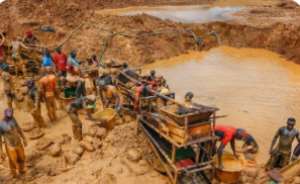
Ghana's galamsey crisis is no longer a problem that can be described in quiet diplomatic language. It is a national wound open, bleeding, and deepening with every excavator that tears into another riverbed, every forest reserve violated, and every water body poisoned beyond recovery. As of 2025, a report by Ghana's Environmental Protection Authority described the situation as an urgent public health and environmental emergency.
Mercury and other heavy metals have contaminated soil, water, fish, and crops, exposing communities to severe health risks including kidney, liver, and skin cancers, as well as respiratory illnesses, metabolic disorders, and congenital defects.
At the heart of this crisis is a troubling reality: Ghana's gold has attracted foreign nationals who see its soil not as a national heritage to be respected, but as a resource to be plundered. Chinese migrants have undertaken a varied portfolio of business ventures in Ghana, the most illicit and destructive being illegal mining. Galamsey has devastated major river bodies and forest reserves, driven by Chinese technology and sustained by a long-term Chinese presence often supported by local elites and patrons.
West African nationals from Burkina Faso, Niger, Mali, Nigeria, Côte d'Ivoire, Guinea, and Togo have also flooded mining communities, forming multinational enclaves deep inside Ghana's forests.
Yet amidst this disturbing roll call of nationalities entangled in the galamsey menace, one nation is conspicuously, instructively absent: Türkiye. No Turkish national has been arrested on a galamsey site. No Turkish excavator has been seized in a forest reserve. No Turkish operator has been indicted for mercury dumping in Ghana's rivers. This article asks why and in answering that question, offers a mirror in which Ghana may see a more hopeful reflection of what foreign engagement with its economy ought to look like.
Who Is Digging Ghana's Gold Illegally?
The list of foreign nationals implicated in galamsey is long and multinational. The period from 2008 to 2025 highlights the enduring legacy of Chinese miners' involvement in galamsey and the related transformations that reveal an exploitative agenda among some private Chinese migrants. Encouraged by China's early-2000s 'Go Out' policy, these migrants established themselves as wealthy entrepreneurs through unorthodox and exploitative practices in Ghana.
While Ghana deported more than 4,500 Chinese nationals during a 2013 crackdown on galamsey, their technology was left behind, used by locals who repurposed it and began manufacturing parts locally. Chinese entrepreneurs now export dredging machines known as "changfa," as well as bulldozers and excavating equipment, to Ghanaian business partners. Some illegal Chinese miners have used money from galamsey to establish legal businesses in Ghana, including supermarkets, construction companies and casinos, creating a network of undercover businesses involved in gold smuggling and recruiting more Chinese miners.
From 2008 to 2013, over 50,000 Chinese nationals entered the country to mine gold illegally. The most notorious symbol of this phenomenon is Aisha Huang the so-called "Galamsey Queen" a Chinese national who was arrested, deported several times, and only in December 2023 sentenced to four and a half years in jail, a term still far below the minimum of twenty years for non-Ghanaians involved in illegal mining as provided by the amended Mineral and Mining Act of 2019.
Beyond the Chinese dimension, West African nationals have formed the second pillar of the galamsey workforce. A sprawling hideout near the Subri Forest Reserve was home to more than 10,000 people, including foreign nationals from Burkina Faso, Guinea, Mali, Niger, and Nigeria. In February 2026, an operation in a palm plantation arrested 17 Burkinabe nationals and 21 Ghanaians, including nine juveniles aged between 13 and 17 years. In October 2025, a raid in Amansie West found all accused persons to be Burkina Faso nationals, operating changfa machines and paid by a Ghanaian site owner.
With hundreds of foreign nationals, particularly from China, Burkina Faso, Niger, and Togo, arrested yearly for illegal mining activities, Ghana is incurring high costs in court proceedings, detention, and deportation.
In this crowded roll call of nationalities plundering Ghana's subsoil, the Turkish name does not appear not once.
What Türkiye Is Doing in Ghana Instead
The absence of Turkish nationals from galamsey sites is not an accident of geography or ignorance of Ghana's gold wealth. It is the outcome of a deliberate, state-backed philosophy of engagement that distinguishes legitimate enterprise from illegal extraction.
Turkish companies are today operating in many key sectors of the Ghanaian economy including aviation, energy, construction, water generation, and education. Turkish brands and products are increasingly getting a foothold in Ghanaian markets, while Ghana's own exports to Turkey keep growing year on year.
As of 2020, the total trade value between Ghana and Turkey stood at US$771 million, a marked increase from US$479 million in 2016. By 2019, Ghana had become Turkey's third-biggest trading partner in sub-Saharan Africa. Bilateral trade was projected to cross US$900 million by the end of 2025 and surpass the US$1 billion mark by 2027, according to the Ghana-Turkey Chamber of Commerce.
In October 2025, Ghana's Trade Minister participated in the Türkiye-Africa Business and Economic Forum in Istanbul, holding bilateral talks with Turkey's Deputy Minister for Trade focused on strengthening trade, investment relations, and developing strategic frameworks to promote mutual economic growth and industrial development.
Ghana is listed among Turkey's priority countries in Africa under the Ministry of Trade's 2024–2025 target frameworks, alongside Kenya, Senegal, Côte d'Ivoire, Morocco, Tanzania, Mozambique, and Angola. The two countries signed a Bilateral Investment Treaty in 2016, and Free Trade Agreement negotiations are currently ongoing.
Turkish-made products from clothing and textiles to cosmetics, electronics, and building materials are increasingly coveted in Ghanaian markets, regarded as being of far better quality than Chinese equivalents and more affordable than European goods. Foreign Direct Investment from Turkey in Ghana has already generated an estimated US$112 million in revenue across various sectors.
This is what constructive foreign engagement with Ghana looks like. Not a hidden excavator in a forest reserve. Not a changfa machine on a riverbed. Not a bribe slipped to an immigration officer for false documents. But factories, trade corridors, diplomatic forums, and investment frameworks built to last.
Understanding Why: The Turkish Model of Foreign Engagement
To understand why Turkish nationals do not engage in galamsey, one must understand the philosophy and strategic culture that shapes how Turkey projects itself abroad particularly in Africa.
Türkiye's engagement with Africa is not transactional opportunism. It is a long-term, institutionally anchored partnership strategy. The 3rd Africa-Turkey Partnership Summit of December 2021 gave strong signals about the priorities the two parties give to their future roadmap, encompassing peace, security and governance; trade, investment and industry; education, science, technology and innovation; infrastructure development and agriculture; and promoting resilient health systems.
Türkiye benefits from its non-colonial past on the African continent, which has allowed it to increase its security activism and commercial footprint from a position of trust rather than suspicion. This ranges from its involvement in state-building in Somalia, to its military base in Mogadishu, to the intensification of its drone diplomacy and arms sales across Africa.
The Turkish business culture, shaped by decades of navigating a complex domestic and international regulatory environment, places strong emphasis on legal compliance, institutional relationships, and reputational capital. Turkish investors in Ghana arrive with formal registration, declared capital, documented employment records, and operational models that comply with Ghana's investment codes. They do not need to hide in forest reserves because they are building real businesses, with real clients, real employees, and real futures in the Ghanaian economy.
This stands in sharp contrast to the calculus of the galamseyer whether Chinese, Burkinabé, or Nigerian who arrives with one objective: extract maximum gold with minimum legal footprint, and leave before enforcement catches up.
The Contrast That Should Shame Ghana's Enablers
The Turkish example does not merely shine a light on what responsible foreign investment looks like. It exposes the moral failure of those Ghanaians who enable the galamsey crisis from within.
The Chinese would not have thrived in illegal mining had they not been aided by corrupt Ghanaian government officials, some of whom provide false immigration documents for a fee. The nefarious social mobility of Chinese migrants and their undercover businesses have sustained galamsey in Ghana their technology was left behind after deportations, and local patrons have appropriated it to their profit by repurposing and manufacturing parts locally.
The galamsey business model depends on Ghanaian complicity at every level: from the local chief who accepts royalties from miners operating in community lands, to the district official who looks the other way, to the national politician whose campaign coffers benefit from the proceeds. When Ghanaian authorities raided Amansie West in October 2025, Burkinabe miners pointed to a Ghanaian site owner named Martin as the person who recruited and paid them yet the police could not locate him.
The big fish, as President John Mahama himself noted in the 2026 State of the Nation Address, never get caught. His administration pledged to focus on dismantling organized criminal networks behind galamsey operations rather than targeting only low-level offenders.
Turkish investors, operating in the open, do not require this architecture of corruption. Their presence in Ghana generates taxes, jobs, and technology transfer. Their departure would leave behind nothing but vacant office buildings. By contrast, when Chinese galamsey operators are deported, they leave behind poisoned rivers, stripped forests, contaminated farmland, and a generation of Ghanaian youth who have learned to see gold not as a resource to be managed but as a prize to be grabbed.
The Environmental Cost of the Wrong Kind of Foreign Engagement
The stakes of this contrast are not abstract. They are measurable in the destruction of Ghana's most vital natural assets.
By 2017, more than sixty percent of Ghana's water bodies were already polluted by mercury and other heavy metals. In a 2024 report, WaterAid warned that Ghana might have to import water by 2030 in a business-as-usual scenario as drinking water sources shrink. The Ghana Water Company's operations in Swedru in the Central Region were shut down entirely due to galamsey-driven water contamination, forcing residents to seek alternative sources of water.
Galamsey is taking a heavy toll on Ghana's cocoa industry, causing widespread deforestation and the loss of fertile farmland. Ghana's Cocoa Board reported that illegal mining has claimed two percent of the country's total cocoa-growing area. Cocoa is not a secondary concern it is the backbone of Ghana's agricultural export economy and the livelihood of hundreds of thousands of farming families.
Arsenic concentrations in soil in some mining areas exceed recommended limits by more than 4,000 percent. Heavy metals used in artisanal gold extraction contaminate not only water but also air, soil, fish, and crops, exposing communities to kidney, liver, and skin cancers, as well as respiratory illnesses and congenital defects.
None of this devastation is linked to any Turkish national. All of it is traceable to the specific nationalities Chinese, Burkinabé, Nigerian, Nigerien, Malian, Ivorian who have treated Ghana's environment as a sacrifice zone in their pursuit of quick gold wealth.
What Ghana Must Learn from the Turkish Presence
The Turkish model of engagement with Ghana offers three actionable lessons.
The first is the value of formal institutional frameworks. Turkish companies arrive in Ghana with investment registrations, bilateral treaty protections, and government-to-government frameworks that create accountability. Ghana must insist that all foreign investors particularly those from countries with a history of galamsey involvement demonstrate the same level of institutional commitment before being granted any form of business or residency authorization.
Ghana's Foreign Affairs Minister, Hon. Samuel Okudzeto Ablakwa, was right to introduce new visa requirements for Chinese citizens in September 2025, eliminating group visa applications and requiring individual interviews. Similar scrutiny must extend to nationals from all countries implicated in galamsey.
The second lesson is the importance of sector-specific engagement. Turkish companies thrive in Ghana's construction, manufacturing, aviation, education, and energy sectors areas where their presence creates value chains, employs Ghanaians, and generates fiscal revenue for the state. Ghana must actively channel foreign investment into these productive sectors rather than allowing the gold sector to become a magnet for criminal enterprise. The ongoing Free Trade Agreement negotiations between Ghana and Türkiye represent a strategic opportunity to deepen this productive partnership.
The third lesson is reputational accountability. Turkish investors know that their conduct in Ghana reflects on their country's broader partnership ambitions across Africa. President Erdoğan has made fifty-three official visits to thirty-one African countries, making him the world leader who has visited Africa most extensively. Türkiye has a continental reputation to protect. Illegal mining would destroy in weeks what decades of diplomatic investment have built. By contrast, the countries whose nationals dominate galamsey have discovered to their cost that short-term gold profits carry long-term diplomatic consequences, including visa restrictions, diplomatic protests, and a souring of bilateral goodwill.
Conclusion: Choose Your Foreign Partners Wisely
Ghana does not have the luxury of being naive about foreign engagement. The galamsey crisis has demonstrated, with brutal clarity that not all foreign presence is benign, not all investment is investment, and not all economic relationships serve Ghana's long-term interest.
The Chinese "Go Out" policy sent tens of thousands of miners to Ghana's gold fields. The result was poisoned rivers, stripped forests, displaced communities, and a diplomatic crisis that has forced Ghana to restrict visas and deploy military task forces at enormous cost. The nationals of several West African neighbors, drawn by desperation and opportunity, have swelled the galamsey workforce often working for Ghanaian financiers who profit from their labour without sharing the legal risk.
Against this backdrop, the Turkish engagement with Ghana stands as a model of what foreign partnership ought to look like: legal, transparent, mutually beneficial, institutionally anchored, and reputationally accountable. Turkish companies build airports, not mining pits. They sell cement, not smuggled gold. They employ Ghanaians in regulated workplaces, not in forest encampments outside the reach of the law.
Ghana's challenge is not simply to crack down on galamsey it is to actively shape the character of foreign engagement with its economy. The Turkish model shows that foreign nationals can arrive in Ghana, do excellent business, contribute meaningfully to the national economy, and leave no trail of environmental destruction behind. That is the standard Ghana must demand of every foreign partner.
When others are busy digging in the dark, Türkiye builds in the light. Ghana must recognize the difference and govern accordingly.
Mustapha Bature Sallama.
Medical/ Science Communicator,
Private Investigator, Criminal investigation and Intelligence Analysis.
International Conflict Management and Peace Building.USIP
[email protected]
+233-555-275-880
References
- China Dialogues / LSE. "Ghana and China Have a Shared Responsibility for the Illegal Mining (Galamsey) Crisis in Ghana." blogs.lse.ac.uk, 29 October 2025. https://blogs.lse.ac.uk/cff/2025/10/29/illegal-mining-ghana-china-responsibility/
- Africa Defense Forum. "Decades Later, China's 'Go Out' Policy Fuels Ghana's Galamsey Crisis." adf-magazine.com, 2 December 2025. https://adf-magazine.com/2025/12/decades-later-chinas-go-out-policy-fuels-ghanas-galamsey-crisis/
- Africa Defense Forum. "Ghana Crackdown on Illegal Gold Mining Puts Focus on China." adf-magazine.com, 5 August 2025. https://adf-magazine.com/2025/08/ghana-crackdown-on-illegal-gold-mining-puts-focus-on-china/
- Africa Defense Forum. "Ghana Faces Growing Galamsey Mining Problem." adf-magazine.com, 27 May 2025. https://adf-magazine.com/2025/05/ghana-faces-growing-galamsey-mining-problem/
- ModernGhana.com. "Chinese Illegal Mining Threatens Ghana's Environment and Future." ModernGhana.com, 28 January 2026. https://www.modernghana.com/news/1467126/chinese-illegal-mining-threatens-ghanas-environme.html
- ENACT Africa. "Illegal Mining Digs Up Multiple Problems in Ghana." enactafrica.org, 31 October 2024. https://enactafrica.org/enact-observer/illegal-mining-digs-up-multiple-problems-in-ghana
- JURIST. "Ghana Tightens Visa Requirements for Chinese Citizens to Curb Illegal Mining." jurist.org, 20 September 2025. https://www.jurist.org/news/2025/09/ghana-dispatch-ghana-tightens-visa-requirements-for-chinese-citizens-to-curb-illegal-mining/
- Wikipedia. "Galamsey." en.wikipedia.org. https://en.wikipedia.org/wiki/Galamsey
- The Ghanaian Chronicle. "21 Foreigners Remanded for Alleged Involvement in Galamsey." thechronicle.com.gh, 27 October 2025. https://thechronicle.com.gh/21-foreigners-remanded-for-alleged-involvement-in-galamsey/
- GhanaWeb. "17 Burkinabe and 21 Ghanaians Among Suspected Galamseyers Arrested." ghanaweb.com, 28 February 2026. https://www.ghanaweb.com/GhanaHomePage/NewsArchive/17-Burkinabe-and-21-Ghanaians-among-suspected-galamseyers-arrested-2023679
- ModernGhana.com. "From Prison to Plantation: Ghana's Galamseyers and the National Farm Initiative." ModernGhana.com, 2025. https://www.modernghana.com/news/1390966/from-prison-to-plantation-ghanas-galamseyers.html
- The Business & Financial Times. "Ghana-Turkey Trade to Hit US$1bn in 2027." thebftonline.com, 18 September 2023. https://thebftonline.com/2023/09/18/ghana-turkey-trade-to-hit-us1bn-in-2027/
- The Business & Financial Times. "Ghana-Turkey Economic Relations: 5 Key Sectors That Require Immediate Attention." thebftonline.com, 31 January 2022. https://thebftonline.com/2022/01/31/ghana-turkey-economic-relations-5-key-sectors-that-require-immediate-attention/
- Citi Newsroom. "Ghana, Turkey Commit to Boosting Trade Volumes Beyond USD1 Billion by 2027." citinewsroom.com, 19 October 2025. https://citinewsroom.com/2025/10/ghana-turkey-commit-to-boosting-trade-volumes-beyond-usd1-billion-by-2027/
- TABEF / Bilateral Relations. "Türkiye-Africa Business and Economic Forum." tabef.org. https://tabef.org/bilateral-relations.html
- APRI Africa. "Assessing Turkey-Africa Engagements." afripoli.org, February 2026. https://afripoli.org/assessing-turkey-africa-engagements
- African Elements. "Expose Shocking Ghana Mining Settlements Exploitation." africanelements.org, 21 April 2025. https://www.africanelements.org/news/expose-shocking-ghana-mining-settlements-exploitation


 GCB denies robbery attempt at Labone Branch after Police shoot two suspects
 Death toll rises to 12 in Pokuase-Achimota multi-vehicle accident
 'He's not one of us' — Hajj Office denies arrested ‘Papa Angola’ seen assaulting...
 Two gunned down as Police foil robbery attempt at GCB Bank branch in Labone
 President Mahama sets 2028 deadline for completion of Upper East Regional Airpor...
 Upper East Airport to open region to investors, boost economic activity — Mahama
 NDC will not take lessons from NPP on economy — Joyce Bawah
 Man seen assaulting suspect at police station not a member of Hajj Board — Pilgr...
 Police gun down two suspects, arrest one over Labone GCB robbery attempt
 Ofankor crash: Stop publishing graphic images, videos — Oppong Nkrumah urges med...

