




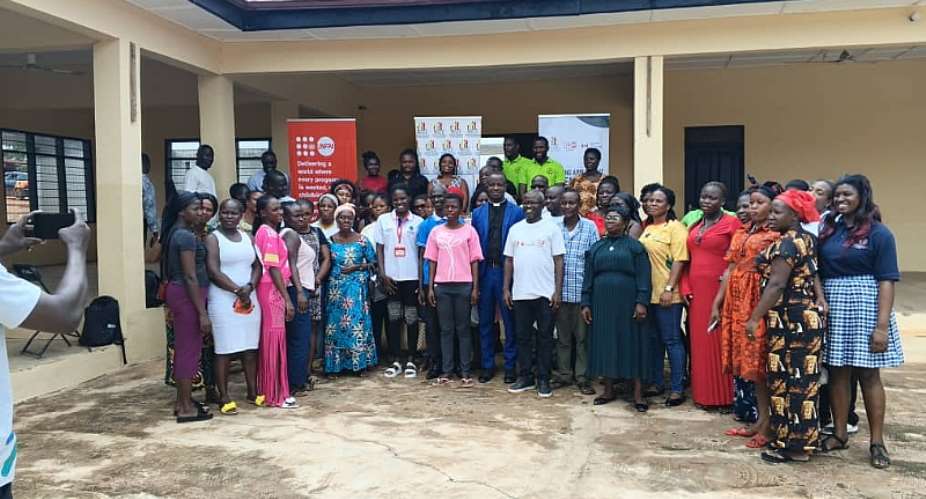
The National Commission for Civic Education (NCCE) in the Akrofuom District has held a stakeholders meeting aimed at finding sustainable solutions to the rising cases of gender‑based violence (GBV) in the district.
The meeting brought together representatives from the clergy, religious bodies, educational institutions, youth groups, artisans, parents, life counsellors, and health practitioners to deliberate on the growing concerns.
Addressing participants, the District Director of the NCCE, Mr. Ali Kassim, underscored the urgency of the engagement. He revealed that recent surveys and research place the Akrofuom District in the “Red Zone” of Metropolitan, Municipal and District Assemblies (MMDAs) with high incidences of gender‑based violence and adult reproductive health challenges.
Mr. Kassim further noted that drug abuse is also on the rise, posing a significant threat to the youth. He stressed the need for parents, community leaders, and institutions to intensify their roles in safeguarding young people.
He explained that although the NCCE has undertaken several outreach programmes on GBV and related issues, the problem persists. He therefore called for stronger collaboration among all stakeholders to help secure the future of the district.
The Gender Coordinator at the Akrofuom District Directorate of the Ghana Education Service, Mrs. Mary Owusu Boateng, also highlighted the severity of the situation. She noted that various forms of abuse — including domestic, psychological, emotional, and socio‑economic — remain widespread and disproportionately affect women, who are often the more vulnerable victims.
Mrs. Boateng attributed some of these abuses to outdated cultural practices that must be abolished. She added that the culture of silence, where women are discouraged from expressing their frustrations or reporting abuse, continues to fuel the problem.
“Many people, especially women, fail to report abuses because they fear societal judgment. For men, it is even more difficult, as they rarely report when they are abused by their spouses,” she said.
During discussions, participants unanimously agreed that parental neglect has contributed significantly to the rise in GBV and related social issues. They called on parents to recommit to their responsibilities.
Stakeholders also urged government institutions mandated to protect vulnerable groups to function effectively and deliver on their obligations.
 Let's move from promises to action on disability rights — Dr Apaak
 Mahama confirms three Deputy Comptrollers-General for Ghana Immigration Service
 GoldBod to purchase 30% of gold output from large-scale mining companies effecti...
 ECOWAS Court did not rule on constitutionality of Torkonoo's removal — Kwesi Bot...
 Collins Adomako Mensah demands explanation for fresh electricity tariff hike
 Ghana pushes for high-integrity carbon markets at London Climate Week
 Ghana's judges need to update their jurisprudence - CDD boss on Larry Dogbe's 7-...
 Teenage pregnancy cases surge in Upper East, hit 2,205 in five months
 Oliver Barker questions legality of jail sentence for Larry Dogbe in Okyere cont...
 Awutu Senya East MCE allegedly storms Obaatanpa Radio for discussing NDC interna...


