




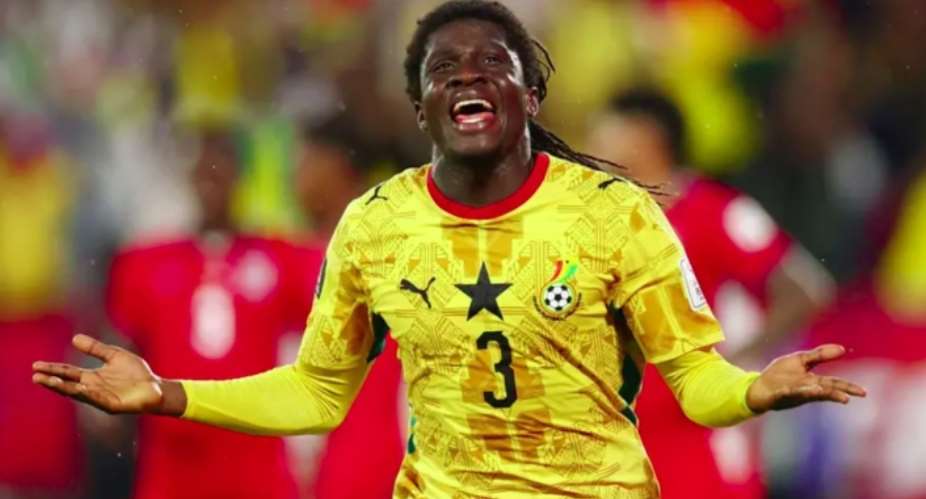
History is often written by those who refuse to let their circumstances dictate their destiny. When we look back at the annals of sports, certain figures stand out not just for their medals or trophies, but for the sheer improbability of their journeys. Two such figures, separated by decades but united by an unbreakable spirit, are Ethiopian legend Abebe Bikila and the rising Ghanaian sensation, Caleb Marfo Yirenkyi.
The story of Abebe Bikila is an evidence of the fact that greatness is not born in comfort; it is forged in struggle. Born to a poor shepherd in Ethiopia, Bikila’s early life was defined by necessity. To support his struggling family, he sought work in the Imperial Bodyguard of Ethiopia. With no money for transportation, he would walk over 20 kilometres to Addis Ababa—a grueling daily commute that inadvertently prepared him for the athletic feats to come.
Bikila’s path to the 1960 Rome Olympics was as unconventional as his running style. He was a last-minute addition to replace the ailing Wami Biratu. Upon arriving in Rome, he faced an equipment disaster: the shoe sponsor had run out of proper gear, leaving him with a pair that didn't fit. Unfazed, Bikila chose to compete barefoot. While the world watched in disbelief, he crossed the finish line in a world-record time of 2:15:16.2.
Yet, his most astonishing feat occurred four years later. Just 40 days before the 1964 Tokyo Olympics, Bikila collapsed during a training session. Diagnosed with acute appendicitis, he underwent emergency surgery. Any ordinary athlete would have retired to bed rest, but not Bikila. He began jogging in the hospital courtyard by night, refusing to let the scalpel derail his dreams. He arrived in Tokyo, shattered his own world record, and clocked 2:12:11:2.4, leaving 70,000 spectators roaring in disbelief.
Today, a new chapter of African brilliance is being written by Caleb Marfo Yirenkyi. Born on January 15, 2006, in Bechem, Ghana, Yirenkyi’s narrative echoes the humble beginnings of his predecessors. Raised by his father, Joshua Larbie Yirenkyi—a modest local carpenter—Caleb’s rise was fueled by talent and rigorous training at the Right to Dream Academy, which he joined at age 11.
Yirenkyi’s professional ascent has been meteoric. Playing as a midfielder for the Danish club Nordsjælland, his technical prowess quickly caught the eye of the handlers of the Black Stars of Ghana. May 2025 marked his breakthrough when he received his first call-up to the Ghana senior national team for the Unity Cup. By June 2, 2026, he was officially enshrined in the 26-man squad for the 2026 FIFA World Cup. That same day, he netted his first international goal—a crucial equalizer in a gritty 1–1 draw against Wales.
The defining moment of his young career, however, came on June 17, 2026. In his World Cup debut against Panama, with the clock agonisingly close to the final whistle, Yirenkyi delivered a 95th-minute strike. The goal which secured a 1–0 win, etched his name as the second-youngest Ghanaian to score at a World Cup.
There is a beautiful, grounded symmetry to this story. As Joshua Larbie Yirenkyi stood in his carpentry workshop in Bechem, he didn't boast of luxury; he simply hung a banner featuring his son’s face. That banner, raised just hours before Caleb’s winning strike, serves as a poignant reminder that while the stage may be the global arena of the World Cup, the soul of these stories is rooted in family, sacrifice, and the quiet dignity of hard work.
Both Abebe Bikila and Caleb Yirenkyi remind us that from the dusty paths of a shepherd’s life or the humble benches of a carpentry shop, the road to greatness is paved with grit. They prove that when talent meets an unyielding spirit, world records are destined to be broken.
Anthony Obeng Afrane


 Sammy Crabbe reveals why most NPP members moved to NDC and became star performer...
 Ghana, Trinidad and Tobago sign air services agreement
 Finance Ministry to write off about US$120m of TOR’s legacy debt
 High profile busts must go with high profile prosecution – Rev Ntim Fordjour
 Ghana Maritime Authority dismisses claims of ineffective vessel monitoring in Gh...
 AI risks, Iran war to take center stage at UN
 ‘I had never heard of Eswatini’: Deported by the US to a country that rejects th...
 Transport fares increased 8% from September 26
 Golokuati residents call for operationalisation of abandoned ECG office


