




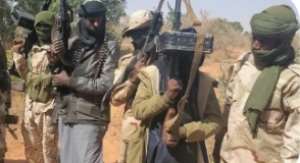
In the long and bloody history of jihadist insurgency in the Lake Chad Basin, a decisive strategic shift has occurred one that has transformed the region's security landscape in ways that are still not fully appreciated by the wider world. The Islamic State in West Africa has eclipsed Boko Haram as the dominant jihadist force in northeastern Nigeria and the broader Lake Chad region.
Better organized, better funded, more disciplined, and more strategically coherent than its rival, ISWAP has engineered a structural takeover of the insurgency that began in 2016, was cemented in 2021, and has deepened every year since.
Understanding how this happened and what it means for Nigeria, the Sahel, and international security requires examining the origins of the split, the anatomy of ISWAP's organizational superiority, the insurgent economy that sustains it, and the inadequacy of the military response that has so far failed to reverse it.
The Split That Changed Everything
The story begins in 2015, when Abubakar Shekau, the notoriously brutal leader of Boko Haram, pledged allegiance to the Islamic State and rebranded the movement as ISWAP. But the marriage was uncomfortable from the start. A group of commanders with closer ties to Islamic State leadership ousted Shekau in 2016. Shekau and his remaining followers returned to the group's original name but continued to claim membership in the Islamic State.
The core disagreement was ideological and tactical. The Islamic State's global methodology discourages mass civilian casualties among Muslim populations it prioritizes governance, territorial administration, and the projection of an alternative state. Shekau's approach was the opposite: indiscriminate violence, mass kidnappings, and massacres that generated fear but also alienated the very communities he claimed to defend.
The Islamic State encouraged the movement to adopt more streamlined, bureaucratic governance that limits the amount of violence committed against Muslim civilians a rationalization that became ISWAP's strength.
The rivalry that followed was vicious and prolonged. ISWAP and Boko Haram regularly clashed in northeastern Nigeria in the years following the 2016 split, with ISWAP ultimately gaining the upper hand. Shekau killed himself to evade capture by ISWAP fighters in May 2021.
His death was a turning point of enormous significance. A splinter faction of the original Boko Haram was active until 2021, when ISWAP killed its leader, absorbed its territory, and relegated its members to remote islands in Lake Chad. Hundreds of Shekau's fighters defected to ISWAP or surrendered to the Nigerian government. The transfer of power was not merely symbolic it was organizational, territorial, and financial.
ISWAP's Structural Superiority
The reason ISWAP won this internal jihadist contest is not difficult to identify. The uploaded intelligence analysis is precise on this point: the organization has built the institutional architecture of a proto-state while Boko Haram has remained a fragmented predatory network.
ISWAP operates with a hierarchical structure modeled on the Islamic State, with centralized command structured around a regional governor or "wali," and specialized units covering intelligence, logistics, taxation, and operations. It has the demonstrated ability to administer territory to function, in other words, as a parallel government in the areas it controls.
This is ISWAP's most dangerous attribute. In some areas, ISWAP attempts to present itself as an alternative to the state by offering arbitration and protection a strategy that does not preclude extortion, kidnappings, and targeted executions, but which gives the group a form of social legitimacy in communities where the Nigerian state has been absent for decades.
ISWAP alone collects an estimated $41.5 million annually by extorting fishing communities on Lake Chad. This figure represents just one revenue stream. The group has built a full-fledged insurgent economy based on taxation of fishermen, farmers, merchants, and herders; levies on livestock; control of trade routes; and ransoms from kidnappings. This financial autonomy is one of the primary factors behind its resilience it does not depend on external state sponsors and has survived multiple attempts to degrade it from the air.
ISWAP is the most prolific producer of Islamic State propaganda, has claimed more attacks than any other Islamic State province between July 2024 and June 2025, and has been on the offensive against the Nigerian government since 2025. It has temporarily overrun a variety of Nigerian military installations, including at least one so-called super camp a consolidated base set up after the Nigerian military proved unable to prevent ISWAP from overrunning smaller military positions in previous years.
Boko Haram: Weakened but Regrouping
Boko Haram today is a shadow of what it was during the Shekau years, but it has not been eliminated, and recent reporting suggests it has been quietly rebuilding in the shadow of the more intense focus on ISWAP. While regional forces focused on countering ISWAP's threats, partly due to the group's advanced drone capabilities, Boko Haram appears to have taken advantage of the relative attention on its rival to regroup, according to Nimi Princewill, a security expert in the Sahel. This has enabled both factions to rebuild strength and carry out further attacks in the area.
The group's main strongholds remain the Sambisa Forest, the Mandara Mountains, certain border areas between Nigeria and Cameroon, and isolated areas around Lake Chad. It is fragmented into autonomous groups organized around local commanders rather than centralized leadership. But it retains a capacity for violence: ambushes against security forces, attacks on villages, kidnappings for ransom, and raids against military positions.
Boko Haram's mix of ideological and criminal operations, including robbery and kidnapping, may help fund its activities while attracting disaffected youth. Recruitment appears influenced by the region's fragile socioeconomic conditions, including high poverty and unemployment, rather than ideology alone. The shortcomings of reintegration programmes also contribute to the problem, with former combatants rejoining Boko Haram after facing limited life prospects.
The battle between the two groups has increasingly taken on the character of a criminal turf war as much as an ideological contest. Local residents and security experts say Boko Haram and ISWAP are fighting more for control of the region and its critical trade corridors than for ideological reasons. Whoever wins the islands wins the money from the taxes on fishermen, farmers and pastoralists, the food, the smuggling routes and the power in the whole region.
The Death of Al-Minuki and What It Does and Does Not Mean
The most significant recent development in this conflict came on the night of May 15, 2026. A precision air-land strike on a compound in Metele, Borno State, ended the life of Abu Bilal al-Minuki the man the United States government had spent years hunting across one of the world's most ungoverned spaces.
Al-Minuki, a Nigerian national from Borno State, had risen through the ranks of ISWAP following the disappearance of veteran commander Mamman Nur in 2018. His reported ability to operate discreetly and avoid public attention helped him maintain influence over operations while evading detection by regional and international security forces.
Trump called al-Minuki "the most active terrorist in the world" and the second-in-command of ISIS globally. Tinubu described the operation as "a significant example of effective collaboration in the fight against terrorism." The operation also resulted in the deaths of several other ISWAP figures, including Abd-al Wahhab, a senior leader involved in coordinating attacks and spreading propaganda; Abu Musa al-Mangawi, a senior member of the group; and Abu al-Muthanna al-Muhajir, who managed ISWAP's media production operations.
By 19 May, Nigerian authorities stated that 175 ISWAP and Boko Haram militants had been killed since the beginning of the joint offensive. But analysts have cautioned against triumphalism. Dennis Amachree, former director of the Department of State Services in Nigeria, said al-Minuki's killing would create a huge vacuum in the leadership and financing of ISWAP, but warned that the group's ability to move funds across borders, acquire high-end drone technology, and coordinate with administrative cells outside West Africa would face immediate friction rather than collapse.
Cheta Nwanze of SBM Intelligence warned that eliminating a single commander may have a limited impact, noting that a growing ransom economy in Nigeria which raised some $1.66 million between July 2024 and June 2025 means the group can recover as long as the economic logic that feeds it remains intact.
The Regional Dimension
The Lake Chad Basin is not Nigeria's problem alone. ISWAP's main areas of operation span Borno State in northeastern Nigeria, the Maiduguri-Monguno-Baga corridor, the islands and shores of Lake Chad, the Diffa region in Niger, the Lac region in Chad, and northern Cameroon. The conflict has spilled across four national borders and drawn in five militaries under the Multinational Joint Task Force (MNJTF), comprising Nigeria, Niger, Chad, Cameroon, and Benin.
The MNJTF has achieved meaningful results recapturing territories and destroying jihadist camps but faces persistent structural challenges: operational fatigue, significant casualties, difficulties maintaining long-term control over recaptured territory, and fragile regional cooperation.
The death of Chadian President Idriss Déby in 2021 removed a critical linchpin of regional counterterrorism coordination. The military coups in Niger and other Sahel states have further complicated cross-border intelligence sharing and operational coordination.
ISWAP and Boko Haram have become active again in the Lake Chad Basin for three main reasons, according to Chris Ogunmodede, a Nigerian political analyst: their resilience and ability to adapt to the evolving tactics of the Nigerian armed forces; the lucrative economy of violence that sustains their funding and manpower; and the Nigerian state's limited ability to establish a legitimate, lasting presence in the region that could undermine their credibility.
Data from the UN Office for the Coordination of Humanitarian Affairs shows the region hosts 2.9 million internally displaced people, including 2.3 million in Nigeria. These displaced populations stripped of livelihoods, separated from social structures, concentrated in camps with limited prospects represent both the human cost of the insurgency and its most reliable recruitment environment.
Why Military Success Alone Cannot End This
The fundamental lesson of seventeen years of counterinsurgency in northeastern Nigeria is one that governments keep learning and then forgetting: military operations can degrade jihadist capacity, but they cannot eliminate the conditions that regenerate it.
Many of the factors driving armed attacks in the Lake Chad Basin are unlikely to be solved by military operations alone. The conditions that give ISWAP and Boko Haram their recruitment base, logistical support, and social legitimacy in some communities can be traced to decades of poverty, displacement, governance gaps, and political exclusion.
Seven years after the regional jihadist landscape began its decisive shift, ISWAP has become the primary security threat in the Lake Chad Basin. Boko Haram survives but is no longer the dominant organization in the region. The dynamics confirm the transformation of a single insurgency into a jihadist rivalry from which ISWAP is now the primary beneficiary.
In the absence of sustainable political, economic, and social responses, the military successes achieved by Nigeria and its partners including the killing of al-Minuki risk remaining insufficient to end the chronic insecurity plaguing northeastern Nigeria. The jihadist threat in the Lake Chad Basin will not be resolved by airstrikes alone.
It will require the Nigerian state to appear in communities where it has been absent for decades, to offer governance where there is currently only vacuum, and to provide economic alternatives to the recruitment pipelines that feed both ISWAP and Boko Haram with an endless supply of young men who have nothing else to join.
Until that happens, the revolving door of leadership kills, tactical victories, and jihadist regeneration will continue and the 2.9 million displaced people of the Lake Chad Basin will continue to bear the cost.
Aisha Lawal Malumfashi
A Criminologist from Department of Sociology, University of Abuja, Nigeria.
+2348036443457
[email protected]
with
Mustapha Bature Sallama
Medical/ Science Communicator
Private Investigator, Criminal Investigation and Intelligence Analysis.
International Conflict Management and Peace Building.(USIP)
+233555275880
mustysallama@gmail .com
References:
"In Nigeria, IS-WA Is Gaining the Upper Hand Over Boko Haram," intelligence analysis document (uploaded source).
"How ISWAP and Boko Haram are reshaping the Lake Chad Basin," Al Jazeera, May 18, 2026. https://www.aljazeera.com/news/2026/5/18/how-iswap-and-boko-haram-are-reshaping-the-lake-chad-basin
"Boko Haram, ISWAP Fight to Control Lake Chad," Africa Defense Forum, June 2026. https://adf-magazine.com/2026/06/boko-haram-iswap-fight-to-control-lake-chad/
"Rival Terrorists in Battle for Control of Lake Chad Islands," Africa Defense Forum, January 20, 2026. https://adf-magazine.com/2026/01/rival-terrorists-in-battle-for-control-of-lake-chad-islands/
"The Killing of Abu-Bilal al-Minuki and the U.S. Military's Deepening Involvement in Nigeria," Center for Strategic and International Studies (CSIS), May 21, 2026. https://www.csis.org/analysis/killing-abu-bilal-al-minuki-and-us-militarys-deepening-involvement-nigeria
"Abu-Bilal al-Minuki: ISIL's shadow commander in West Africa," Al Jazeera, May 16, 2026. https://www.aljazeera.com/news/2026/5/16/abu-bilal-al-minuki-isils-shadow-commander-in-west-africa
"Killing of Abu-Bilal al-Minuki," Wikipedia, updated June 2026. https://en.wikipedia.org/wiki/Killing_of_Abu-Bilal_al-Minuki
"Violent Extremism in the Sahel," Global Conflict Tracker, Council on Foreign Relations, May 2026. https://www.cfr.org/global-conflict-tracker/conflict/violent-extremism-sahel
"Salafi Jihadi Areas of Operation in the Lake Chad Basin," Critical Threats, American Enterprise Institute. https://www.criticalthreats.org/analysis/salafi-jihadi-areas-of-operation-in-the-lake-chad-basin
"Boko Haram in the Lake Chad Basin: The Bakura Faction," SWP Berlin Policy Brief. https://www.swp-berlin.org/assets/afrika/publications/policybrief/MTA_PB_Foucher_ElHadji_Bakura_EN.pdf


 Speaker Bagbin summons Parliament for September 29 sitting
 Kwesi Pratt warns against abuse of free expression amid Ghana Jollof controversy
 PURC keeps electricity, water tariffs unchanged for fourth quarter
 EOCO heads must be removed over ‘abusive conduct’ – Bobby Banson
 GES transfers funds for SHS 1 perishables, recurring items
 US judge lifts Trump’s White House ban on CNN, MS NOW, Politico
 Trump gives Xi rare airport welcome as Chinese leader begins US state visit
 Putin using citizens from 47 countries to fight Ukraine, Zelensky tells UN
 Damanko residents demand immediate commissioning of abandoned E-Block SHS projec...
 Osahen Afenyo-Markin hands over as head of Ghana’s delegation to ECOWAS Parliame...


