




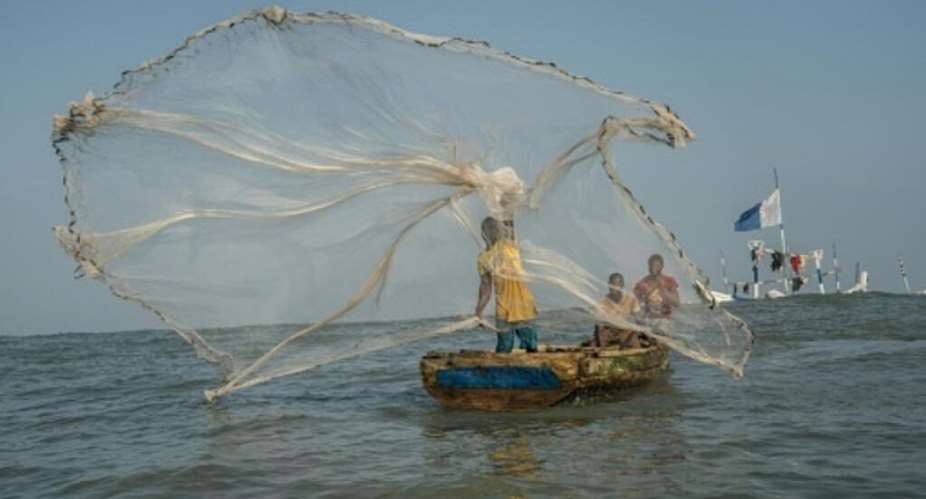
The 11th edition of the Our Ocean Conference began in Mombasa on Tuesday, its first time being held in Africa, bringing together politicians, NGOs, investors and innovators.
Since its first edition in 2014, organisers say it has led to more than 2,900 commitments valued at over $169 billion, covering marine conservation, sustainable fisheries, climate adaptation, security and pollution reduction.
The Mombasa Declaration signed on Wednesday commits to modernising vessel registries, better monitoring and sharing data with the United Nations Food and Agriculture Organization (FAO).
Signatories include Belgium, Cameroon, Chile, Dominican Republic, France, Gambia, Ghana, Guinea, Liberia, Panama, Papua New Guinea, Peru, Somalia, South Korea and the Republic of Congo.
Landmark WTO deal shifts course in global effort to curb overfishing
For years the fishing industry has resisted transparency, either to disguise illicit activity or simply to ensure competitors did not know about valuable hunting grounds, Tony Long, CEO of charity Global Fishing Watch told French news agency AFP.
Many ships also disguise their real owners, flying flags that have nothing to do with their true base of operations, he said.
Global Fishing Watch is launching a "world-first global map" during the conference, tracking every class of fishing vessel, including the so-called "dark fleet" that tries to hide its location.
"Too much of today's fishing remains invisible to those tasked with managing our ocean," said Long, vowing the map would "transform scattered, fragmented data into actionable insights for policymakers".
Many countries have come to see the long-term benefits of open data, notably since the UN's Sustainable Fisheries Resolution in 2024, which has put "transparency at the forefront of every discussion," Long said.
Disappearing dugongs
The issue is existential for local fishermen just a few kilometres up the Kenyan coast, who accuse large, foreign-crewed trawlers of destroying fish stocks and damaging the marine environment.
"This is making people here poor and dramatically changing the sea ocean bed which has depleted a lot of species in our area," said Awadh Mbarak, 53, secretary of a "beach management unit" in the coastal town of Kipini.
A retired fisherman from the same town, Twaha Yusuf, told AFP he had not seen a dugong, the beloved manatee-like sea mammals, for 40 years – and blames the trawlers.
"Maybe my son will not even see sea turtles in the future," he said.
How Europe's appetite for farmed fish is gutting Gambia's coastal villages
Locals accuse trawlers of illegally trespassing in shallow waters reserved for small, local boats. But without publicly available data, it is impossible to hold them to account.
"Small-scale fishers are unable to feed their families. They're losing their livelihoods," said Maisey Pigeon of the Coalition for Fisheries Transparency, a Washington-based NGO.
"A lack of transparency enables things like illegal, unreported and unregulated fishing, and also human rights and labour abuses on fishing vessels."
(with AFP)


 “I am upset by some free speech arrests sanctioned by police; it hurts governmen...
 WAEC withholds results of 9 BECE private candidates over suspected collusion
 Forestry Commission laments how illegal miners return to forest reserves with ne...
 Here are areas to face outages as ECG announces 4-day power outage scheduled mai...
 Mion NPP Chairman resigns barely two weeks after winning constituency polls
 Ghana’s Deputy Ambassador to Saudi Arabia Sanni Jajah dies
 Prof. Opoku-Agyemang reveals the driving force of her partnership with Mahama
 'Mahama gov’t has arrested more for free speech than Akufo-Addo's eight years' –...
 'Mahama called Akufo-Addo 'Akyem sakawa mafia'; Nana Yaa Jantuah called him Nebu...
 NPP Asante Mampong Parliamentary aspirant Beatrice Owarewa Siaw dies

