




At 8.40pm on 23 January 2025, Simiao Carvalho was walking through Choupal, a neighbourhood behind the airport in Maputo, Mozambique's capital.
Protests linked to the disputed October 2024 general election had shaken the capital that day, as they had many times in previous months. Demonstrators continued to challenge the results of the vote, which had sparked months of unrest across the country.
"I was accompanying a friend to check that his boss's shop had not been vandalised," Carvalho tells RFI.
Three white and grey Toyota Hilux vehicles suddenly pulled up behind him, and 12 men got out, he recalls. "They were dressed in civilian clothes and had black face coverings."
Three other young men were nearby, also helping protect their boss's shop. "Go home!" the masked men shouted.
"When we turned our backs, they started shooting," Carvalho says.
A bullet struck his foot and he hid behind a low wall for hours before relatives helped him reach hospital.
How Cabo Delgado's riches became fuel for the Islamist insurgency in Mozambique
Agency under scrutiny
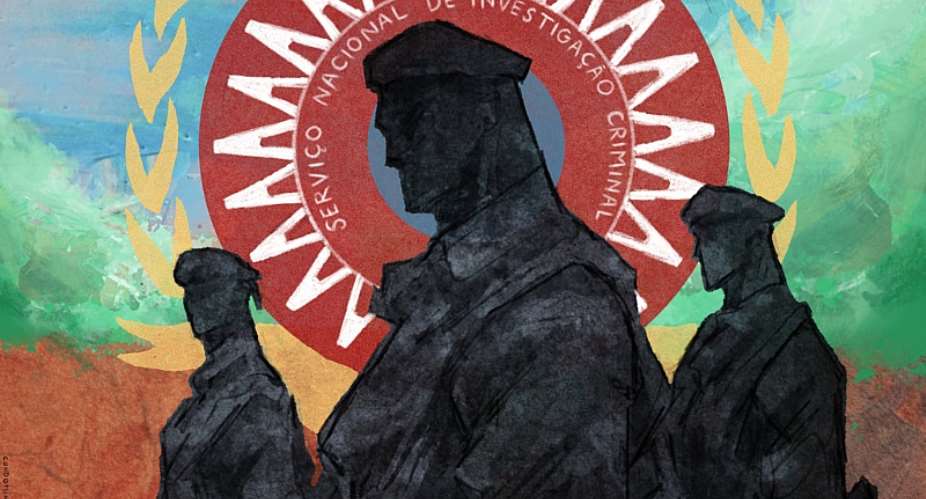
"It's always Sernic that persecutes us," said Amilcar Francisco, an activist with the opposition party Anamola, referring to Mozambique's National Criminal Investigation Service.
Francisco says he was forced into an unmarked white car by a group of men in late April and beaten with iron bars on a patch of wasteland.
"One of them I knew," he adds. "He is part of the service. He is a short man with a beard. I don't know his name. You only observe Sernic people from a distance."
Sernic is officially tasked with investigating criminal cases and operates with what its website describes as administrative, technical and tactical autonomy.
Human rights defenders see it differently and describe the agency as a form of political police working for the government.
"Sernic is one of the most powerful services in the country," explains Borges Nhamirre, a researcher at the Institute for Security Studies.
"It's more powerful than the army because it is politically very connected to Frelimo."
Frelimo, the Mozambique Liberation Front, has ruled the country since its independence from Portugal in 1975. Sernic's predecessor, the Criminal Investigation Police, operated until 2017.
Mozambique's current interior minister led that force between 2010 and 2015.
Resumption of $20bn Cabo Delgado gas project reignites both hope and resentment
'Spies everywhere'
"Sernic is the armed wing of the regime," Nhamirre says. "They track people down in the streets, in bars." Part of that work relies on telecommunications surveillance.
Mozambique has three phone operators.
MCEL is state-owned. Movitel is 70 percent owned by Viettel, a Vietnamese telecoms company controlled by Vietnam's defence ministry, while 20 percent is held by SPI, a Frelimo holding company.
Vodacom is 85 percent owned by its South African parent company, with the rest held by private interests close to the government.
"Data protection is extremely weak in Mozambique," Nhamirre says. "Nobody uses phone lines. People prefer WhatsApp, Signal or Telegram."
A dense network of human informants also helps Sernic, Francisco adds.
"I'm sure the person who betrayed me is a member of our party," he says, rubbing his injured leg. "They have spies everywhere."
Mozambique was governed under a one-party Marxist-Leninist system after independence, and researchers say the government has built an information network across the country.
Among its local links are neighbourhood chiefs, known as chefes de quarteirao.
"They are the people you must notify if you move house," Carlos Quembo, a researcher at Amnesty International, tells RFI. "You explain where, when and why."
Several sources told the journalists behind the Mozambique Exposed investigation that neighbourhood chiefs are systematically drawn from Frelimo and often lead local party meetings.
One neighbourhood chief interviewed by the consortium acknowledged sometimes sharing information with the authorities.
Journalists disappear as intimidation grips Mozambique's Cabo Delgado region
Missing businessman
The disappearance of businessman Americo Sebastiao on 29 July 2016 shows the level of impunity critics say Sernic, and its predecessor, have enjoyed.
Sebastiao, who worked in the timber sector, was abducted in Sofala province in central Mozambique.
A judicial source in Portugal told the consortium that Portuguese police supplied Sofala's regional prosecutor with several leads that could have advanced the investigation.
"Sebastiao's bank card was used for nearly 10 days after his abduction," the source said. "Police recovered bank surveillance footage that could have identified the people using the card."
Portuguese investigators also provided the phone number of a man known as Aviao, whom their inquiry had identified as one of the coordinators of the kidnapping.
Contacted by the consortium on that number, Sergio Aviao acknowledged that he is a member of Sernic. He was also serving as a police officer in Sofala province when Sebastiao was abducted.
Mozambican authorities never followed up with Portuguese police, the judicial source said. The investigation never led to a resolution and Portuguese officers were never sent to Mozambique.
"The issue is sensitive and could affect relations between two states," the source said.
Neither Sernic nor the Mozambican authorities have responded to requests for comment.
This article has been adapted from the original version in French by Gaëlle Laleix, reporting from Cabo Delgado.
It is the fourth instalment of Mozambique Exposed, an investigation coordinated by Forbidden Stories, a global non-profit network of investigative journalists. The project is based on nearly 100 interviews and five months of reporting by 30 journalists from 10 media organisations, including RFI and Les Observateurs de France 24 (France), Evident Media (United States), Expresso (Portugal), M28 Investigates (Rwanda), Paper Trail Media (Germany), SourceMaterial (United Kingdom), ZDF (Germany) and Zitamar News (Mozambique).


 Allow the law to deal with defilement perpetrators - Director tells families
 Gov’t to develop policy for Ghanaian sign language in education
 Two Ada SHS students plead guilty to assault, slapped with 12-month bond
 Enlistment: GAF begins documentation, body selection from September 28
 Violent rainstorm rips off roofs, displaces residents in Krachi Nchumuru
 Ghana risks EU gas market access over methane emissions
 Tumu landlord gives road encroachers 2-week ultimatum to relocate for road const...
 Serbian President Aleksandar Vucic resigns
 Tigray TV station hit by drone, rebels advance in north Ethiopia
 Swiss reject plan to toughen neutrality


