




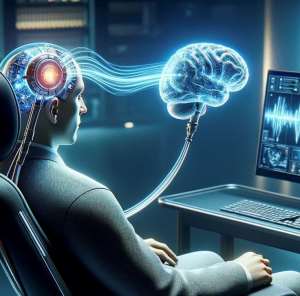
As artificial intelligence becomes a daily companion in classrooms, workplaces, and homes, neuroscientists are raising a critical question: What happens to the human brain when machines begin doing too much of our thinking for us?
Introduction: The Greatest Convenience of the Digital Age
Artificial intelligence is transforming modern life at an astonishing speed.
Students use it to write essays. Professionals use it to draft reports. Businesses use it to automate communication. Millions rely on AI-powered tools to answer questions, summarize information, generate ideas, and solve problems in seconds.
What once required hours of research can now be accomplished with a simple prompt.
The benefits are undeniable.
Yet beneath the excitement surrounding artificial intelligence, a growing number of neuroscientists, psychiatrists, educators, and technology experts are asking a more uncomfortable question:
What if the convenience of AI comes with a hidden cognitive cost?
Recent discussions involving renowned psychiatrist Dr. Daniel Amen and computational neuroscientist Dr. Terrence Sejnowski have reignited concerns about how excessive reliance on generative AI could affect memory, attention, learning, critical thinking, and even long-term brain health.
Their warnings do not suggest that AI is inherently harmful. Rather, they argue that how humanity uses AI may determine whether it becomes one of history's greatest educational tools—or one of its most significant cognitive crutches.
The MIT Experiment That Sparked Global Debate
One of the most discussed findings in recent conversations about AI and cognition comes from a small experimental study involving students writing essays with different levels of technological assistance.
Participants were divided into groups that wrote independently, used traditional internet searches, or relied heavily on generative AI systems.
Researchers monitored patterns of brain activity while participants completed their tasks.
The findings generated significant attention because participants who relied heavily on AI assistance demonstrated lower levels of cognitive engagement compared with those producing original work without AI support.
More strikingly, many participants struggled to recall portions of content they had just submitted.
The implications were difficult to ignore.
If a machine performs much of the intellectual heavy lifting, does the brain become less engaged in the learning process?
Although researchers caution that larger peer-reviewed studies are needed before drawing sweeping conclusions, the findings align with a broader phenomenon already familiar to psychologists.
The Rise of Digital Amnesia
For years, scientists have studied what is known as the "Google Effect."
When people know information can easily be found online, they become less likely to store that information in memory.
The internet effectively becomes an external memory system.
Generative AI may be accelerating this process.
Unlike search engines, which still require users to compare sources, evaluate evidence, and synthesize information, AI systems often provide ready-made answers.
The convenience is remarkable.
The cognitive effort is reduced.
The question is whether repeated reductions in mental effort eventually affect how deeply we process information.
Learning has never been a passive activity.
True understanding requires struggle.
It requires reflection.
It requires mental effort.
And mental effort is precisely what many AI systems are designed to eliminate.
Why the Brain Needs Challenge
The human brain is often compared to a muscle.
The comparison is not perfect, but it captures an important truth.
Functions that are regularly exercised tend to strengthen.
Functions that are rarely used tend to weaken.
Neuroscientists describe this process through the concept of neuroplasticity—the brain's ability to reorganize and strengthen neural connections based on experience.
Reading, problem-solving, writing, memorization, critical analysis, and creative thinking all contribute to building cognitive resilience.
When these activities are reduced, the brain receives fewer opportunities to strengthen the neural pathways associated with them.
This does not mean technology is harmful.
Calculators did not destroy mathematics.
Computers did not destroy literacy.
The concern is not about using AI.
The concern is about becoming dependent on AI for tasks the brain still needs to perform regularly.
Just as physical inactivity can weaken the body, cognitive inactivity can weaken the mind.
The Risk Facing a Generation Growing Up With AI
Perhaps no group faces greater uncertainty than today's children and teenagers.
Unlike previous generations, many young people are encountering sophisticated AI systems during critical stages of brain development.
The human brain continues developing well into early adulthood.
The prefrontal cortex—the region responsible for decision-making, planning, emotional regulation, and critical thinking—is among the last areas to mature.
This raises important questions.
What happens when children routinely outsource writing, research, and problem-solving to machines?
Will AI enhance learning?
Or will it reduce opportunities to develop essential intellectual skills?
Educational experts remain divided.
Some believe AI could become one of the greatest educational tools ever created, providing personalized tutoring at a scale previously unimaginable.
Others worry that unrestricted dependence could undermine intellectual growth by reducing opportunities for independent thought.
The reality may lie somewhere in between.
Like any powerful technology, AI's impact depends largely on how it is used.
The Loneliness Economy and AI Relationships
Beyond education, AI is beginning to influence another deeply human area: emotional connection.
Millions of people around the world now interact with conversational AI systems not simply for information, but for companionship.
Some users form strong emotional attachments to digital personalities.
Others rely on AI as a source of comfort during periods of loneliness.
This trend reflects a broader social challenge.
Many countries are experiencing what researchers describe as a loneliness epidemic.
People are more digitally connected than ever before, yet many report feeling increasingly isolated.
AI companions offer something attractive:
Constant availability.
Unlimited patience.
No judgment.
No conflict.
No rejection.
But psychologists caution that meaningful human relationships require compromise, empathy, vulnerability, and growth through shared experiences.
Artificial relationships can imitate these qualities, but they cannot fully replace them.
The concern is not that people will talk to AI.
The concern is that some may gradually stop investing in real human connections.
Convenience Is Rewiring Daily Life
The broader debate extends far beyond artificial intelligence.
Modern life increasingly prioritizes convenience.
Navigation apps guide every journey.
Algorithms recommend every movie.
Smart devices automate countless decisions.
Food arrives at the touch of a button.
Information appears instantly.
While these innovations improve efficiency, researchers argue that excessive dependence can sometimes reduce opportunities for mental engagement.
Studies have suggested that relying exclusively on GPS navigation may reduce activation of brain regions associated with spatial memory.
Similarly, constant digital stimulation can make sustained concentration more difficult.
The issue is not technology itself.
The issue is balance.
Technology should assist human capability—not replace it.
The Future Belongs to Human Intelligence
Despite concerns about AI, experts remain optimistic about humanity's future.
The most successful individuals in the coming decades may not be those who use AI the most.
They may be those who use it most wisely.
Artificial intelligence excels at processing information.
Human beings excel at judgment.
AI can generate answers.
Humans determine which answers matter.
AI can predict patterns.
Humans create meaning.
Creativity, ethics, empathy, wisdom, leadership, and imagination remain deeply human strengths.
Far from making intelligence obsolete, AI may increase the value of these uniquely human abilities.
The challenge is ensuring that convenience does not replace competence.
The Choice Before Us
Artificial intelligence is not the enemy of human intelligence.
Nor is it automatically its savior.
It is a tool.
Like every transformative technology in history, its impact will depend on how society chooses to use it.
The real question is not whether AI can think.
The real question is whether humans will continue choosing to think deeply for themselves.
In an age of instant answers, the ability to question, analyze, reason, and create may become more valuable than ever.
The future will belong not to those who surrender their minds to machines, but to those who use technology to amplify their intelligence while preserving the cognitive skills that make us uniquely human.
The challenge of the AI age is therefore not merely technological.
It is profoundly human.
And the decisions we make today may shape the intellectual health of generations to come.
About the Editor
Chief Tutu Baffour Brownsy Williams is a Ghanaian author, filmmaker, digital strategist, and cultural commentator whose work explores technology, innovation, society, leadership, and African development. Through journalism and creative media, he seeks to translate complex global issues into compelling stories that inform, inspire, and provoke thoughtful discussion.


 August 6 helicopter crash: Family remembers Flt. Lt. Manaen Twum Ampadu one year...
 August 6 helicopter crash: ‘I’ve not been able to sit at a dining table since my...
 “I am upset by some free speech arrests sanctioned by police; it hurts governmen...
 WAEC withholds results of 9 BECE private candidates over suspected collusion
 Forestry Commission laments how illegal miners return to forest reserves with ne...
 Here are areas to face outages as ECG announces 4-day power outage scheduled mai...
 Mion NPP Chairman resigns barely two weeks after winning constituency polls
 Ghana’s Deputy Ambassador to Saudi Arabia Sanni Jajah dies
 Prof. Opoku-Agyemang reveals the driving force of her partnership with Mahama
 NPP Asante Mampong Parliamentary aspirant Beatrice Owarewa Siaw dies

