




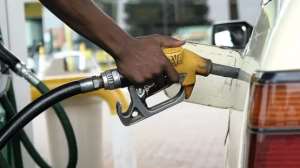
Fuel prices in Ghana could experience a downward adjustment in the coming days after global crude oil prices fell sharply following reports of a peace agreement between the United States and Iran.
Oil prices declined significantly during Asian trading on Monday after Pakistan, which has been facilitating diplomatic efforts between the two countries, announced a breakthrough agreement that includes the reopening of the Strait of Hormuz, one of the world's most critical shipping routes for crude oil and liquefied natural gas.
The development gained further attention after former U.S. President Donald Trump stated on social media that the agreement would allow oil shipments to move freely through the strategic waterway.
As a result, Brent crude, the international benchmark for oil prices, dropped by approximately 4.8 per cent to $83.18 per barrel, while U.S. West Texas Intermediate fell by 5.6 per cent to $80.13 per barrel.
The decline in global oil prices is expected to ease the cost of fuel imports for countries such as Ghana, raising hopes of lower pump prices in the next pricing window, subject to adjustments by local oil marketing companies.
Pakistan's Prime Minister, Shehbaz Sharif, announced that a formal signing ceremony for the agreement is expected to take place in Switzerland on June 19. Iran's Deputy Foreign Minister, Kazem Gharibabadi, also confirmed on state television that an agreement with the United States had been reached.
Despite the positive market reaction, energy analysts have cautioned that uncertainties surrounding the implementation of the agreement could continue to affect global oil markets in the short term.
According to energy analyst Vandana Hari of Vanda Insights, the absence of detailed information about the agreement could create uncertainty among investors and contribute to continued market volatility in the days ahead.
The Strait of Hormuz has faced significant disruptions since tensions escalated following military actions involving the United States and Israel earlier this year. The narrow waterway is responsible for transporting roughly 20 per cent of the world's crude oil and liquefied natural gas supplies.
Industry experts have also warned that normal shipping operations may not resume immediately. Energy consultant Andrew Lipow noted that obstacles such as clearing mines and addressing shipping congestion could delay a full restoration of traffic through the corridor for several weeks or months.
Nonetheless, global financial markets responded positively to the development. Major Asian stock indices recorded strong gains on Monday, with Japan's Nikkei 225 rising by 5.4 per cent and South Korea's Kospi advancing by more than 5.5 per cent as investors welcomed signs of easing geopolitical tensions.
Oil markets have witnessed considerable fluctuations in recent months. Brent crude previously surged to nearly $120 per barrel during the height of tensions before falling back to around $70 per barrel prior to the latest escalation.
For Ghana, which depends heavily on imported petroleum products, the latest decline in international oil prices is being closely monitored as a potential source of relief for consumers facing high fuel costs.
 Don't Compare GHS44.9m to GHS173m: GLOA acknowledges KGL's dominance in revenue ...
 Prosecution withdrew charges, not Judge’s order – Judicial Secretary clarifies t...
 BoG extends registration deadline for international money transfer operators
 V/R: Sogakope residents storm ECG office over alleged overbilling, poor service ...
 'I am completely distraught' — Ketu North MP mourns death of UCC student
 Government surpasses treasury bill target, raises GHS 8.29billion
 Former Foreign Affairs Minister James Victor Gbeho dies at 91
 Mideast crisis: Global oil price drop raises prospects of fuel price relief in G...
 Skin bleaching is self-induced albinism; causes cancer, kidney damage – Dr Thoma...
 IGP deploys special investigative team to probe death of UCC female student


