




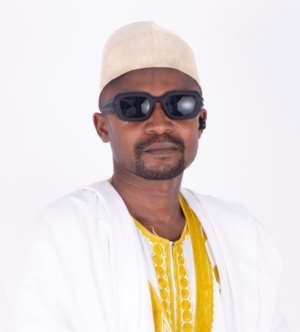
There is a moment when a security crisis crosses a threshold not simply in terms of body counts or displacement figures, but in terms of symbolic meaning. Nigeria's North West crossed that threshold this week with the death of Retired Major General Rabe Abubakar in the hands of bandits in Katsina State.
When a former Director of Defence Information a man who once served as the face of the Nigerian military can be dragged from a vehicle on a public highway, held for two weeks in a bandit encampment, and die in captivity without being rescued, the crisis has moved beyond statistics. It has become a statement about the limits of the Nigerian state itself.
The Abduction and Its Circumstances
Major General Abubakar Rabe (rtd) and his wife were abducted along the Marabar Musawa–Kafinsoli Road in Matazu Local Government Area of Katsina State, near Zakin Baure village.The couple were reportedly travelling to attend a wedding ceremony the kind of ordinary journey that millions of Nigerians make without a second thought, and that has become a gamble with one's life across the North West.
Witnesses said armed men, believed to be bandits, suddenly emerged from hiding, blocked the road and opened fire on the vehicle, forcing it to a halt. The driver, Abdullahi Sa'idu, was shot in the hand during the attack but was later spared by the gunmen.
Days later, in a development that brought national attention to the unfolding tragedy, the couple appeared in a video released by their captors, who demanded the release of three detained associates identified as Sani, Aminu and Nasiru, as well as the return of livestock allegedly seized from them.Mrs. Abubakar specifically appealed to the Katsina State Government and leaders across five local government areas to intervene and facilitate compliance with the demands.
Speaking briefly in the same footage, the retired general himself called for peace and dialogue, noting that the abductors had indicated a willingness to engage in dialogue and pursue peaceful coexistence.
It was the image of a man who had dedicated his career to defending Nigeria's security apparatus, now reduced to appealing for his own life from a bandit's den.
The appeals went unanswered in the most final way possible. The Katsina State Government confirmed his death, saying the retired military officer died from complications arising from diabetes and hypertension while being held by his abductors.
In a statement, the Commissioner for Internal Security and Home Affairs, Nasiru Mu'azu, described the incident as a tragic loss despite efforts by the state government and security agencies to secure the general's freedom. The Defence Headquarters in Abuja described Abubakar's death as a tragic loss, noting that he served the nation with distinction in various capacities, including as spokesman for military formations and the Armed Forces of Nigeria.
The DHQ added that ongoing operations had been further intensified in response to a series of unfortunate abductions across Nigeria, including that of Major General Abubakar, to bring perpetrators to justice and to dismantle all terrorist networks threatening the nation.
Noble words. But they do not bring back a retired general who died in a forest hideout nor do they address the structural conditions that made his abduction and death possible.
A Crisis Without Parallel in Scale
The death of Major General Abubakar is shocking in its symbolism, but it is not exceptional in the raw arithmetic of the North West's security collapse. The numbers behind this crisis are staggering.
A report by geopolitical research firm SBM Intelligence found that 2,938 people were kidnapped in the North West region between July 2024 and June 2025 over 60 percent of reported kidnapping incidents nationwide. Zamfara State, the epicenter of the banditry crisis, recorded the highest number at 1,203 abductions, followed by Kaduna with 629, Katsina with 566, and Sokoto with 358.
By February 2025, more than 580,000 people the majority of them women had been forced to flee their homes across the three North Western states of Katsina, Sokoto, and Zamfara due to the insecurity. Bandits have been found to control entire districts, shutting people in with improvised roadblocks, limiting access to markets, and forcing communities to provide free labour on farms they have seized.
Mass abductions sharply escalated across northern Nigeria in late 2025. In November alone, at least 402 people mostly schoolchildren were kidnapped across four states in the north-central region, surpassing the scale of the 2014 abduction of the Chibok girls by Boko Haram.
The response from Abuja has included intensified military operations, and some genuine gains have been recorded. The Nigerian Army's 8 Division reported rescuing 1,023 kidnapped victims and recovering 189 AK-47 rifles, 4,338 rounds of ammunition, and 305 motorcycles used by bandits across Sokoto, Katsina, Kebbi and Zamfara states during 2025.
These are real achievements. But they are achievements measured against a baseline of extraordinary and worsening violence and the death of a retired general in captivity, just months later, suggests the underlying tide has not turned.
No One Is Safe And That Is the Point
What makes the killing of Major General Abubakar so politically significant is the signal it sends about the reach of the bandit networks that now operate across the North West. This was not a poor farmer in a remote village with no access to security forces. This was a retired two-star general, a man with connections to the military establishment, whose family had access to communication channels and whose plight was known to the Katsina State Government and national security agencies in real time. His captors were contacted. Negotiations were attempted. And he still died.
He is not alone among prominent figures to have suffered this fate. Retired Major General Maharazu Tsiga, the former Director General of the National Youth Service Corps, was abducted in his hometown in Bakori Local Government Area of Katsina State along with nine civilians on February 2, 2026. Reports indicated that the sum of N60 million was paid in ransom with some sources suggesting the actual sum was three times higher.
The pattern is unmistakable: bandit networks are no longer confining themselves to targeting the rural poor. They are targeting the Nigerian establishment retired generals, former government officials, prominent community figures and in doing so, they are making a deliberate political statement. They are demonstrating that the state cannot protect even its own.
The deteriorating situation prompted the US State Department in April 2026 to authorize the departure of non-emergency US government employees and family members from Embassy Abuja, citing the worsening security environment. Multiple North Western states, including Katsina, Sokoto, Zamfara and Kaduna, are classified at Level 4 "Do Not Travel" under American travel advisories.
The Structural Roots of Collapse
The North West's banditry crisis did not emerge overnight. The region has been plagued by tension and insecurity for more than a decade, becoming a hotspot for banditry, rape, kidnapping, armed robbery, cattle rustling, and destruction of property. The crisis traces its origins to unresolved conflicts between settled cultivators and nomadic herders that have persisted for nearly four decades, with organized banditry escalating from around 2009 before intensifying sharply following the 2011 elections.
The security landscape has grown more complex as banditry increasingly intersects with jihadist influences seeking to control territory, impose illegal levies, and restrict movement. Persistent structural challenges remain: disjointed federal-state collaboration, underfunding, corruption, porous borders with Niger Republic that enable arms trafficking, and climate-driven farmer-herder conflicts that continue to fuel recruitment into armed groups.
The Tinubu administration and state governments across the North West have pursued a mix of kinetic operations and negotiated settlements. Neither approach has produced a durable solution. Every peace deal with one bandit faction creates space for another to fill the vacuum. Every military operation displaces armed groups from one forest to another. The cycle continues, and ordinary people and now retired generals pay the price.
A Nation That Must Confront Itself
The death of Major General Rabe Abubakar deserves more than condolence statements and vows of intensified operations. It deserves an honest national reckoning with how Nigeria arrived at a point where a former defence spokesperson can die in a bandit encampment, where over half a million people are displaced from their homes in three states alone, and where the kidnapping of schoolchildren has outpaced even the horrors of the Chibok era.
The question is not simply one of military capacity. Nigeria's armed forces have demonstrated, in the right conditions, the ability to deal serious blows to armed groups. The deeper questions are about governance, about the economic exclusion that drives young men into bandit networks, about the politics that has too often treated the North West's crisis as a provincial problem rather than a national emergency.
Major General Abubakar spent his career defending the Nigerian state. In the end, the Nigerian state could not defend him. That contradiction demands more than mourning. It demands the kind of political courage that matches the scale of what the people of Nigeria's North West are living through every single day.
Mustapha Bature Sallama.
Medical/ Science Communicator,
Private Investigator, Criminal investigation and Intelligence Analysis.
International Conflict Management and Peace Building.USIP
[email protected]
+233-555-275-880

 Gov’t Should Have Anticipated Partey Visa Trouble — Asafo-Adjei Ayeh Fires
 Swiss Vote on Population Cap Sparks Fierce Immigration Debate Ahead of Sunday Re...
 Two seriously injured as speeding cargo truck crashes into shop at Ho Civic Cent...
 Suspected armed robber dies after taxi hijacking incident in La
 High Court orders Linda Ocloo be served for alleged contempt of court
 Oti House of Chiefs to unveil seven-member committee to probe recurring of Nkwan...
 Aflao border plunged into darkness, exposing travellers to attacks
 Nkwanta South: Home burials hinders water project in Abotareye
 C/R: Heavy rains disrupt Big Push projects in Ajumako
 Grave at Adevukope cemetery reportedly desecrated, body of 67-year-old woman sto...


