




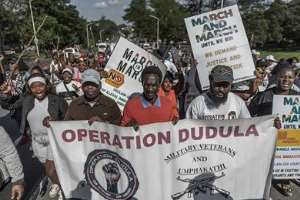
Willie Lynch letter is a purported verbatim account of a short speech (address) delivered by one called William Lynch (a British slave owner in the West Indies), who came to the United States (US) and was addressing an audience of (other American slave masters) on the bank of the James River in Virginia (US) in 1712. The speech or address was on how to control and restrain slaves. Though the so-called speech has been exposed as a hoax, it has given birth to what is known as the "Willie Lynch Concept", an underlying sociological theory of divide- and- conquer, a psychological control and subjugation tool.This "Lynch concept" is helpful in trying to comprehend xenophobic and afrophobic tendencies in South Africa (SA).
The Speech
"Gentlemen, you know what your problems are; I do not need to elaborate. I am not here to enumerate your problems, I am here to introduce you to a method of solving them. In my bag here, I have a full proof method for controlling your black slaves. I guarantee every one of you that if installed correctly It will control the slaves for at least 300 hundred years. My method is simple. Any member of your family or your overseer can use it. I have outlined a number of differences among the slaves; and I take these differences and make them bigger. I use fear, distrust and envy for control purposes.These methods have worked on my modest plantation in the West Indies and it will work throughout the South. Take this simple little list of differences and think about them. On top of my list is "Age" but it's there only because it starts with an "A." The second is "Color" or shade, there is Intelligence, size, sex, sizes of plantations, status on plantations,Attitude of owners, whether the slaves live in the valley, on a hill, East, West, North, South, have fine hair , course hair, or is tall or short. Now that you have a list of differences, I shall give you an outline of action, but before that, I shall assure you that Distrust is stronger than trust and envy stronger than adulation, respect or admiration.The Black slaves after receiving this indoctrination shall carry on and will become self refueling and self generating for hundreds of years, maybe thousands. Don't forget you must pitch the old black Male vs. the young black Male, and the Young black Male against the Old black male. You must use the dark skin slaves vs. the light skin slaves, and the light skin slaves vs. the dark skin slaves. You must use the female vs the male. And the male vs the female. You must also have your white servants and over-seers distrust all Blacks. But it is necessary that your slaves trust and depend on us. They must *llove, respect and trust only us.Gentlemen, these kits are your keys to control. Use them. Have your wives and children use them, never miss an opportunity. If used intensely for one year, the slaves themselves will remain perpetually distrustful. Thank you gentlemen."
Willie Lynch Concept
The concept is drawn from this so-called historical speech delivered by William Lynch, a slavemaster, owning slaves on a plantation in the West Indies to an audience of other slave masters, owning slave plantations in Virginia, US. This concept, which can also be described as the "Lynch syndrome", is all about magnifying and emphasizing differences(minor or major, real or artificial) among slaves so that it simultaneously becomes a perpetual reason of disunity among slaves but an ever ongoing powerful control tool for the slavemasters. It is about creating distrust, envy, fear and consciousness of even minor differences amongst slaves so that they never come together or unite. All these negative, harmful feelings for each other are self- refuelling & self-generating in the mindset of the oppressed (slaves) for generations. In essence, the Lynch concept is a psychological divide and rule strategy to prevent slaves from "awareness", from "coming together & working together", and "uniting" or forming "one front" against their common enemy...the system, as represented by the slave master.
SA As A Global Capital Slave Plantation
South Africa (SA) serves as the primary financial and industrial anchor of the continent. The Johannesburg Stock Exchange, (JSE) remains the undisputed epicenter of African corporate equity and debt markets. It functions as the primary vehicle through which global capital interacts with African assets. SA has huge multinationals in mining, retail, energy, telecommunications etc. These multinationals are the largest vectors of Foreign Direct Investment (FDI) into the rest of the African continent.
It is a fact that global capital remains deeply entrenched in SA, however, three decades later, post- Apartheid SA faces intense pressure to transform its domestic economy and address poverty, while still serving the interests of international investors.This has resulted in structural pressures and tensions between global capital and domestic policy pressures. The push for economic equity, land reform, and nationalization sometimes spooks the very international markets the economy relies on. Instead of addressing the structural issues, tensions, pressures within the SA global capital dominated economy, the Lynch concept or syndrome takes sight away from these real macroeconomic structural issues of inequality and unequal income distribution within the SA economy.
Suppose SA is one huge global capital slave plantation.The slave masters are Global Capitalist.The ruling elites are plantation overseers and slave-drivers. And everyone else, especially those in marginalized communities are the slaves.
Applying the Lynch concept framework, coming from such a background, marginalized communities are manipulated into turning on one another rather than challenging systemic inequalities, emanating from the structural tensions and issues within the global capital dominated SA economy.
A Nation Of Stark Contrast
According to the World Bank, South Africa has one of the highest levels of economic inequality globally.These inequalities are the reasons for frustration decades after majority rule in 1994. Mpho Makhubela, a member of the Consortium for Refugees and Migrants in South Africa (CoRMSA) and an activist in the Kopanang Africa Against Xenophobia (KAAX) coalition, noted with concern the opportunistic nature of these groups.
“Vigilante groups feed off the country’s frustrations and socioeconomic rights regression, unemployment, [and] lack of efforts to address the equity gaps that we have as a country", he said.
“The reality is that the country has been faced with the enormous task of addressing the legacies of apartheid”,he stated.
Legacies
Socio-economic divide
Legacy of apartheid and current forces & developments still sustain and drive an agenda of divide and rule within the SA society. Decades after attainment of majority rule, SA remains a society with a stark gap between affluent, historically privileged groups and historically impoverished and marginalized populations. And who benefits from such a stark contrast- global capital. Such a society of stark economic contrast guarantees at the same time both huge market as well as a huge pool of supply of cheap labor.
Ethnic divide
Social cohesion across South Africa's diverse ethnic and cultural landscape is often challenged by economic desperation, sometimes translating into mistrust and distrust issues leading to tension and violence with or against other groups or foreigners. Studies frequently show weakened social bonds and high mistrust within and among communities struggling with these historical legacies and structural barriers.Therefore, unfulfilled independence dreams coupled with high unemployment fuels anger against foreign nationals, who are often scapegoated for competing for limited jobs and scarce local resources.
Spatial divide
The legacy of forced geographic separation during apartheid remains structurally embedded in modern cities. The disparity between under-resourced, isolated townships and well-developed urban centers limits access to economic opportunities, hinders social integration.
Lynch Syndrome In Action
Divide and Conquer
The SA context just reveals how differences that lead to Xenophobia & Afrophobia are exploited especially when towards local or national elections.Local politicians and hyper-nationalistic groups exploit these ethnic, socio-economic disparities to turn indigenous South African citizens against African foreign nationals. Typical of divide and rule.
Perpetuation of Envy, Fear and Hate
The Willie Lynch methodology dictates that sowing distrust and fear makes marginalized groups "self-refuelling and self-generating" in their mindset leading to continuous if not generational fear, envy or hate and in this case, of foreigners. In SA, this is reflected in the scapegoating of immigrants, who are often wrongfully accused of "stealing jobs" or resources, distracting the populace from broader economic structural inequalities and mismanagement. Real fear or envy is the emotion behind hatred and violence in xenophobic and afrophobic violent outbursts. Some mislead South Africans genuinely and wrongly believe foreigners are the reasons for their economic suffering, unemployment and general economic inequality, such mindset is either envious,fearful or hateful of foreigners. It is these emotions driven or encouraged by the divisive power of the "Lynch syndrome" that is behind xenophobic and afrophobic violence.
Internalized Colonialism
He who fights a monster (apartheid) should be careful not to end up being a monster himself or herself.These are the psychological insights psychology teaches us. And in the world of psychology, a victim can easily transform into a perpertrator. South Africans themselves being victims of apartheid violence, a generation later, post- 1994, are exhibiting internalization of historical trauma and the "divide" mechanisms used during Apartheid.The "Willie Lynch syndrome" relies on the oppressed adopting the tools and philosophies of their former slavemaster (colonizers). And in SA, sadly, this might be case. The result, an orgy of xenophobic and afrophobic violence and hostilities.
Psychology of Xenophobia
Steven Pieter stated that Black South Africans would never attack a white person or ask White people for documents because, according to him they know that White people are the backbone of the SA economy. Or to use the Lynch concept, they (perpertrators of xenophobic & afrophobic violence) have been conditioned to "respect, trust & depend" on non- Africans, white people especially. A Pan- Africanist Congress (PAC) leader questioned what he described as the selective targeting of black Africans in South Africa's xenophobia and immigration discussions.
"Why does xenophobia affect only black people? What about cartels from Italy? What about Israelites who run businesses illegally? What about white people who are in the country illegally?Chinese who hire illegal immigrants and are in the country illegally themselves", he asked.
Are all undocumented foreigners treated equally in South Africa, or does public attention focus more on certain groups than others? The answer may lie in the effects of the"Lynch syndrome". Legacy of colonialism, apartheid emphasis differences,not only race, ethnic, spatial but as well as socio-economic. Reckless politicians, hyper- nationalist especially when moving towards election time tend to raise "anti- foreigners" sentiments.Unfortunately, the result is xenophobic and afrophobic violence.
Selective Xenophobia or Afrophobia
Such a phenomenon is known as "Selectively xenophobia" referring to the distinct, disproportionate targeting of Black African migrants—particularly from neighboring nations like Zimbabwe, Mozambique, and Nigeria- while white, Asian, and other non-African groups typically face little to no hostility or scrutiny. Why the localized, anti-Black bias? This hostility is deeply rooted in the psychology the "Lynch concept" as well as the legacy of colonial-era and apartheid hierarchies of social stratification and belonging. Blackness is coded as "foreign," "disposable," or "criminal," while white is coded as "investors" or legitimate "expatriates". According to PAC, "selective xenophobia" or "Afrophobia", is a betrayal of Pan-African ideals.
Afterthought
Socio-economic divide, ethnic divide, spatial divide, internalized colonialism creates mistrust and distrust, fear and envy between and among groups (socio-economic, ethnic) which creates a fertile ground for anti-immigrant sentiment. Competition for scarce jobs, housing, and social services leads to friction and violence between local South African communities and migrants from other African nations. But Afrophobic and Xenophobic violence in SA is a betrayal of the project of one united Africa.It is self- sabotage to "Africa by Africans". Instead of challenging structural inequalities within the global capital dominated SA economy, and righting wrongs of apartheid legacy, Afrophobia & Xenophobia shift focus on that and instead scapegoats so- called foreigners. Africa needs to woke up and realize their struggle are intertwined, one and the same. Africa should not give in to division.And the biggest question one needs to ask is; who benefits when Africans turn on each other?
Conclusion
William Lynch prophesied exploitation of differences as a method of control that would push an inferior mentality on the enslaved and their offsprings and eliminate the strength in numbers that unity can provide.Afrophobia and Xenophobia is giving in to William Lynch prophecy.bAfrica needs to work together towards challenging the unequal and unfair legacy of colonialism, apartheid, neo- colonialism and some globalisation forces keeping Africa down. But this is not going to happen when Africa and Africans focus on colonially manufactured differences. As long as Africa is divided and manufacturing division, hate, fear, envy, distrust and scapegoating each other, perpertrating violence on each other because of ethnic or nationality differences, then we are still slaves, behaving like slaves, under "Lynch Syndrome" in the early 18th century William Lynch sugar plantation.
F. Madondo (African Teacher) [email protected]


 Justin Kodua Launches Bid to Retain NPP General Secretary Post Ahead of Crucial ...
 Zanetor Demands Continental Action: ‘Africa Cannot Progress While Women Live in ...
 Mahama assures transfer of UGMC to University of Ghana
 Wontumi told me he would get 20year jail term before judgment was read – Lawyer ...
 Sarkodie Warns Gov’t: ‘Explain the 24-Hour Economy or Risk Voter Backlash’
 ‘Ofori-Atta Must Account’: COPEC Boss Warns NPP of 2028 Backlash Over Lingering ...
 UG Economist Slams Gov’t: “24-Hour Economy Implementation Far From Reality”
 Ghana Flags 1.8m Housing Gap at UN Forum, Says Urban Pressures Demand Urgent Act...
 NDC Draws Red Line: Gov’t Appointees Who Don’t Resign Barred from Executive Elec...
 Kpebu Warns: “Judicial Independence Won’t Come From Law Alone — It Needs Judges ...

