




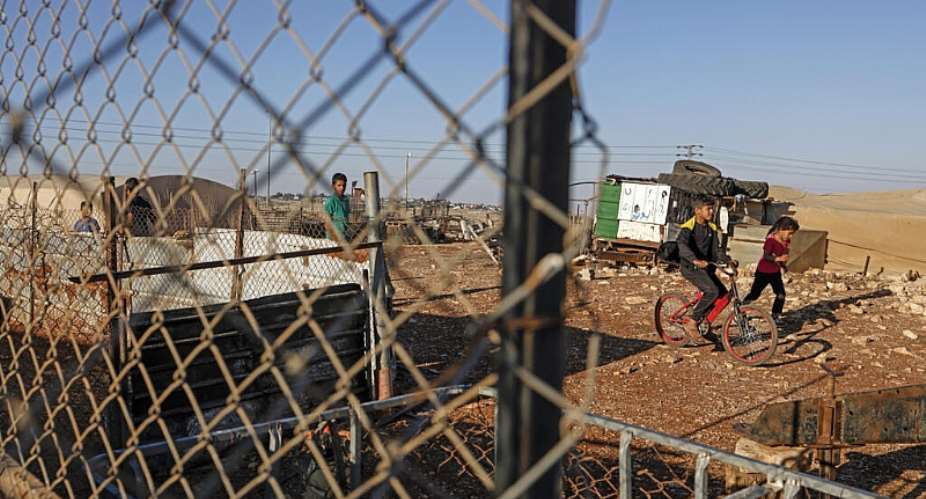
In a report released on Wednesday, the rights group said rural Palestinian communities were facing a sharp increase in settler violence, land grabs and forced displacement, particularly in Area C of the West Bank, which makes up around 60 percent of the territory and remains under Israeli control under the Oslo agreements of the 1990s.
The report, titled Erasing anything Palestinian: Israel's ethnic cleansing of West Bank Bedouin and herding communities, said Israeli authorities were “accelerating annexation through a state-driven campaign of ethnic cleansing targeting Palestinian Bedouin and herding communities”.
Amnesty said its research found that 27 Bedouin and herding communities, comprising hundreds of Palestinians, had either been forcibly displaced between 2023 and 2025 or were at risk of displacement.
UN raises concerns of 'ethnic cleansing' amid record displacement in West Bank
A drive to expand settlements
The rights group accused the government of Prime Minister Benjamin Netanyahu, one of the most right-wing in Israel's history, of advancing the religious nationalist agenda of the settler movement.
“It has accelerated settlement expansion and land grabs, increased financial and logistical support to settlements, and it has armed settlers, thereby enabling a brutal state-sanctioned campaign of settler violence,” the report said.
Amnesty argued that the violence should not be seen as the work of isolated individuals or “rogue settlers”. Instead, it pointed to “explicit calls by Israeli officials for settlement expansion” and policies it said were designed to minimise the Palestinian presence in Area C.
“The ethnic cleansing campaign is state-led, and state-sponsored, not driven by rogue settlers or so-called extremist ministers,” the report concluded.
The issue has drawn growing international attention. Far-right Finance Minister Bezalel Smotrich, who lives in a settlement and is a vocal advocate of annexing the West Bank, has been banned from France over his active promotion of annexation. In May 2026, the UN rights office also raised alarm over indications of “ethnic cleansing” in both Gaza and the West Bank.
Amnesty said Israel, as the occupying power in the West Bank, had clear legal responsibilities under international humanitarian law. It said alleged violations included “the war crime of unlawful deportation and transfer and the crime against humanity of deportation or forcible transfer of population”.
France condemns Israel's west bank settlement plan as serious breach of international law
Rising pressure on vulnerable communities
Bedouin and herding communities are among the most exposed groups in the West Bank. Often isolated, with limited infrastructure and little access to security services, they are especially vulnerable to intimidation, violence and displacement.
Since 2023, reporters have witnessed the departure of several Bedouin communities in the West Bank under pressure from settler groups, including Ras Ein al-Auja in early 2026.
“What is happening today is the complete collapse of the community as a result of the settlers' continuous and repeated attacks,” Farhan Jahaleen, a Bedouin from the village, told AFP in January.
Rights groups say settler attacks have included arson, vandalism, theft of private property, physical assaults and, in some cases, killings. The number of incidents has risen steadily since the start of the war in Gaza in 2023, reaching an average of six per day in the West Bank in 2026, according to the UN humanitarian agency OCHA.
The broader settlement drive has also accelerated. Since Netanyahu's government came to power in late 2022, Israel has greenlighted the creation of 102 settlements in the West Bank, according to the settlement watchdog Peace Now.
Excluding east Jerusalem, more than 500,000 Israelis now live in settlements in the West Bank, alongside around three million Palestinians. Israel has occupied the territory since 1967, and all Israeli settlements there are considered illegal under international law.
(With newswires)

 GWL resumes production at Barekese Water Treatment Plant after completion of rep...
 Economic performance most powerful source of Mahama’s goodwill — IEA
 Nyinahini SHS assault: Court strikes out case, urges reconciliation
 Even traffic lights in front of police headquarters are being stolen — Roads Min...
 One major cause of Ablekuma North rerun violence was lack of security coordinati...
 BTU Council divided as Chairman rejects parliamentary mediation in VC dispute
 Roads Ministry needs 1,000 additional staff — Governs Agbodza
 Stop tweeting and brief Parliament on South Africa situation — Patrick Boamah to...
 Roads Minister reassigns Bogoso–Prestea road project to new contractor over dela...
 President Mahama’s approval rate remains positive at 58.9% — IEA survey shows


