




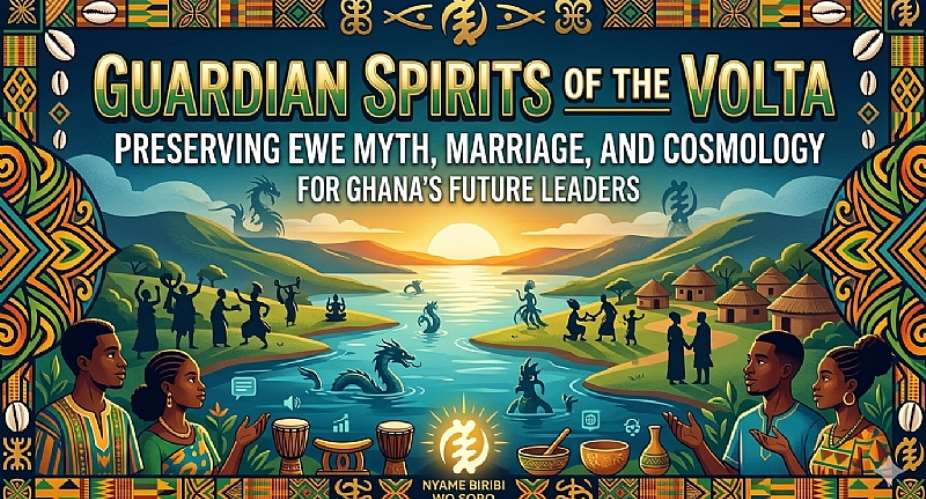
A nation that severs itself from its ancestral roots is like a tree trying to grow with its roots exposed to the scorching sun; it is bound to wither. As the ancient Ewe proverb states, "Ati ɖeka me wɔa eve o"—literally meaning "A single tree does not make a forest". This timeless truth reminds us that our individual modern successes are meaningless without the collective strength of our heritage.
In our rapid race toward modernization, globalization, and digital advancement, contemporary Ghanaian society stands at a critical cultural crossroads. The Volta Region of Ghana, a breathtaking landscape bounded by rolling hills, majestic waterfalls, and the sweeping Volta River, holds one of the most sophisticated spiritual and cultural tapestries on the African continent. For the Ewe people and other ethnic groups of the region, traditions are not mere archaic superstitions; they are complex socio-ecological frameworks designed to maintain harmony between humanity, nature, and the divine. As the future leaders of our great nation, the youth of Ghana must understand that embracing our cultural heritage is not a step backward into the past, but the ultimate anchor for navigating the future.
The Cosmos and Creation: The Supreme Weaver and the Lesser Deities
In the traditional cosmology of the Volta Region, the universe is a deeply structured, interconnected ecosystem where the physical and spiritual realms constantly overlap.
- Mawu and Sodza: The Ewe people acknowledge a supreme, gender-fluid or dual-aspected deity known as Mawu (often paired as Mawu-Lisa), representing the ultimate creator of life, the sun, and the moon. Mawu is viewed as distant but benevolent, having retired into the heavens after crafting the universe.
- The Trowo (Lesser Deities): Because Mawu is transcendent, governance of the physical world is delegated to the Trowo—vibrant nature deities who inhabit physical landmarks like mountains, rivers, and trees. These deities act as intermediaries, punishing moral corruption and rewarding community virtue.
- The Breath of Life (Gbogbo): Human beings are believed to possess Gbogbo (spirit) and Luwo (soul). Before a soul is born into the physical world, it stands before Mawu to declare its destiny (Kpakpaliga), meaning every single youth has a divinely sanctioned purpose to fulfill on Earth.
Creature Myths and Eco-Spiritual Taboos
The folklore of the Volta Region is rich with mystical creatures and environmental taboos that have historically served as highly effective conservation laws long before modern environmentalism existed.
- The Aziza (Forest Fairies): In Volta folklore, the Aziza are tiny, hairy, benign spirits living in the deep bellies of the virgin forests. They are the ultimate custodians of wilderness, credited with teaching humanity the medicinal properties of plants, the art of fire, and the secrets of hunting.
- Sacred Groves and Forest Taboos: Felling trees or hunting within designated sacred forests (like those surrounding the Amedzofe or Logba areas) was strictly forbidden. Harming the forest meant angering the resident spirits, a mythic enforcement mechanism that preserved the region's rich biodiversity and water catchments for centuries.
- The Mystical River Spirits: Certain rivers and lagoons have specific days of the week when no fishing, swimming, or washing is permitted. This traditional taboo allowed aquatic ecosystems a day of undisturbed rest to regenerate, ensuring that fish stocks were never depleted.
The Sacred Accord: Traditional Wedding Custom (Nugbortor)
Marriage in the Volta Region is far more than a legal contract between two individuals; it is a sacred, spiritual merger of two ancestral lineages that requires meticulous reverence. Elders often use the proverb, "Asi ɖeka melea todzo o" ("One hand cannot catch a buffalo") to counsel the young couple, reminding them that marriage requires teamwork, compromise, and the backing of both families.
- The Knocking (Vofofo): The marriage process begins with the presentation of drinks to the bride's family, formally opening the doors of negotiation and investigating both family backgrounds to ensure compatibility, dignity, and a lack of hereditary ailments.
- The Bridal Dowry and Symbolic Gifts: The items requested in the dowry are deeply symbolic, including traditional fabrics like Kente, which represent wealth and cultural identity, alongside specific spirits used to invoke the blessings of the ancestors.
- The Nugbortor Ritual: The crowning glory of the traditional Ewe wedding is the counseling and induction of the bride. Elder women pass down ancestral wisdom regarding patience, financial management, and emotional intelligence, binding the couple under the spiritual watch of the community.
Echoes of Liberation: The Hogbetsotso Festival
Nowhere is the historical resilience of the Ewe people more brilliantly dramatized than in the Hogbetsotso Festival, celebrated annually on the first Saturday of November in Anloga, the ritual capital of the Anlo state.
- The Exodus from Notsie: The word Hogbetsotso translates to "the festival of exodus". It commemorates the historic escape of the Ewe ancestors from Notsie (in modern-day Togo) during the 17th century, where they suffered under the cruel, tyrannical rule of King Togbe Agorkoli.
- The Strategic Escape: To break free from the fortified earthen walls built by Agorkoli, the Ewe women systematically poured wastewater on a specific section of the wall to soften it. Once the wall crumbled, the ancestors executed a brilliant military deception: they walked backwards out of the city. This ensured that their footprints pointed inward, completely confusing King Agorkoli’s pursuing warriors.
- The Agbadza Dance: This legendary backward march is the origin of the world-famous Agbadza dance. The vigorous expansion and contraction of the chest, accompanied by backward leaning movements, is a direct somatic reenactment of the flight to freedom.
- The Purification and Peace-Making: Before the grand durbar of chiefs, the festival enforces a strict period of absolute peace, reconciliation, and community cleaning. All outstanding interpersonal disputes must be resolved amicably. This stems from the proverb, "Amedzro nkugaa, menyá xɔdome mɔ o" ("A stranger with big eyes cannot know the secret paths of the community"). It serves as a reminder that community problems require internal harmony, and outsiders cannot fix a fractured home.
The Sacred Harvest: Asogli Te Za (The Yam Festival)
Every September, the capital city of Ho and the surrounding Asogli state burst into life for Asogli Te Za, widely known as the Asogli Yam Festival. Far more than a culinary celebration, this festival carries intense historical and agricultural significance.
- The Hunter's Discovery: Ewe oral tradition states that during an ancient period of severe famine, a legendary hunter on an expedition discovered a strange wild tuber in the forest. Rather than consuming it immediately, he buried it back in the soil to preserve it. Upon returning months later, he discovered the single tuber had germinated, multiplied, and grown massive—saving the community from starvation.
- The Dzawuwu Ritual: To honor this miracle, no citizen of the Asogli State is traditionally permitted to consume the new season's yam crop until the spirits have been fed. During the sacred Dzawuwu ritual, boiled and red-palm-oil-mashed yams called bakabake are ceremonially sprinkled at various royal stools and ancestral shrines. This public thanksgiving safeguards the health, fertility, and prosperity of the coming year.
- A Catalyst for Unity: Revived and modernized under the leadership of Agbogbomefia Togbe Afede XIV, the festival has evolved into an international platform for socio-economic development and youth mobilization. It visually emphasizes the truth that culture and economic progress are two sides of the same coin.
Living Monuments: Sacred Geography and Eco-Landmarks
The physical landscape of the Volta Region stands as a monument to indigenous preservation, housing some of the most critical ecological landmarks in West Africa.
- Wli Agumatsa Waterfalls: Located near Hohoe, Wli Waterfalls is the highest waterfall in West Africa, measuring approximately 80 meters. Guarded by thousands of wild bats and a dense canopy, local folklore teaches that the waters possess a protective spirit that shields the surrounding villages from epidemics and curses.
- Tafi Atome Monkey Sanctuary: In the village of Tafi Atome, True Mona monkeys coexist peacefully alongside human inhabitants. For over two centuries, the surrounding forest was designated as a sacred grove. The monkeys were revered as the personal pets and messengers of the land's guardian deities. Anyone who harmed a monkey faced severe spiritual restitution—a mythic decree that successfully prevented deforestation and poaching long before modern game reserves existed.
- Mount Afadja and Mount Gemi: As some of Ghana’s highest peaks, these mountains (such as Afadjato near Liati Wote or Mt. Gemi in the alpine settlement of Amedzofe) are treated with reverence. Historically acting as natural lookout points and spiritual altars during times of tribal warfare, they serve as permanent monuments to Ewe survival and endurance.
Recommendations for the Youth: Embracing Heritage in a Modern World
To the vibrant youth of Ghana—our prospective tech innovators, politicians, scientists, and educators—preserving our heritage does not mean abandoning your modern ambitions. Remember: "Ɖe wotana hafi dzea azɔli" ("A person must first crawl before walking"). Do not rush blindly into foreign cultures without first mastering your own roots.
- De-colonize Your Mindset: Stop viewing traditional customs through a lens of Western prejudice that labels indigenous knowledge as "primitive" or "evil." Recognize that our taboos were early forms of science, law, and environmental conservation.
- Document and Digitalize Oral Histories: Use the power of modern technology, social media, podcasts, and filmmaking to record the stories, proverbs, and historical narratives of the elders in your villages before this priceless oral archive fades away.
- Engage in Cultural Tourism: Make it a priority to travel within Ghana. Visit the Wli Waterfalls, climb Mount Afadjato, and participate in the vibrant Hogbetsotso Festival of the Anlo Ewes to witness the living power of unity and historical resilience.
- Practice Eco-Spiritual Conservation: Revive the spirit of the ancient taboos by becoming champions of the environment. Protect our polluted rivers, stop illegal logging, and plant trees, honoring the ancient wisdom that nature is a sacred trust.
- Blend Tradition with Modern Innovation: Let the patterns of the Kente cloth inspire your graphic design; let the rhythms of the Agbadza dance inspire your music; and let the communal values of our ancestors shape your leadership style to be selfless and people-centered.
Our identity is our ultimate shield in a globalized world. When the youth of Ghana stand tall, rooted deeply in the rich cultural soil of regions like the Volta, they become unshakeable. Let us protect our traditions, honor our ancestors, and build a modern Ghana that remains beautifully, unapologetically African.
✍️By A Concerned Retired Senior Citizen
For and on behalf of all Senior Citizens of the Republic of Ghana 🇬🇭
Teshie-Nungua
[email protected]


 GCB denies robbery attempt at Labone Branch after Police shoot two suspects
 Death toll rises to 12 in Pokuase-Achimota multi-vehicle accident
 'He's not one of us' — Hajj Office denies arrested ‘Papa Angola’ seen assaulting...
 Two gunned down as Police foil robbery attempt at GCB Bank branch in Labone
 President Mahama sets 2028 deadline for completion of Upper East Regional Airpor...
 Upper East Airport to open region to investors, boost economic activity — Mahama
 NDC will not take lessons from NPP on economy — Joyce Bawah
 Man seen assaulting suspect at police station not a member of Hajj Board — Pilgr...
 Police gun down two suspects, arrest one over Labone GCB robbery attempt
 Ofankor crash: Stop publishing graphic images, videos — Oppong Nkrumah urges med...

