




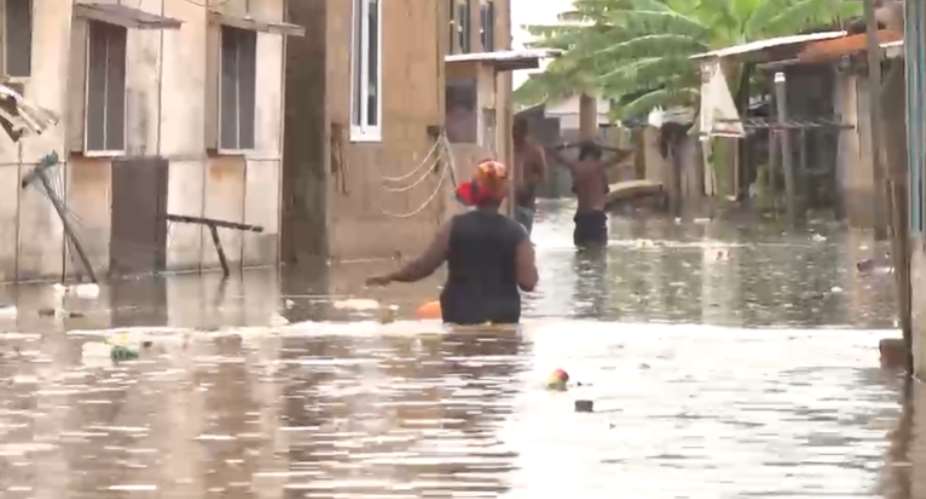
On 6 June 2026, the Director of NADMO’s Inspectorate Unit, Richard Amo Yartey, offered one of the most honest official summaries of Accra’s flooding we have yet heard: “drainage channels are silted, mountain runoffs are rising as vegetation is cleared, and wetlands that should absorb them have all been sold.” In a single sentence he named the three failures at the heart of the crisis — a clogged network, an unbuffered catchment, and the loss of our natural sponges. The diagnosis is correct. The harder task is the cure.
In an earlier article I argued that Accra’s flooding is not a problem of indiscipline alone, but a systems failure. If that diagnosis is correct — and NADMO has now confirmed it from the front line — then the cure must also be a system. Not a single fix, not a seasonal task force, and certainly not another round of demolitions photographed for the evening news. The question Ghanaians should be asking is no longer whether to act, but how to re-engineer the whole drainage system of the city so that Accra finally drains itself.
Accra was never short of a drainage system. Nature gave it one. The Odaw River, the Densu, the Sakumo, Kpeshie and the Korle and Sakumo lagoons once carried rainwater from the Akuapem hills to the sea, while wetlands acted as sponges — absorbing storm surges and releasing them slowly. We have spent four decades dismantling that system: silting the channels, clearing the hillside vegetation that once held the runoff, selling the wetlands, and building in the path of the water. Re-engineering Accra’s drainage means rebuilding that entire system — hills, channels, wetlands and city — and reinforcing it with modern infrastructure, governed as a single whole.
Here is what a holistic re-engineering of the whole system should contain.
1. Treat the catchment, not the gutter
Water does not respect the boundaries of a metropolitan or municipal assembly. The Odaw alone drains across several jurisdictions before it reaches the Korle Lagoon. Yet drainage, waste, planning and disaster response are split among agencies that rarely coordinate. The Ghana Institution of Engineers has rightly called for a single greater-metropolitan management structure to manage the catchment as one hydrological unit. Until one authority is accountable for the whole basin — from the hills to the sea — every downstream fix will be undone by an upstream failure.
2. Slow the water where it falls
The instinct to rush every drop into the nearest drain is itself part of the problem. Modern resilient cities do the opposite: they delay and absorb. This is the logic behind nature-based, decentralised stormwater management — permeable pavements, rain gardens, bioswales, green roofs, and mandatory rainwater harvesting for larger buildings. Stored at the point of rainfall, that water never reaches the overwhelmed channel downstream. Making harvesting compulsory for major developments would ease both flooding and our chronic water shortages in a single stroke.
3. Hold the water on the hills
NADMO’s warning about rising mountain runoff points to a failure that begins long before the water reaches the city. As vegetation on the Akuapem range and the upper catchment is cleared for farming, quarrying and construction, there is nothing left to intercept the rain. Water that forests and grassland once held back now sheets down the slopes and arrives in the city in a fraction of the time, hitting the channels in a single destructive surge. Re-engineering the system must therefore reach upstream: reforestation and contour planting on the hills, check dams and sediment traps on the upper tributaries, and firm protection of remaining slope vegetation. A drain in Accra cannot cope with a hillside that no longer holds its own rain.
4. Restore the natural buffers
No amount of concrete will substitute for a living wetland. The Sakumo, Kpeshie and Chemu wetlands, and the Ramsar sites we are steadily building over, are flood-control infrastructure as surely as any culvert. They must be legally protected, cleared of encroachment, and actively restored — with re-vegetation along the Odaw and other flood corridors to slow runoff and rebuild absorption. A wetland filled is a flood guaranteed.
5. Dredge, widen and maintain — permanently
The Odaw and Korle systems are heavily silted and choked with plastic, and flooding now occurs even in modest rainfall — a clear signal of channels operating beyond capacity. Dredging works such as those already under way matter, but one-off, pre-election dredging is not a strategy. Channels in dense areas need to be widened and deepened, and then maintained on a permanent, funded, year-round schedule. Engineering is only as good as its maintenance budget.
6. Build retention where the city has none
When a storm exceeds the channel’s capacity, the water needs somewhere to wait. Flood retention basins — already envisaged under the Greater Accra Resilient and Integrated Development (GARID) programme — temporarily hold stormwater and release it once the channel falls. Combined with sand traps on the Odaw’s tributaries to catch silt before it reaches the main channel, these are the unglamorous works that prevent the next disaster. They deserve funding and completion, not announcement and abandonment.
7. Design for tomorrow’s rain, not yesterday’s
Our drains were sized for a climate that no longer exists. Rainfall is heavier and more concentrated, and the infrastructure must be designed for the storms we will face, not the ones we remember. Cities such as those in Japan deliberately build for rainfall events far above the historical average. New developments in Accra should be required to incorporate drainage designed for future intensity — building in a margin of safety rather than designing for failure.
Engineering needs governance to hold
None of this survives without enforcement. A re-engineered drain is worthless if a structure is permitted across it next year, or if residents fill it with refuse the contractor must clear by hand. Engineering, planning, waste management and enforcement are not competing explanations for the flood — they are interlocking components of one machine. Build the infrastructure, and then protect it with the law.
“Accra does not need another emergency. It needs a system: a single catchment authority, restored wetlands, decentralised storage, properly dredged channels, retention where the city has none, and drains designed for the rain that is coming — all held together by enforcement. That is engineering redemption, and it is entirely within our reach.”
The cost of this is real, but it is dwarfed by the cost of doing nothing: the lives lost, the markets destroyed, the billions in property and productivity washed away every single rainy season. We have the engineers. We have the World Bank-backed framework already on paper. What we have lacked is the will to treat flooding as a permanent engineering challenge to be solved, rather than a recurring act of nature to be mourned.
Accra can be a city that drains itself. But only if we stop reaching for the broom after the flood and start building the system before it. The rain is coming — as it always does. The only question is whether we will have engineered a city ready to receive it.
Philip Kyeremanteng holds an MSc in Environmental Science and is a Chartered Environmental Scientist (CSci) with experience across the energy, nuclear and environmental consultancy sectors. This is the second in a series on Accra’s flooding crisis.

 NDC Enforces Strict Verification and Voting Rules as Constituency Elections Begi...
 Protests against cost of living expected in Italy under heavy security
 Lula, Bolsonaro clash on living costs, corruption in final Brazil election debat...
 Ebola vaccine trial begins in DR Congo
 Trump says US may launch ‘another little Epic Fury’ attack on Iran
 ‘Too arrogant, too sure of itself’ France confronts its legacy in Africa
 Nigeria's unwritten power-sharing rule looms over presidential race
 Several killed, dozens wounded in Jordan church shooting
 ‘I killed lots of terrorists, but it didn’t make me feel better’: The trauma hau...
 Casualties feared as multi-storey building collapses in Nairobi


