




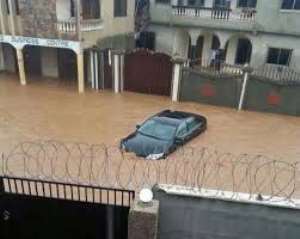
The Frimpong-Manso Institute has expressed its heartfelt commiseration with residents and families affected by the recent devastating floods in Accra, describing the incident as a painful reminder of Ghana’s growing environmental and sanitation challenges.
In a statement issued on its behalf, the Institute extended sympathy to victims who have suffered property loss, displacement, and disruption of livelihoods as a result of the flooding.
“We are deeply saddened by the scale of destruction caused by the recent floods in Accra. Our thoughts and prayers are with all affected families. Ghana continues to lose valuable lives and resources to what has become a recurring environmental crisis,” the statement noted.
The Institute stressed that while natural rainfall may be inevitable, the severity of flooding in urban areas is largely worsened by human actions, particularly indiscriminate waste disposal, encroachment on waterways, and poor urban planning enforcement.
It called on duty bearers at both national and local levels to move beyond periodic responses to flooding and adopt decisive, sustained interventions aimed at preventing what it described as “annual ritual disasters.”
“We can no longer treat flooding as an occasional emergency. It has become an annual ritual of destruction. Duty bearers must act decisively and consistently to enforce planning regulations, clear waterways, and strengthen sanitation systems,” it emphasized.
The Institute further urged a national shift in attitude and behaviour, warning that without a change in public mindset regarding waste disposal and environmental responsibility, the problem would persist.
“Behavioral and attitudinal change is critical. The habit of dumping refuse haphazardly must be nipped in the bud. Citizens must recognize that sanitation is not only a government responsibility but a collective duty,” the statement added.
It also called on religious bodies, particularly the Christian community, to take a leading role in environmental advocacy, education, and enforcement support, noting that faith institutions wield significant influence in shaping public behaviour.
“The Church and other faith-based organizations must rise to the occasion. They have a moral responsibility to lead the campaign against building in waterways, illegal refuse dumping, and environmental neglect. Stewardship of the environment is a divine mandate,” it said.
The Frimpong-Manso Institute concluded by urging a coordinated national response involving government agencies, traditional authorities, civil society, and citizens to protect lives and reduce Ghana’s growing vulnerability to flooding.
 Fire Service rescues trapped victim after STC Bus, Taxi collision at Konongo
 Private SHSs in Free SHS pilot programme demand payment of outstanding governmen...
 Police foil planned robbery, recover weapons at Kukuom
 A 53-year-old mechanic remanded for allegedly stabbing another over car battery ...
 Asiedu Nketiah urges IGP to speed up justice for victims of election 2024 killin...
 Each family receives GH¢15,000 support after Accra Police Barracks Fire
 Mussa Dankwah urges ministers to focus on performance amid MoFA–finance minister...
 Selling single cigarette sticks illegal – FDA
 Hungry, unhealthy workforce cannot protect nation’s health – GRNMA
 Health Minister orders suspension of KATH CEO over Emergency admissions directiv...


