




A growing number of girls in Ghana are losing valuable classroom hours every year due to menstrual health challenges, with stakeholders warning that severe menstrual pain is too often dismissed as “normal” when it may signal serious reproductive health conditions.
According to the Ghana Menstrual Health Snapshot by Days for Girls, about 95 per cent of Ghanaian girls miss some school days annually due to menstrual health issues, while nine out of every 10 girls are absent from school during menstruation.
The alarming figures have renewed calls for stronger attention to menstrual health beyond hygiene campaigns and sanitary pad distribution, as the founder of All Love Foundation and first-year Health Communication Doctoral student Esther Apreku, urged society to stop normalising severe menstrual pain among girls and women.
In an article marking this year’s Menstrual Hygiene Day under the theme “Together for a Period Friendly World,” Ms Apreku explained that many girls who suffer debilitating menstrual pain are often told that periods are naturally painful and that they would eventually “be fine.”
She noted that such responses have caused generations of girls to ignore symptoms that may be linked to serious reproductive conditions, including endometriosis and polycystic ovarian syndrome (PCOS), now referred to as polyendocrine metabolic ovarian syndrome (PMOS).
“A girl misses school again. Not because she is sick. Not because she chose to stay home. She is lying in bed with severe menstrual pain,” she stated.
According to her, teachers often mark such girls absent while classmates continue with lessons, with many families reinforcing the belief that painful menstruation is simply part of being female.
Ms Apreku stressed that for some girls, severe menstrual pain may be the first warning sign of chronic reproductive health conditions that could later affect fertility, pregnancies and maternal health.
She cited the World Health Organisation estimate that endometriosis, a condition where tissue similar to the lining of the uterus grows outside the uterus, (usually on pelvic organs like the ovaries, fallopian tubes, and bladder) affects about 1 in every 10 women and girls of reproductive age globally.
She also referenced the Eunice Kennedy Shriver National Institute of Child Health and Human Development, which identifies PCOS as one of the leading causes of ovulation-related infertility.
The conditions, she explained, are associated with chronic pelvic pain, heavy bleeding, fatigue, anxiety, depression and pregnancy complications, yet many women spend years without receiving a proper diagnosis because their symptoms are repeatedly dismissed.
“The consequences reach far beyond monthly discomfort,” she said.
Ms Apreku observed that many girls withdraw from sports, church activities and social events because of menstrual pain, while quietly restructuring their lives around symptoms they have been taught to endure in silence.
She acknowledged the efforts of organisations such as UNICEF Ghana, which continues to support menstrual health education, hygiene promotion and school-based menstrual health activities across the country.
However, she noted that many girls still miss school during menstruation due to persistent barriers involving awareness, stigma and limited access to support.
She argued that the issue is not only medical but also cultural and communicative, explaining that many girls are raised in environments where periods are hidden and discussed only when necessary.
“For generations, girls have been taught that periods should be hidden, managed quietly, and discussed only when necessary,” she explained.
According to her, phrases such as “Once you start having babies, the pain will stop” and “When I was your age, my period pain was worse than this” have contributed to a culture where girls are expected to endure severe pain rather than seek medical attention.
She warned that normalising severe pain delays help-seeking and can result in girls receiving medical intervention only after conditions have worsened.
Ms Apreku further noted that menstrual stigma and limited education continue to affect how girls experience menstruation, with many staying away from school to avoid embarrassment or ridicule from peers.
She stressed that menstrual health should not be separated from conversations around fertility, pregnancy and maternal health.
“Some women struggle with infertility years later without ever connecting it to the painful periods they were told to ignore as teenagers,” she said.
She explained that menstrual experiences often form the first chapter of a girl’s reproductive health story and therefore deserve early attention and intervention.
Ms Apreku commended Ghana’s broader commitment to reproductive and maternal health through the Integrated Reproductive, Maternal, Newborn, Child, Adolescent Health and Nutrition Strategic Plan, but called for menstrual health to be fully integrated into that agenda.
She also highlighted recent national efforts to improve menstrual health support.
Vice President Jane Naana Opoku-Agyemang, she said, has publicly called for a Ghana where no girl is held back by her period, while advocating stronger action against menstrual stigma and improved access to menstrual health education and support.
She also mentioned the Government of Ghana’s Free Sanitary Pad Initiative launched in 2025, which aims to provide monthly sanitary pads to approximately two million girls in public basic and secondary schools nationwide.
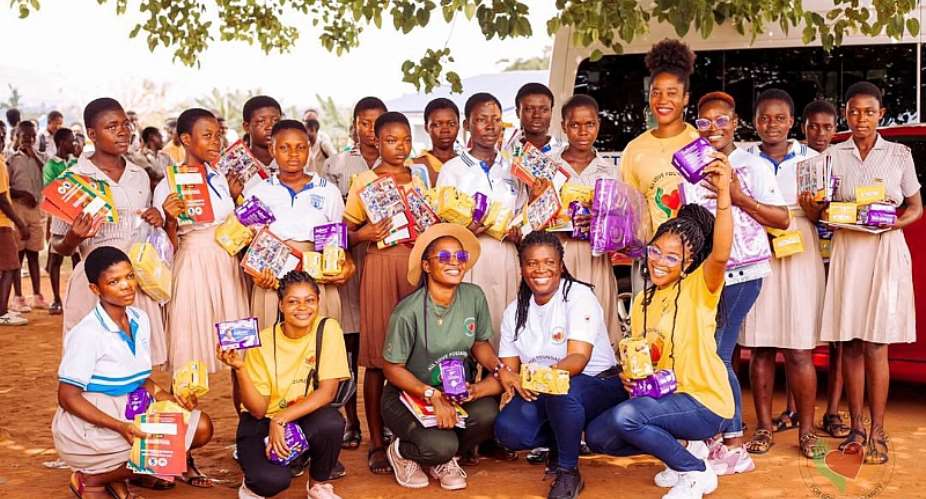
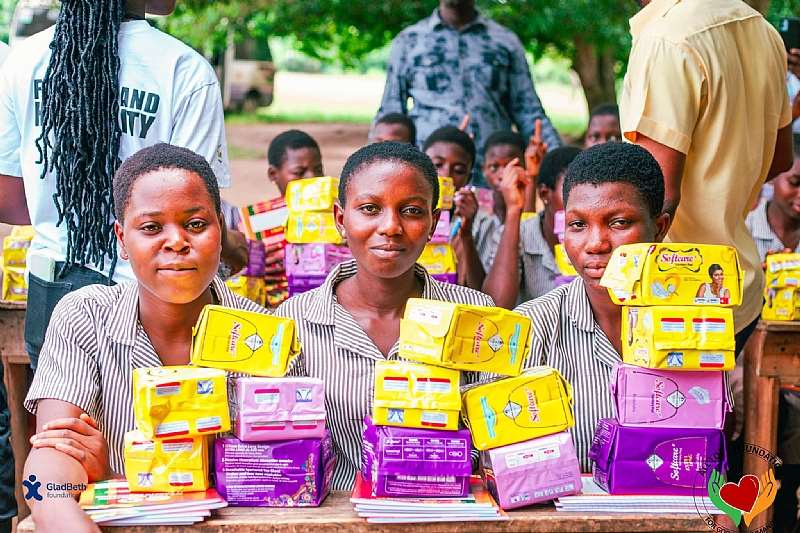
Community organisations, including All Love Foundation, continue to support menstrual health education and product distribution in schools and communities.
Despite these interventions, Ms Apreku insisted that menstrual health efforts must move beyond awareness campaigns and product distribution alone.
She said girls also need better education on menstrual pain, early symptom recognition and easier access to healthcare services.
“Menstrual health is connected to education, reproductive health, fertility, maternal wellbeing, and the everyday dignity of girls and women across this country,” she stressed.
She noted that public health discussions in Ghana frequently focus on pregnancy, childbirth and maternal mortality, while overlooking the early reproductive health experiences of adolescent girls.
According to her, maternal health may begin long before pregnancy, starting with the experiences of girls whose severe menstrual pain is ignored.
Ms Apreku called on schools and teachers to recognise repeated menstrual absences as possible warning signs requiring support instead of treating them as ordinary absenteeism.
She also urged parents to take girls seriously whenever pain interferes with school attendance or daily activities, rather than comparing girls’ experiences with their own.
Healthcare providers, she added, should avoid automatically dismissing menstrual pain among adolescent girls and instead listen carefully to symptoms that may require further investigation.
She further encouraged public health campaigns to incorporate menstrual pain education into broader reproductive and maternal health discussions.
Ms Apreku concluded by calling for schools, homes, clinics and communities where girls and women can openly discuss menstrual symptoms without shame.
“Too many women spend years believing that debilitating pain is simply the price of being female. It is not,” she said.
She added that how society responds to menstrual pain determines whether girls receive help early enough to prevent long-term complications.
“Maternal health does not begin with pregnancy. It begins with how we listen to girls. It begins with believing them when they say they are in pain. And it begins by refusing to call suffering normal,” she stated.
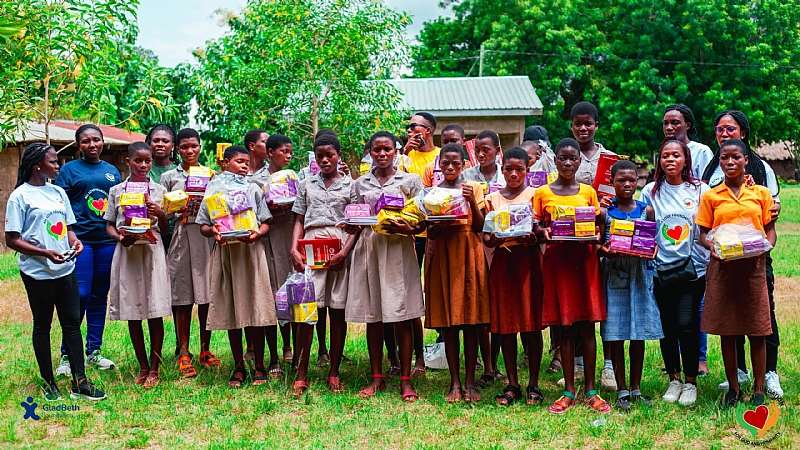
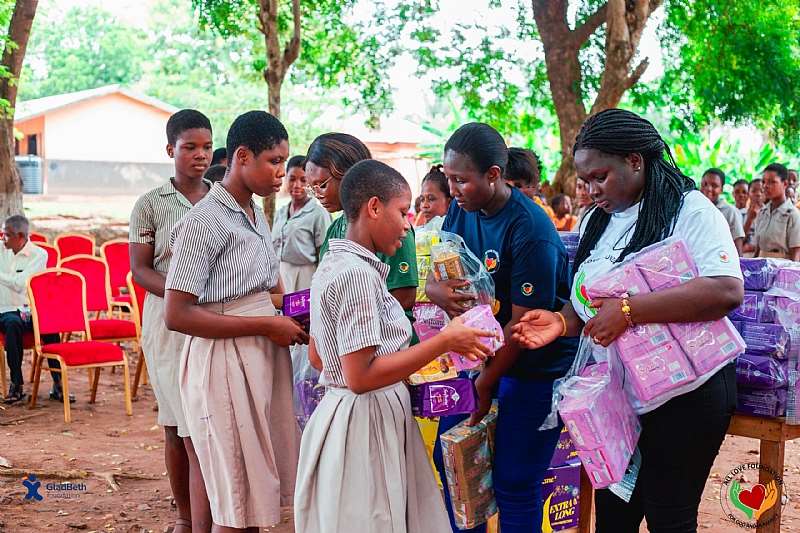 A pad donation exercise by All Love Foundation.
 Esther Apreku, founder of All Love Foundation and a first-year doctoral student in the Department of Communication at the University of Missouri, Columbia.


 President Mahama urges African countries to fund own peace operations, warns aga...
 Govt to borrow GHS15.38 billion from domestic market, plans DDEP bond buyback
 Finance Ministry says all 2026 ABFA allocations reserved for Accra-Kumasi expres...
 'Surprised and disappointed' — GTA CEO Efua Houadjeto responds to Abeiku Santana...
 Police arrest NDC delegates for allegedly photographing ballots at Bimbilla cons...
 Gambia’s Chief Justice pays courtesy call on Asantehene at Manhyia Palace
 NDC Constituency polls: Delegates invoke 'Antoa' deity over alleged album manipu...
 NDC Oforikrom constituency election stalls over ballot paper delays
 Former NDA CEO Sumaila Abdul-Rahman, three others fined GH¢84,000 each over proc...
 Wa: Abandoned newborn baby boy rescued at Sombo


