




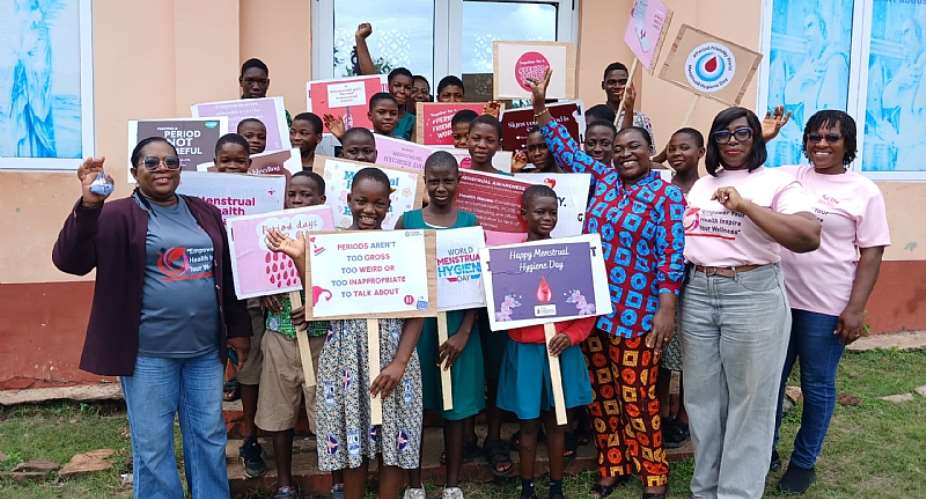
The Founder of Wellness Initiative Network (WIN), Rejoice Dzifa Tamkloe, has appealed to parents and society to support girls during their menstrual periods to help prevent future reproductive health challenges and improve their emotional well-being.
She made the appeal during the celebration of World Menstrual Hygiene Day on Thursday 28th May 2026 held at Matse under the theme, “Together for a Period-Friendly World.”
The programme which was held in collaboration with the Department of Gender - Volta Region. and the Adolescent and Reproductive Health Unit of the Ho Teaching Hospital - Trafalgar brought together pupils from Matse EP Basic School, Matse RC Basic School, and Matse Dzorkpe Ando School as part of efforts to create awareness on menstrual hygiene and reproductive health among adolescent girls and boys.
According to Madam Tamkloe, menstrual health remains an important issue that must be taken seriously by parents, teachers, and communities because poor menstrual hygiene and lack of support could affect the reproductive health of girls in future.
“Menstrual health is very important because if care is not taken, in the future it can affect the reproductive system of girls. So I want to appeal to parents in particular to educate girls and support them during this period,” she said.
She explained that some girls experience severe pain and emotional stress during menstruation and therefore need understanding and support from family members and society instead of discrimination or neglect.
“Depending on the individual, people fall sick during that period. So we need to support them mentally or emotionally and also educate them on how to take good care of themselves during this period,” she stressed.
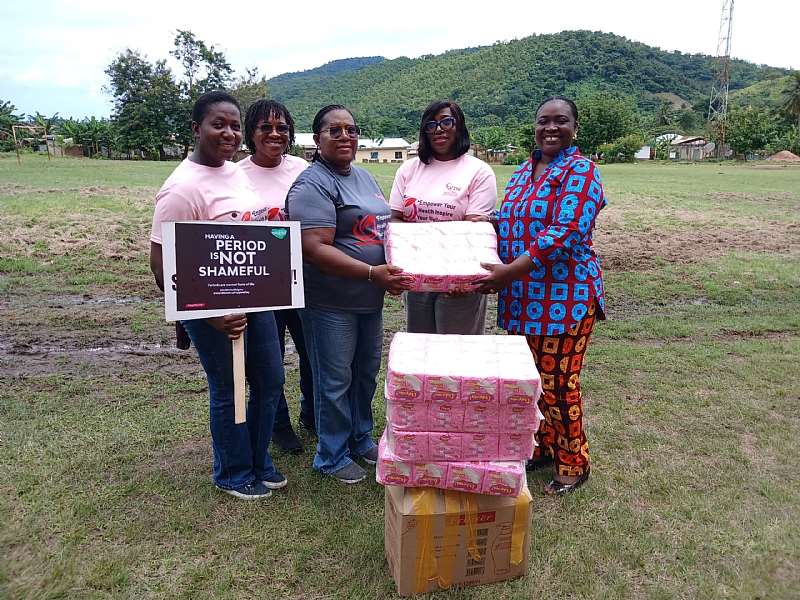
Madam Tamkloe further appealed to members of the public to contribute to supporting girls, especially those in rural communities who struggle to access sanitary products and menstrual hygiene materials.
“On a day like this, it is not bad for one or two people to come together, contribute something little, and give to our girls, especially in the villages. It is very important,” she added.
She noted that WIN has over the years focused on health promotion and awareness creation, particularly on menstrual hygiene among girls in deprived communities.
According to her, the organisation celebrated last year’s Menstrual Hygiene Day at Taviepe Senior High School but decided to move to Matse this year to extend awareness to younger girls in basic schools.
Madam Tamkloe said one of the main objectives of the programme was to break the stigma and myths surrounding menstruation in many communities.
“Most people think that menstruation is evil. So in some communities, when girls are in their menses, they are shamed and isolated but we want to break that stigma,” she explained.
She added that some girls in rural communities continue to miss school or struggle to manage their periods because they do not have access to sanitary pads and other menstrual materials.
“We also donate with the aim of every girl having access to menstrual materials,” she stated.
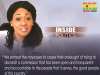
The Public Relations Officer for WIN, Beatrice Amesawo, also called on parents to create a friendly environment that would encourage girls to openly discuss menstrual issues without fear or shame.
“I want to especially appeal to parents to be welcoming of their girls. They should create an environment that is friendly so that their girls could talk to them about their problems in relation to menstruation,” she said.
Madam Amesawo also urged parents to support the government’s initiative of providing sanitary pads to school girls and ensure that the girls use them properly.
She dismissed rumours suggesting that the government’s sanitary pad distribution policy was intended to affect the reproductive abilities of girls in future.
“There are some parents who say they feel it is a means government wants to use to stop their kids from having children in the future but I want to dispel this rumour because I don't think any responsible government will go on that tangent,” she said.
She encouraged parents to engage openly with their children on menstrual health and provide them with the needed guidance and emotional support.
Facilitating one of the sessions, the Director of the Department of Gender Madam Thywill Eyra Kpe described menstruation as a natural and healthy part of life and urged society to stop treating it as something shameful.
She noted that many adolescent girls continue to face stigma, discrimination, and limited access to menstrual hygiene products and reproductive health information.
“A period should never stop a girl from going to school, participating in community activities, pursuing her dreams, or feeling confident about herself,” she stated.
Madam Kpe encouraged girls to understand their menstrual and reproductive health in order to make informed decisions and grow with confidence.
“Menstruation is not a weakness; it is a sign of strength, growth, and womanhood,” she stressed.
She advised girls to practise proper menstrual hygiene by using clean menstrual materials, changing them regularly, washing their hands before and after changing pads, bathing regularly, and properly disposing of used materials.
According to her, good menstrual hygiene also requires access to clean water, sanitation facilities, privacy, and accurate reproductive health education.
Madam Kpe further appealed to boys to support girls and help end the stigma surrounding menstruation.
“Respect girls and understand that menstruation is a normal biological process, not something to laugh at or mock,” she advised.
She said boys have a responsibility to stand against teasing, discrimination, and harmful stereotypes while promoting kindness and inclusion in schools and communities.
Madam Kpe noted that a period-friendly world is one where no girl misses school because of menstruation and where parents, teachers, and communities openly discuss reproductive health issues.
She urged both boys and girls to work together to promote dignity, equality, and respect for adolescent girls.
“Together, boys and girls can help create communities where menstruation is understood, accepted, and supported,” she concluded.
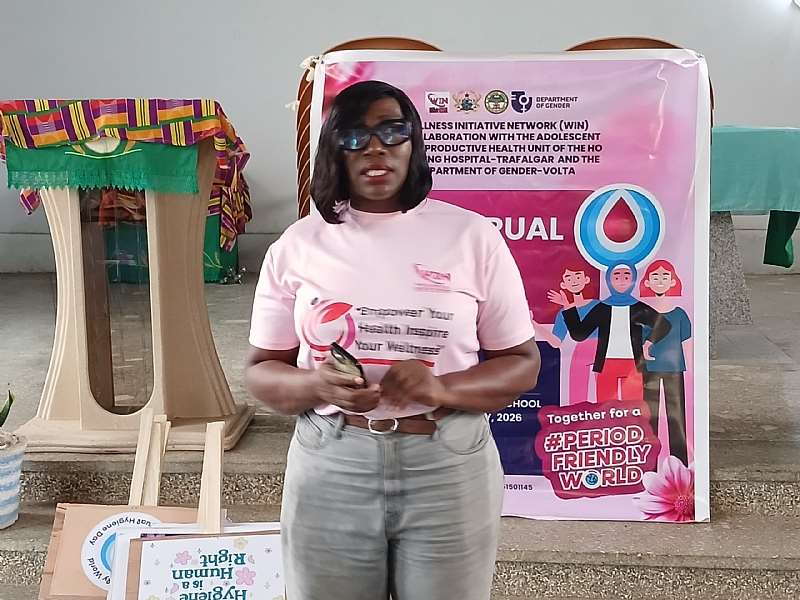 Madam Beatrice Amesawo, PRO for WIN.
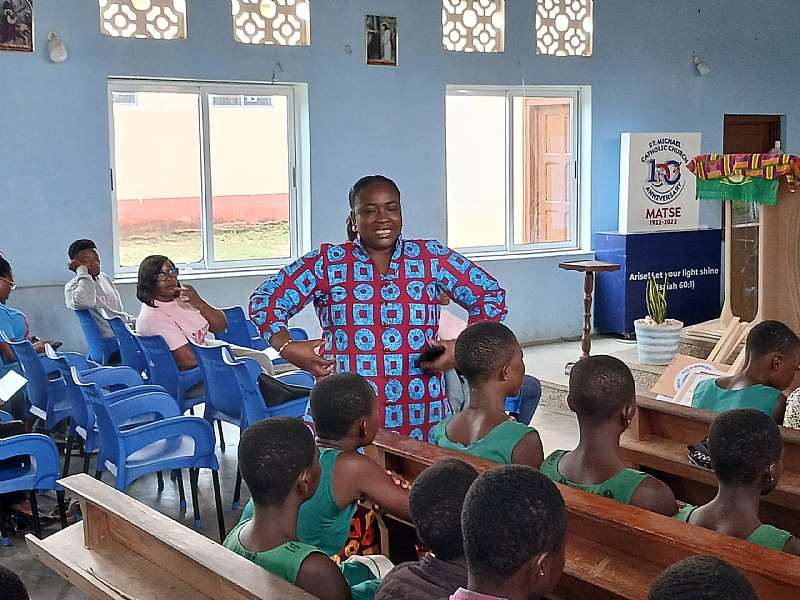 Madam Eyra Kpe, facilitating a season at the World Menstrual Hygiene Day celebration in Matse.

 President Mahama urges African countries to fund own peace operations, warns aga...
 Govt to borrow GHS15.38 billion from domestic market, plans DDEP bond buyback
 Finance Ministry says all 2026 ABFA allocations reserved for Accra-Kumasi expres...
 'Surprised and disappointed' — GTA CEO Efua Houadjeto responds to Abeiku Santana...
 Police arrest NDC delegates for allegedly photographing ballots at Bimbilla cons...
 Gambia’s Chief Justice pays courtesy call on Asantehene at Manhyia Palace
 NDC Constituency polls: Delegates invoke 'Antoa' deity over alleged album manipu...
 NDC Oforikrom constituency election stalls over ballot paper delays
 Former NDA CEO Sumaila Abdul-Rahman, three others fined GH¢84,000 each over proc...
 Wa: Abandoned newborn baby boy rescued at Sombo


