




Introduction
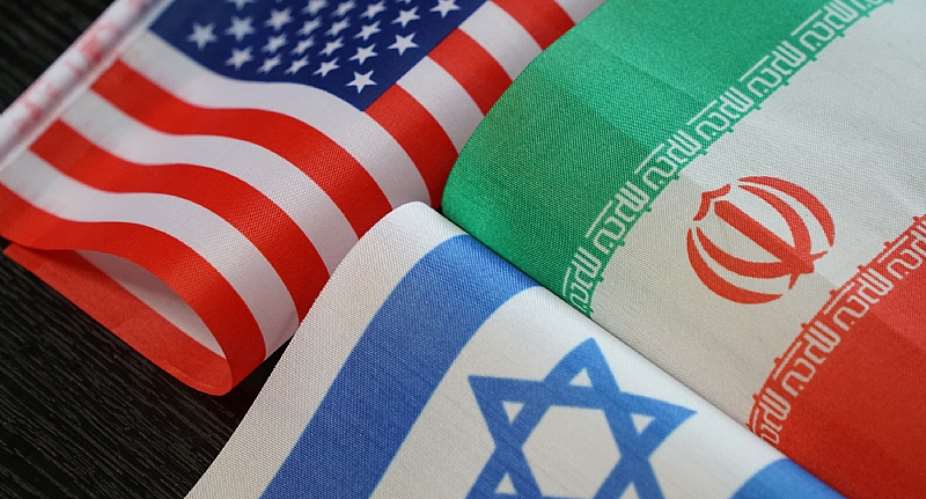
Oil has long been a central factor in global politics, shaping alliances, conflicts, and economic strategies. The discovery of oil in Iran in 1908 marked the beginning of foreign interest in the country's vast energy resources. Over time, this interest has contributed to deep-rooted tensions involving Iran, the United States, and Israel. These tensions continue to influence global stability and have far-reaching effects even on countries like Ghana.
Historical Background of Conflict Iran and the United States
The conflict between Iran and the United States can be traced far back to the Iranian Revolution, which overthrew the monarchy of Mohammad Reza Pahlavi. The Shah, who had strong backing from the United States, was widely criticized within Iran for authoritarian rule and human rights abuses.
Tensions escalated when Jimmy Carter, allowed the Shah to enter the United States for medical treatment. This reaction was because of how he ill-treated the people of Iran during his regime and they looked for any means to avenge him. They requested he was shipped back to his home state, but the US president refused. In response, Iranian students stormed the U.S. Embassy in Tehran on November 4, 1979, taking 52 American diplomats' hostage for 444 days. This crisis marked a turning point, leading to decades of hostility between the two nations.
Iran, Israel and Lebanon
The roots of hostility between Iran and Israel are linked to broader Middle Eastern conflicts, particularly the Arab Israeli War of 1948, which followed the declaration of the State of Israel on May 14, 1948.
Neighboring Arab states (Syria, Lebanon, Jordan, Egypt and Iraq) opposed Israel's creation and launched a military attack on the newborn state with the intention of destroying it and vowed that the nation will not gain roots. Despite this, Israel survived and expanded its territory beyond what had been originally designated to them by the United Nations.
In modern times, there have been arguments that Iran does not recognize Israel as a legitimate state and strongly opposes its existence. It is alleged that Iran also supports groups such as Hezbollah originating from Lebanon. Hezbollah is a powerful Lebanese Shiite militant group founded in 1982. Israel considers the group as a major threat to its security because it believes the group was created to fight Isreal being one of its core aims. This has intensified rivalry and suspicion among these three nations.
Current Tensions in the Middle East
On Saturday,28th of February 2026, US and Isreal began an attack against Iran, bombing several locations, leading to the death of many people including some senior officials, the former President of Iran and the Iranian leader, Ayatollah Khamenei.
The Iranians retaliated by attacking the northern part of Isreal and other basis in the gulf region where US has military bases.
Currently, about 8 countries have been drawn into this war: Jordan, Cyprus (British Military Base hit by Iran), Lebanon (due to the presence of Hezbollah in that state) and The Gulf States (Saudi Arabia, UAE, Oman among others.)
The US is not physically close to Iran but launch attacks on Iran through its military bases in some of these gulf states.
However, tensions remain high due to several factors:
- Alleged Iran's nuclear program and concerns about weaponization.
- Proxy conflicts involving armed groups in Lebanon which the Israeli's believe is a threat to their government.
- Israel's security concerns regarding Iranian influence in the region.
- Enforcing a regime change in Iran by the US government.
The Strait of Hormuz
The Strait of Hormuz is a key strategic flashpoint in this conflict. It is a narrow stretch of water only 21 miles wide, but about 20% of the world's oil and a third of its natural gas passes through it every day. When there is a disruption at the strait, it has massive leverage over global energy. Iran has weaponized it by threatening and temporarily blocking shipping routes there. That single move sent shockwaves through global markets: oil price jumped from $86.55 to $109.66 per barrel in just days. The Strait of Hormuz has become Iran's main bargaining chip and every tanker delayed there adds to the price you pay at the pump.
Global Interests: China and Russia
Major global powers also have vested interests in Middle Eastern stability:
- China: Iran exports 90% of its oil to China. China depends heavily on oil imports from the region and seeks to ensure uninterrupted energy supply.
- Russia: Russia on one hand opposes western influence and objects to the USA meddling in the affairs of the Iranians. However, the closure of the Strait of Hormuz by Iran and surging oil prices have rather boosted Russia's budget and caused the nation to gain leverage through influence on global energy markets at a time of crisis. According to Tim Ash of Chatham House, the US-Israeli war on Iran is “a welcome gift for Russia's President, Vladimir Putin”.
Implications of the Conflict on Ghana
Ghana, like many developing economies, is vulnerable to global oil market fluctuations. The petroleum industry remains a key contributor to Ghana's economy, particularly in the downstream sector.
Dependence on Imports
Ghana relies significantly on imported refined petroleum products. However, the country has diversified sources like Russia, other European countries as well as the middle east.
Buffer Measures
- On April 4, 2026, the President, John Mahama called an emergency cabinet meeting to decide on measures to absorb the economic shocks due to this conflict. He stated that the country currently holds at least six weeks petroleum reserves with the government working actively to secure additional supplies supported by both public and private sector efforts.
- Ghana doesn't rely solely on the middle east for all its petroleum imports on like Kenya but has diversified sources like Russia, giving it some buffer.
- Cabinet has been charged to scrutinize extra charges that make fuel expensive including government taxes, fees, fuel margins and levies. This is expected to last for about 4 weeks, effectively the next pricing window. This has led to the removal of BOST margin on diesel, UPPF, Fuel marking and Primary distribution margin.
- Ghana's annual inflation rate stands at 3.2% year on year in March 2026 extending an easing streak to a 15th consecutive month.
Some other measures the country can fall on include:
- The Tema Oil Refinery and Sentuo Oil Refinery contribute significantly to local supply. According to the NPA Boss, Godwin Edudzi Tameklo, these two refineries can meet about 50% of the nation's demand.
- The Dangote Refinery in Nigeria provides an important regional backup, producing about 650,000 barrels every day and obtaining most of its raw materials (crude) from Nigeria.
- As at March 2026, NPA stated that there are 4 vessels at anchorage ranging from 37,000 to 42000 metric tons.
- Ghana can also depend on the Veto, Trafigura, Glencore and BP who bring their bigger vessels into the Lome waters which is about 500,000 metric tons of petroleum products.
- Expedite deployment of newly acquired metro mass buses by the transport ministry in high traffic corridors with lower transport fares.
The margins removed and what they were designated for:
- Bost Margin: These margins are collected for the maintenance of storage facilities.
- Unified Petroleum Pricing Fund (UPPF): This fund caters for the payment of transportation from the depot to the fueling station. This expense is absorbed by government indicating that Oil Marketing Companies (OMC) cannot include that in their price variables.
- Fuel Marking: To fund all expenses related to tackling illegal activities such as fuel adulteration to assure quality of fuel products.
- Primary Distribution Margin: This provides funding for the transportation of fuel products from one depot to another.
Arguments to the removal of BOST Margin as an intervention by Government:
The Institute for Energy Security (IES) recently released a statement about government's intention to remove the Bulk Oil Storage and Transportation (BOST) margin emphasizing that such decision would be a threat to Ghana's fuel supply security and derail critical infrastructure expansion efforts. The margins represent a strategic financing mechanism that supports the development, maintenance and expansion of petroleum storage and distribution infrastructure across the country. Its removal, particularly under current market conditions, risks weakening the operational capacity of BOST and compromising the reliability of fuel supply nationwide.
Currently, BOST urgently needs to undertake projects in certain corridors to enhance the smooth running of its activities, pointing out a huge infrastructural deficit.
A report from the Downstream Reform Committee in August 2025 pointed out certain key areas that require urgent infrastructural attention, and these are as follows:
- Eastern Corridor: Tema and its environs are facing dispatch challenges
- Western Corridor: Requires rehabilitation of their storage facilities
- Northern Corridor: Requires the expansion of pipelines between Buipe and Bolgatanga all the way to the borders of Burkina Faso to meet their intention of sourcing fuel from Ghana since it is a landlocked country.
- Central Corridor: Requires the expansion of storage facilities.
However, others are of the view that BOST is a limited liability company that engages in commercial activities to generate revenue therefore the government should scrap off the margin they receive. There is also evidence of more private storage facilities in the country now which is a clear indication that the pressure on BOST storage facilities has been lessened and does not require these levies anymore for their said purpose.
Conclusion
The interplay between oil, geopolitics, and conflict remains a defining feature of international relations. Historical tensions between Iran, the United States, and Israel continue to shape global dynamics, even without a full-scale war.
For Ghana, these distant conflicts are not merely geopolitical issues but economic realities that affect fuel prices, inflation, and overall stability. Strengthening domestic refining capacity, expanding storage infrastructure, and diversifying energy sources will be crucial in safeguarding the nation against future global shocks.
Currently, Ghana's plans and strategies to cushion any economic shock that may arise due to this conflict are for the short to medium-term. The million-dollar question now is what if the conflict escalates into a full bloom war? Yes, there are talks between the two nations to settle matters and the declaration of a temporary cease fire but what if it does not hold?
Where does Ghana stand in all these?
These are some recommendations the government must consider:
- A long-term investment in storage infrastructures which can hold petroleum products for months. COPEC described Ghana's fuel storage as abysmal compared to China having about 3 months reserve cover as well as Germany and South Korea have about 7 months import cover and Ghana having about 5 weeks Diesel and 7 weeks for Petrol as at when the conflict started. There is an urgency to consider proper fuel management and re-equipe the already existing storage facilities.
- Government must consider a policy of promoting the use of Electric Vehicles and include equipping local mechanics with the technical know-how to service and maintain these next generation vehicles. Lithium, which is a core ingredient for manufacturing electric vehicle batteries have been discovered in commercialqualities in the central region granting Ghana a good leverage.
- There is a shift for entities, especially those in the manufacturing sector to patronize hybrid or electric powered equipment for their daily activities with the aim of reducing the volume of diesel required for their operations and government intervention such as the reduction of import duties, granting of tax holidays amongst others can drive this agenda.
We have everything it takes to change the course of affairs in this country regardless of external pressures and impacts.

 “Your bail conditions will be scary” – Afenyo Markin warns GoldBod officials
 Stop going about calling yourself ‘incoming MP’ to undermine sitting MPs— COKA w...
 Focus on ‘bread and butter’ issues affecting Ghanaians, not ‘specialising in arr...
 Tanoso youth grabbed Chief over alleged illegal miming activities near Tano Rive...
 Young man allegedly assaulted after being caught stealing at shop in Adum
 Angelique Kidjo becomes first Black African to receive Hollywood Walk of Fame st...
 2024 defeat: 'I could've asked for recount but I chose peace over everything' – ...
 Trump says no Iran talks planned, insists Strait of Hormuz remains open
 My government contract went through competitive tendering; not sole-source — Mus...
 ICC says US sanctions on top court members 'undermine rule of law'


Comments
An insightful and timely article that thoroughly explains recent happenings in depth. A great and informative read.