




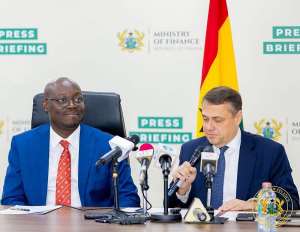
Ghana’s transition from the International Monetary Fund’s Extended Credit Facility (ECF) to a Policy Coordination Instrument (PCI) marks a defining moment in the country’s economic policy evolution. For the first time since 1966, the country is entering an IMF-supported framework that does not involve financial assistance, signalling a decisive shift away from decades of programme dependency toward policy credibility and institutional maturity.
This milestone is best understood against the backdrop of Ghana’s long-standing engagement with the IMF. Analysing IMF data between (May 17,1966 and May 31, 2018), Ghana relied extensively on IMF-supported programmes to restore macroeconomic stability during periods of fiscal and external distress. These arrangements ranging from eight (8x) Stand-By Arrangements (SBAs) between 1966 and 1986, to Structural Adjustment Facility (SAFC) programmes in the November, 06, 1980, and multiple (7x) Extended Credit Facility (ECF) programmes from 1987 to 2018 showed persistent structural challenges. In total, IMF commitments to Ghana over this period reached approximately $3.0 billion, of which about $2.55 billion was disbursed, leaving roughly $789 million outstanding.
This repeated recourse to IMF financing highlights a historical pattern of fiscal shortfalls, rising public debt, and vulnerability to external shocks. Even in more recent programmes, implementation gaps were evident. For instance, the difference between committed ( amount agreed) and disbursed amounts exceeded $530 million during the 2015–2018 programme and about $258million during the 2009–2012 programme, pointing to constraints in policy execution and reform continuity.
Against this history, the outcomes under the most recent ECF programme represent a clear departure. Macroeconomic conditions have improved greatly, driven by a disciplined policy mix and sustained reform efforts. Inflation has declined sharply from previously elevated levels, international reserves have been rebuilt, and confidence in the cedi has strengthened. Fiscal consolidation has been particularly noteworthy, with Ghana recording a primary surplus above programme targets in 2025 and placing public debt on a firm downward trajectory.
More importantly a strong progress in debt restructuring and market confidence. Agreements with official creditors under the G20 Common Framework, alongside the successful reopening of the domestic bond market, signal a restoration of investor trust, an outcome that has historically been difficult to achieve. Economic growth has also proven resilient, supported by strong export performance, especially in gold, and other domestic-based activities.
The transition to the PCI framework therefore represents a structural ending point of these decades cycle. Unlike previous IMF programmes, the PCI provides no financing but instead supports the authorities’ reform agenda through policy coordination, transparency, and institutional strengthening. It reflects confidence in Ghana’s ability to sustain reform momentum independently, while maintaining macroeconomic discipline.
Importantly, the improved debt dynamics have created limited but strategic fiscal space for the economy. This provides an opportunity to address critical development priorities, including infrastructure investment, job creation, and social protection, while remaining anchored to the medium-term debt target of 45% of GDP. However, this space is conditional on continued reforms in public financial management and effective control of fiscal risks.
Notwithstanding some challenges remain. State-owned enterprises, quasi-fiscal operations, and contingent liabilities continue to pose risks to fiscal sustainability. Ghana’s economic history demonstrates that without sustained discipline, this hard-won gains can quickly be reversed. Therefore, strengthening governance, enhancing transparency, and reinforcing institutional frameworks will be essential to avoid a return to past cycles of instability and then unto ECF.
In a global environment marked by uncertainty and geopolitical risks, Ghana’s transition from ECF to PCI stands as a strong signal of policy credibility and reform commitment. It represents not only an important achievement, but also a test of consistency from now on . If sustained, this shift could mark the beginning of a more resilient, self-reliant, and forward-looking economic future for AMA Ghana. !God Bless Ghana & Africa!
Author : Evans Darko, PhD, CREM Lab , University of Rennes, France.
Data source : History of Lending Commitments: Ghana


 NDC not worried about NPP’s Kojo Bamba, he is small boy – Azorka
 Obuasi SHTS: 'Children are not buffet' – NPP’s Fatimatu confronts Zuba
 'I didn’t know I was supposed to chop and not work' – Blakofe on her time at GTD...
 Resource exploitation fuelling Africa’s conflicts – Mahama
 Our ports' growth always depended on collaboration across maritime, logistics va...
 Stranded Ghanaian fishermen narrate how they ate fresh fish, drunk sea water to ...
 How notorious armed robber died on the way whiles leading police to arrest accom...
 'We must continuously improve cargo handling, coordination among port operators'...
 Nii Lante Vanderpuye confident of winning NDC national chairmanship despite Gold...
 Agalga dismisses critics, assures Builsa North of progress on Sandema–Wiaga Road


