




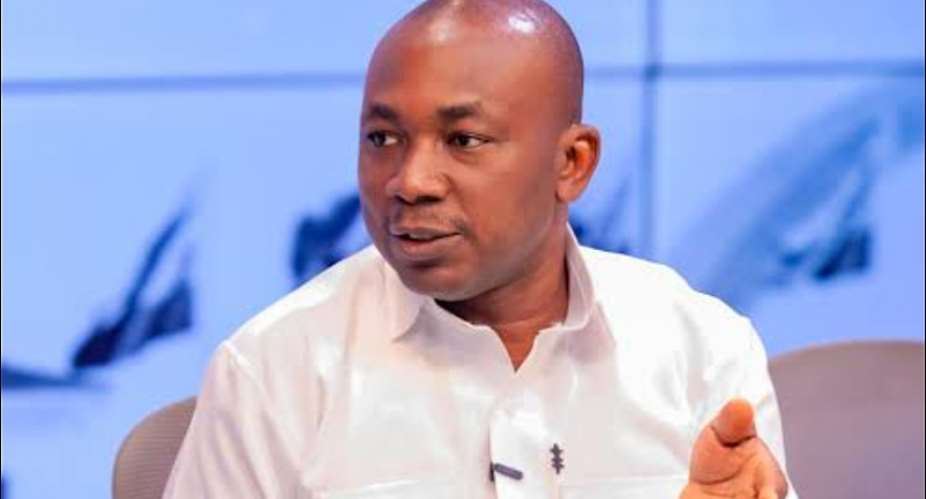
Professor of Finance at the University of Ghana, Godfred Alufar Bokpin, has argued that Ghana’s controversial Domestic Debt Exchange Programme (DDEP) could have been avoided if the previous government had sought support from the International Monetary Fund earlier.
The DDEP was introduced by the previous New Patriotic Party government in December 2022 as part of conditions to secure a $3 billion IMF bailout programme.
The policy required domestic bondholders to exchange their existing government bonds for new ones with lower interest rates and longer maturity periods, a move that triggered widespread public backlash and financial losses for many investors.
Speaking on Accra-based JoyNews’ Newsfile programme on Saturday, May 16, Prof Bokpin said government delayed too long before approaching the IMF despite clear signs of economic distress.
“In my considered view, and we said this before, that if the government had been a little proactive in reaching out to the IMF, we could have avoided domestic debts,” he said.
According to him, Ghana’s worsening economic conditions and delayed intervention forced the country into what he described as the “most pricey IMF programme” in its history.
“The parameters were quite clear, and the government should have taken that decision perhaps in the third quarter of 2021,” Prof Bokpin stated.
He compared Ghana’s situation to Kenya, noting that Kenya approached the IMF earlier under similar economic conditions, while Ghana delayed until the crisis deepened.
Prof Bokpin further argued that the economic sacrifices associated with the programme, including expenditure cuts, losses on the books of the Bank of Ghana and the DDEP itself, would take years for the country to recover from.
Meanwhile, the government has announced the conclusion of Ghana’s three-year Extended Credit Facility (ECF) programme with the IMF and the country’s transition to a non-financing Policy Coordination Instrument (PCI).
The Presidency, in a statement issued on Friday, May 15, described the development as a major milestone in Ghana’s economic recovery efforts after years of fiscal reforms, debt restructuring and macroeconomic adjustments.

 Trump threatens to ‘hit Iran hard’ as strikes resume after month-long lull
 Marketer accused of threatening to kill EOCO staff granted GH¢100,000 bail
 GAF opens 2026 recruitment portal September 4 as Military Academy requirements e...
 Railway Workers Union commends government for clearing 20 months’ salary arrears
 SOEs swing from GH¢2.2bn loss to GH¢19.8bn profit in 2025
 'Every component that we are using has gone high' — GPRTU warns of possible fare...
 NPA surplus jumps 76% to GH¢447million as revenue surges in 2025
 Teacher unions suspend planned strike after 'sweet' talks
 Sammi Awuku demand answers on waived $1million MV Sankofa penalty
 Afenyo-Markin urges Mahama to take bold steps, tighten GoldBod controls to preve...


Comments
The NPP is a wicked government that knows what it does. It was deliberately done to cover up their widespread corruption and also create an impression that Ghana was facing difficulties; therefore, it is necessary.