




Ghana Business News Roundup: April 20, 2026
Accra — The week opened with a flurry of significant developments across Ghana's financial markets, energy infrastructure, economy, trade, and regulatory landscape. From a record-breaking stock market performance to a planned shutdown at the Atuabo Gas Plant, and from an upgraded IMF growth forecast to a major mining takeover, the news flow reflects an economy in transition—managing near-term operational challenges while positioning for long-term transformation.
Here is your complete Accra Street Journal's roundup of the business news shaping Ghana on Monday, April 20, 2026.
Financial Markets & Banking
Treasury Bill Undersubscription: Fourth Consecutive Miss
The government's latest Treasury bill auction recorded an 8.2 per cent undersubscription, marking the fourth consecutive auction in which the government failed to meet its borrowing target. The shortfall comes as interest rates on short-term government paper continued to rise, reflecting investor demand for higher yields amid persistent fiscal and monetary considerations.
Treasury bills are the government's primary tool for short-term borrowing to finance budget shortfalls and manage cash flow. Consistent undersubscription concerns fiscal managers because it signals that investors are either demanding higher returns, shifting capital to alternative assets, or reducing their exposure to government paper.
Rising interest rates on T-bills increase the government's debt servicing costs, putting additional pressure on an already constrained fiscal budget. The Bank of Ghana's monetary policy committee has maintained a tight policy stance to anchor inflation expectations, but the resulting high interest rates create a challenging environment for fiscal authorities.
Stock Exchange Performance: GSE Hits GH¢266.4 Billion
In stark contrast to the weakness in the primary debt market, the Ghana Stock Exchange ended the previous week strongly, with market capitalisation reaching a new record of GH¢266.4 billion.
The milestone continues a remarkable run for the GSE, which has seen its market cap more than double in recent years. The exchange has benefited from strong investor interest in banking and insurance stocks, as well as the broader economic recovery following the domestic debt exchange programme.
The rally has been broad-based, but banking stocks have been particularly strong. Investors appear to be betting that Ghana's banks are well-positioned to benefit from the high interest rate environment, which typically expands net interest margins. Additionally, improved asset quality following the government's debt restructuring has reduced provisions for loan losses, boosting reported profits.
Top Gainers: Banking Stocks Lead the Rally
Three banking stocks recorded double-digit or near-double-digit gains, leading the GSE's advance.
GCB Bank (+9.97%) led the gainers. The bank has been a favourite among investors due to its strong deposit base, conservative lending practices, and consistent dividend payments. The proposed dividend of GH¢1.00 per share for the 2025 fiscal year, announced ahead of the bank's upcoming Annual General Meeting, has also supported investor sentiment.
Ecobank Transnational (+9.38%) , the pan-African banking group with listings across multiple West African exchanges, gained on the back of its cross-border operations and diversified revenue streams, which have made it attractive to investors seeking exposure to the broader West African recovery.
CalBank (+8.86%) rounded out the top three gainers. The bank has been executing a turnaround strategy following capital raising and restructuring efforts, and investors appear to be rewarding its progress.
Top Loser: Access Bank Ghana (-9.93%)
While most banking stocks gained, Access Bank Ghana was the exception. The stock recorded a price depreciation of 9.93 per cent, making it the top loser on the exchange. The sharp decline contrasts with the positive performance of its peers. The depreciation may reflect company-specific factors rather than broader sector weakness, including possible profit-taking, investor concerns about specific exposures, or repositioning ahead of the bank's upcoming financial results.
Liquidity Management: BoG Absorbs Record GH¢389.1 Billion
The Bank of Ghana absorbed a record GH¢389.1 billion in excess liquidity during the first quarter of 2026, a move aimed at managing rising liquidity pressures that could otherwise fuel inflation or put downward pressure on the cedi.
Excess liquidity refers to the amount of money in the banking system beyond what banks need to meet reserve requirements and transaction demand. When excess liquidity is high, banks have more money to lend, which can stimulate economic activity but also risks fueling inflation if it outpaces productive capacity.
The Bank of Ghana has been using open market operations—selling its own bills to banks—to mop up excess liquidity. By absorbing GH¢389.1 billion in the first quarter alone, the central bank demonstrated its commitment to maintaining a tight monetary stance.
The record absorption supports inflation containment, cedi stability, and policy credibility. However, it also reduces the funds available for bank lending to the private sector, potentially constraining credit growth.
Remittances: $7.8 Billion Surpasses FDI
Remittance inflows to Ghana reached approximately $7.8 billion in 2025, surpassing Foreign Direct Investment as a primary driver of foreign exchange inflows and investment.
Remittances—money sent home by Ghanaians living abroad—have been growing steadily for years, driven by a large and active diaspora, particularly in the United States, United Kingdom, Germany, and other European countries. The $7.8 billion figure represents a significant source of foreign currency that does not come with the conditionality or profit repatriation pressures associated with FDI.
Remittances tend to be more stable than portfolio flows or even FDI, go directly to households supporting consumption, education, healthcare, and small business investment, create no future repayment obligations, and provide steady support for the cedi.
Energy & Infrastructure
Atuabo Gas Plant: Planned Five-Hour Overnight Shutdown
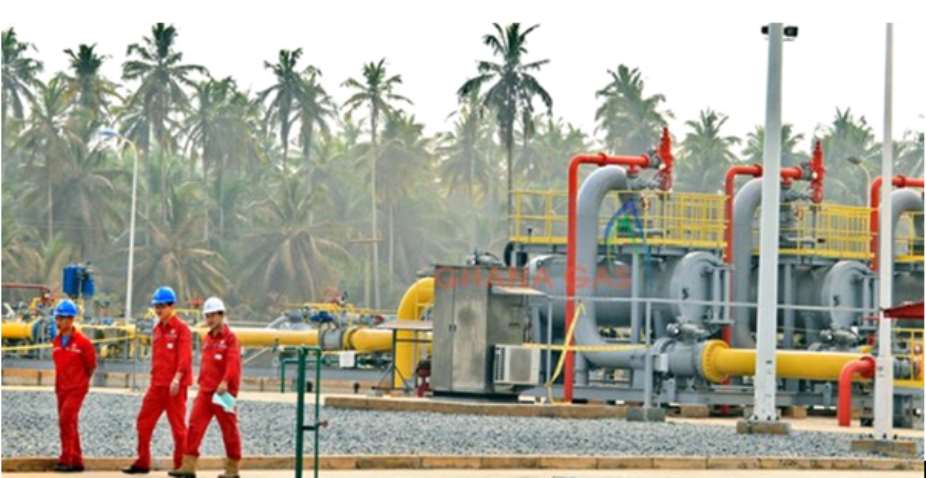
The Gas Processing Plant at Atuabo began a planned five-hour overnight shutdown at midnight today to complete repairs on the Burner Management System (BMS), according to statements from the Ghana National Gas Company.
The BMS is a critical safety and control system that monitors and manages the plant's combustion processes. It ensures that burners operate within safe parameters, automatically shutting down equipment if unsafe conditions are detected. Repairs to this system are essential for maintaining operational safety and preventing unplanned outages.
The shutdown was scheduled for overnight hours to minimise disruption to the broader power system. Demand for electricity typically drops significantly during late-night and early-morning hours, allowing maintenance to be performed without triggering supply shortfalls or requiring load shedding.
The Ghana National Gas Company has stated that the repairs are part of routine maintenance and that the plant is expected to resume normal operations upon completion of the five-hour window. However, the Atuabo facility is a critical component of Ghana's power generation value chain, and any extended downtime could have cascading effects.
The Atuabo Gas Processing Plant is the cornerstone of Ghana's domestic gas infrastructure. It processes natural gas produced from the Jubilee and TEN fields in the Western Region, removing impurities and separating natural gas liquids before sending lean gas to thermal power plants, including the Aboadze Power Enclave. Gas from Atuabo fuels a significant portion of Ghana's thermal generation capacity.
Power Grid Upgrades: 2,500 New Transformers for NEDCo and ECG
The government is distributing 2,500 new transformers to the Northern Electricity Distribution Company (NEDCo) and the Electricity Company of Ghana (ECG) as part of a broader effort to stabilise the national grid and address recent outages.
The transformer distribution programme aims to replace ageing, overloaded, or failed units that have been responsible for localised power interruptions across the country. Transformers are critical components of the distribution network, stepping down high-voltage electricity from transmission lines to lower voltages suitable for homes and businesses. When transformers fail, neighbourhoods or entire communities can lose power for extended periods while repairs are arranged.
The 2,500 transformers will be shared between ECG, which serves southern Ghana including Accra, and NEDCo, which serves the northern regions. The allocation is based on population density, load requirements, and the condition of existing infrastructure.
The programme is part of the government's broader Energy Sector Recovery Programme, which has received support from development partners including the World Bank and the African Development Bank.
Outage Reporting: Ministry of Energy Plans WhatsApp-Based System
The Ministry of Energy plans to launch a WhatsApp-based system for citizens to report power outages directly, a move aimed at improving communication between utilities and consumers.
The proposed system would allow customers to report outages by sending a message to a dedicated WhatsApp number or by using a chatbot interface. The reports would be routed to the relevant distribution company (ECG or NEDCo), logged, and tracked through to resolution.
WhatsApp is the most widely used messaging platform in Ghana, with penetration rates exceeding 80 per cent among smartphone users. Unlike dedicated mobile apps, which require downloads and registrations, WhatsApp is already installed on most phones and familiar to users across all demographics.
The Ministry has not announced a specific launch date. The plan is still in the development phase, with technical and operational details yet to be finalised.
Economy & Trade
Economic Outlook: IMF Revises 2026 Growth Forecast to 4.8%
The International Monetary Fund has revised Ghana's 2026 growth forecast upward to 4.8 per cent, according to statements made during the ongoing Spring Meetings in Washington, D.C.
The revised forecast represents an increase from previous projections and positions Ghana as one of the faster-growing economies in sub-Saharan Africa. It reflects the IMF's assessment that Ghana's economic recovery is proceeding more rapidly than anticipated, supported by fiscal consolidation, stabilising inflation, and improving external conditions.
Several factors underpin the IMF's revised forecast: inflation moderation to 3.2 per cent in March 2026, cedi stability, progress on debt restructuring including the 11th bilateral agreement with EXIM India, stronger-than-expected trade performance with non-traditional exports reaching $5 billion, and improved business confidence.
The IMF's 4.8 per cent forecast aligns closely with the World Bank's recent projection for Ghana's 2026 growth, providing a strong signal of confidence in Ghana's economictrajectory.
Non-Traditional Exports: NTEs Reach $5 Billion in 2025
Ghana's non-traditional exports reached $5 billion in 2025, representing a 30.7 per cent increase year-on-year, according to data released by the Ghana Export Promotion Authority (GEPA).
The figure is significant because NTEs have historically lagged behind traditional commodity exports—gold, oil, and cocoa—which have dominated Ghana's export basket for decades. The strong growth in NTEs indicates that the economy is diversifying, reducing reliance on a small number of volatile commodities.
Non-traditional exports include processed and semi-processed goods (cocoa butter, cashew nuts, shea butter, canned tuna), manufactured products (textiles, garments, pharmaceuticals, plastics), agricultural products (fresh vegetables, fruits, yams, pineapples, bananas), industrial raw materials (limestone, bauxite, manganese), and services (tourism, financial services, information technology).
Several factors contributed to the 30.7 per cent increase: improved market access through AGOA, EPA, and AfCFTA; private sector investment in capacity expansion; government support programmes from GEPA; and currency competitiveness.
Mining Sector: Engineers & Planners Assumes Control of Damang Gold Mine
Local firm Engineers & Planners, led by Ibrahim Mahama, has officially assumed control of the Damang Gold Mine, a significant development for Ghana's mining sector representing a transfer of ownership from an international mining company to a Ghanaian-owned firm.
The Damang Gold Mine is located in the Western Region of Ghana, approximately 35 kilometres north of the town of Tarkwa. The mine has been in operation for decades and has produced millions of ounces of gold over its lifespan.
Engineers & Planners is a Ghanaian-owned mining and civil engineering company with a track record in the sector. The company has been involved in mining operations, contracting, and equipment supply. The Damang acquisition represents a significant expansion of its direct ownership and operational responsibilities.
The takeover aligns with the government's Local Content and Local Participation regulations for the mining sector, which require that Ghanaian entities have increasing ownership and control of mining operations over time.
24-Hour Economy: Government Commissions New Markets, Including Tamale
The government is commissioning new 24-hour economy markets, including a major project in Tamale, as part of a broader initiative to stimulate local trade and economic growth.
The 24-hour economy policy is designed to extend economic activity beyond traditional daylight hours, creating opportunities for businesses to operate multiple shifts, increase output, and generate employment. The Tamale market project is a significant investment in the northern regional capital, designed to operate around the clock with lighting, security, sanitation, and other infrastructure necessary for night-time trading.
The policy aims to increase trading hours, reduce congestion, improve security, and boost the local economy. The Tamale project is part of a broader programme that includes similar initiatives in other regional capitals and major commercial centres.
Regulatory & Corporate News
Port Technology: AGI Officially Backs Publican AI Platform
The Association of Ghana Industries has officially backed the Ghana Revenue Authority's implementation of the Publican AI platform for port valuations, despite ongoing resistance from some trading groups and freight forwarders.
Publican AI is an automated valuation system that uses artificial intelligence to assess duties on imported goods. The system is designed to replace manual valuation methods, which have been criticised for being slow, inconsistent, and susceptible to manipulation.
The AGI's endorsement is significant because the association represents a broad cross-section of Ghanaian industry, including manufacturers, processors, and importers who rely on the ports for raw materials, machinery, and finished goods. The association believes an automated, AI-driven system will be more consistent, transparent, and efficient.
The endorsement provides political cover for the GRA to continue implementing the system even as freight forwarders remain on strike protesting that the system leads to excessive and arbitrary duties.
Fintech Crackdown: MTN MobileMoney Restricts 9,000 Agent Accounts
MTN MobileMoney has restricted approximately 9,000 agent accounts recently due to compliance and rule breaches, according to statements from the company.
The action represents a significant enforcement move by Ghana's largest mobile money operator, reflecting increased regulatory scrutiny of the fintech sector and the company's own efforts to strengthen its compliance systems.
Common breaches that can trigger restrictions include exceeding transaction limits, incomplete or inaccurate customer registration, suspicious transaction patterns suggesting money laundering or fraud, operating without proper authorisation, and charging fees above permitted rates.
The Bank of Ghana has been tightening oversight of the mobile money ecosystem, which has grown rapidly over the past decade. Mobile money accounts now outnumber traditional bank accounts in Ghana, and transaction volumes run into the billions of cedis annually.
.
Outlook Frm Accra Street Journal
The developments across financial markets, energy infrastructure, economy and trade, and regulatory affairs paint a picture of an economy managing multiple transitions simultaneously.
The stock market is booming, but the government's borrowing costs are rising. Remittances are surging, providing a stable source of foreign currency, but FDI remains subdued. The Atuabo shutdown is planned maintenance, not a crisis, but it is a reminder of ageing infrastructure. The IMF has upgraded the growth forecast, but fiscal discipline remains essential. NTEs are growing strongly, but port disruptions threaten supply chains.
For businesses and investors, the message is mixed but cautiously optimistic. Ghana's economy is moving in the right direction, but the path is not without bumps.

 KMA Deploys Vacuum Sweepers to Tackle Dust, Waste and Flooding in Kumasi
 UCC Probes Death of Level 200 Student Found at Hutchland Beach
 BoG Cracks Down on Crypto Dollar Wallets; Orders Banks to Cut Ties Immediately
 BoG Extends IMTO Registration Deadline to July 31 — Non‑Compliant Operators Face...
 Ato Forson Pushes for New ‘Auditors’ Court’ to Tackle Waste, Strengthen Accounta...
 Big Payout, Big Changes: MMMF Declares 30p Dividend, Endorses New Board
 C/R: Missing UCC student found dead at Hutchland Beach
 Man collapses and dies in front of pharmacy at Abura in Cape Coast
 Gov’t Should Have Anticipated Partey Visa Trouble — Asafo-Adjei Ayeh Fires
 Swiss Vote on Population Cap Sparks Fierce Immigration Debate Ahead of Sunday Re...


