




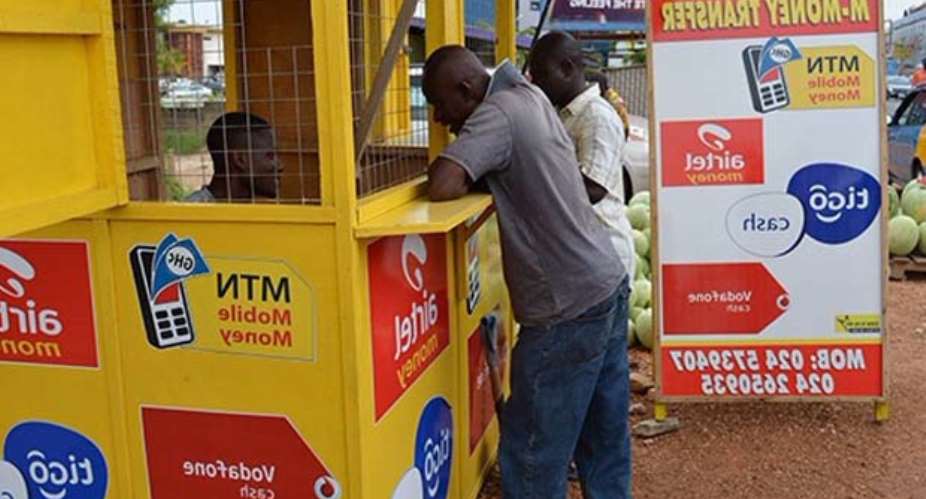
I am afraid the noise made about cyber fraud, to justify the order of the Government that mobile phone Sim cards should be re-registered by certain dates, appears to me to be another instance of the authorises misusing the power the citizenry has entrusted to them.
The welfare of the people is the “supreme law” was one of the mottos popularised by the first Government of an independent Ghana. Unfortunately, the motto was largely used as a tool of propaganda, with reality teaching us that the “welfare of the ruling party” was what mattered to the Government of the day.
Sadly, when the then ruling party lost power, many of those that put on the boots of authority realised that it was easier to rule the country with one eye closed and both ears blocked. The result has been that many of our past Governments have proved to ben nothing but “the same thing different” when it comes to safeguarding the public interest.
Indeed, decision-makers often operate to make things more convenient to themselves than to the community they have solemnly sworn to serve.
Cyber crime is, of course, to be condemned as a heinous practice that brings misery into the lives of many individuals and their families. But should the wickedness of the few who perpetrate it be siezed upon to punish the innocent many?
Punish the many? Yes ! I speak as an eye-witness to the inefficiency, and occasionally, the corruption that comes in the wake of attempting to enable citizens to satisfy the many bureaucratic requirements of the state.
I mean all manner of documents cannot be issued to the individual citizen unless he or she produces OTHER documents, of ten as specified by an officious state employee. Anyone who has needed to produce an unexpired passport or a voter's card etc. will know what I am talking about.
What I am talking about.
Demands for official papers often prove to be an oportunity for ruthless extortion.
Not only that:I have been obliged to be physically present in order to obtain a specified document that in my view, could have been collected by someone else more mobile than me.
To collect my voter's card, for instance, had to go to 3 different vebues. Why? I don't know what happens in the offices we pay for do I?
Our Government is aware of the inefficiencies that dog our public services. Ir also knows of the corruption. Yet it thinks nothing of asking us to re- register themillions of Sim cards in use in a country where mobile phones are now the SINE QUA NON for business and social communication?
In any case has Parliament ever wondered whether the wholesale confiscation of mobile phone Sim cards that do not pass the re-registration test, would be a negation of Article 18 of the1992 Constitution?


 'Chief Justice was talking as a citizen; you have to look at the context in whic...
 Mandatory towing to remove broken-down, stationary vehicles from roads to begin ...
 Domelevo backs OSP probe into alleged GH¢70,000 payment to Appiagyei despite den...
 WAEC releases 2026 WASSCE results, cancels entire results of 861 candidates for ...
 Baffour Agyeman-Duah explains why profitability may not be only reason behind SO...
 Kofi Bentil defends Mahama’s dissolution of nine State Boards
 5-year-old girl dies after falling into water-filled manhole at Winneba
 Sierra Leone ex-president to return after treason case dropped
 'Explain how you spent your Common Fund' — Boako, Annoh Dompreh challenge Tano N...
 Ghana ends South Africa evacuation; brings home nearly 1,900

