




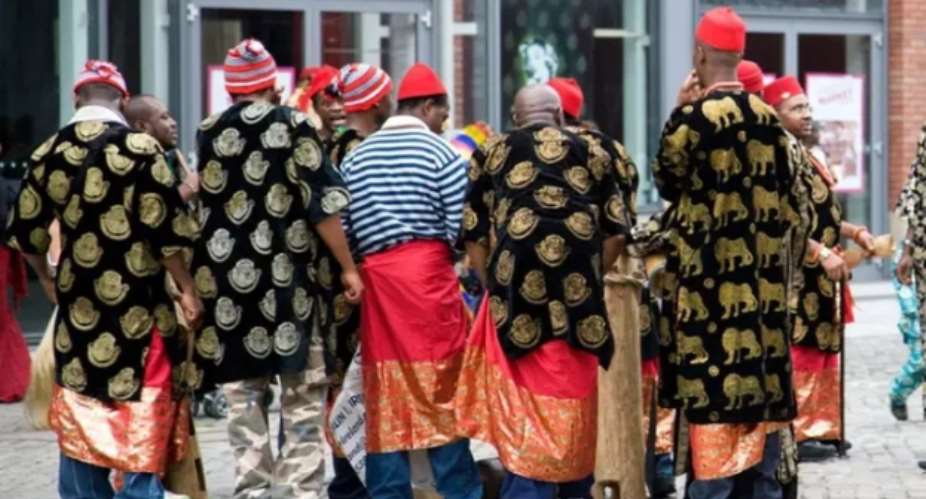
The Igbo people of southeastern Nigeria are one of Africa’s largest and most influential ethnic groups. Known for their entrepreneurial spirit, decentralized political systems, and rich traditions, Igbo communities have spread widely across the continent due to migration, trade, and historical events. However, this wide presence has also led to cultural misunderstandings particularly in places like Ghana and South Africa.
Igbo Presence in Ghana: “Igbo village” Misconceptions
In Ghana, especially in urban centers such as Accra and Kumasi, Igbo migrants have established strong commercial networks. Their success in trade and business has sometimes led to the informal labeling of certain neighborhoods or markets as “Igbo village.”
This phrase, however, is often misunderstood. It does not imply territorial ownership or political control but rather reflects the concentration of Igbo traders in those areas. Misinterpretations can fuel unnecessary tension, as some locals may perceive it as cultural dominance or exclusion. In reality, Igbo communities in Ghana typically integrate economically while maintaining their linguistic and cultural identity.
Historically, migration patterns especially after events like the Nigerian Civil War pushed many Igbo people to seek opportunities abroad, including in Ghana. Over time, they became embedded in local economies without displacing indigenous cultures.
The Meaning of “Igwe” and Its Misuse in South Africa
In Igbo culture, the title “Igwe” is deeply significant. The word refers to a traditional ruler or king in certain Igbo communities a figure of authority, respect, and cultural continuity.
However, in parts of South Africa, particularly cities like Johannesburg, the term “Igwe” is sometimes misunderstood or loosely applied. Some migrant communities use it informally to refer to leaders of Igbo associations or even as a general honorific. This can create confusion among non-Igbo observers, who may assume a centralized monarchy exists across all Igbo people.
In reality, traditional Igbo governance is largely decentralized. Unlike highly centralized kingdoms such as the Zulu people, Igbo societies historically operated through village assemblies, councils of elders, and consensus-based decision-making. The presence of an “Igwe” varies by community and does not represent a uniform political system.
Cultural Identity vs. Perception
A key reason for these misunderstandings lies in the visibility of Igbo migrants. Their strong communal ties, language retention, and business networks make them highly identifiable abroad. While this visibility fosters solidarity, it can also lead to stereotypes such as assumptions of exclusivity or economic domination.
Additionally, cultural terms like “Igbo village” or “Igwe” are often taken out of context when used outside their original settings. Without proper understanding, these terms can be misinterpreted as claims of territorial expansion or rigid hierarchy.
Bridging the Gap
Addressing these misconceptions requires cultural awareness and dialogue. Host communities benefit from understanding the historical and social context of Igbo migration, while Igbo communities can continue fostering inclusive relationships within their host countries.
Ultimately, the Igbo experience across Africa reflects a broader story of mobility, resilience, and cultural adaptation. Rather than symbols of division, their presence in countries like Ghana and South Africa highlights the interconnected nature of African societies.
Mustapha Bature Sallama.
Medical/ Science Communicator,
Private Investigator, Criminal investigation and Intelligence Analysis.
International Conflict Management and Peace Building.USIP
[email protected]
+233-555-275-880


 'We will upgrade Ho Teaching Hospital to be worthy of the name of a teaching hos...
 'If you are a man of principle and have done nothing wrong please come home' – M...
 'Ghanaians gave me one additional term; it’s exactly what the constitution says'...
 EOCO questioned Miracles Aboagye over GH¢5million, not GH¢55million – Sammi Awuk...
 'I do not take enjoyment, pride in prosecuting people if they have done no wrong...
 Father arrested for allegedly forcing her 16-year-old daughter to sleep with men...
 Female ward assistant in court over alleged GH¢1.7million military recruitment s...
 "He stood for peace, good neighborliness" — Bawku Naba mourns demise of Yaa Naa ...
 Mahama targets completion of Ho Sports Stadium before Ghana's 70th anniversary

