




The law is not an arithmetical formula you apply without conscience. It is a moral enterprise. Any legal argument that ignores the lived reality of 25–30 million Africans uprooted, brutalized and commodified over four centuries and the ongoing inequalities that result, is bankrupt at its core.
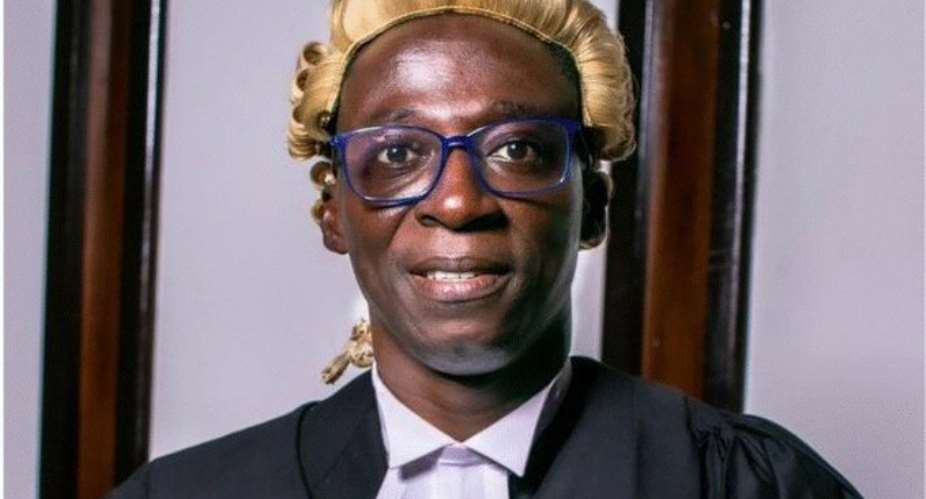
Last week’s debate around reparations for the transatlantic slave trade has exposed a fundamental dissonance between sterile legalism and justice rooted in historical truth. In a much‑noticed Facebook post, legal practitioner Austin Kwabena Brako‑Powers argues that contemporary calls for reparations are “legally flawed” because the transatlantic slave trade was not prohibited under international law at the time it was practiced. His position, that moral outrage cannot create enforceable legal claims and that retroactive criminalization threatens legal certainty, sounds sophisticated on its surface. But it collapses under the weight of historical fact, human rights principles and modern legal developments. It also reveals an unsettling preference for technicalities over justice for generations of suffering.
Let’s be clear: the transatlantic slave trade was more than a regrettable chapter in history. It was a systemic regime of exploitation that reshaped global economies, social hierarchies and human destinies. Contemporary international consensus increasingly recognises this. On 25 March 2026, the United Nations General Assembly adopted a resolution declaring the transatlantic trafficking of enslaved Africans and racialized chattel slavery as the gravest crime against humanity, with an express call for reparations, formal apologies, restitution and institutional reforms. The resolution passed with 123 votes in favour, despite opposition from just three states (including the United States) and abstentions from 52 others.
Brako‑Powers is right that the resolution is non‑binding. But that misses the point: law is more than black‑letter rules in isolation; it is a living project shaped by evolving norms, precedents and collective moral understanding. Modern international law has not been frozen in amber since 1850; it has progressively expanded to codify atrocities long treated as outside the legal frame.
The Myth of an “Empty Legal Field”
Brako‑Powers’ core claim, that slavery was not prohibited under international law at the time, assumes that only what was explicitly outlawed then can be judged now. This reasoning, however, ignores the nature of peremptory norms and the evolution of international legal consciousness.
Slavery and the slave trade are now recognized as peremptory norms, jus cogens, from which no derogation is permitted because they violate fundamental human rights. These norms are considered binding on all states regardless of treaties or historical context. Even if the lexicon of contemporary criminal law (e.g., “crime against humanity”) did not exist in the European 18th century, the underlying prohibition against treating human beings as property was always a moral and legal imperative. The very concept of human rights, as later codified in instruments like the Universal Declaration of Human Rights, is premised on the recognition that certain wrongs are intolerable anywhere, regardless of historical timing.
International law did not invent morality; it formalizes shared human values. The absence of a treaty in 1750 saying “slave trade is illegal” does not negate the inherent injustice of enslaving human beings, and it does not invalidate the legal and moral claims of their descendants today.
Law Evolves with Justice
Brako‑Powers warns against retroactive application of law. But this is selectively applied. Legal systems routinely reassess past conduct in light of present understanding when core human rights are at stake. The Nuremberg Trials after World War II are a stark example: defendants were prosecuted for crimes against humanity decades before formal codification of these crimes in international treaties. That would be dismissed out of hand under Brako‑Powers’ premise, yet few dispute the legitimacy of those prosecutions.
Similarly, transitional justice mechanisms around the world reflect an understanding that law must grapple with historical injustice. South Africa’s post‑apartheid Truth and Reconciliation Commission, tribunals for genocide in Rwanda and the former Yugoslavia, and reparations programmes for forced child removals in Australia and Canada all deal with wrongs that predated specific legal provisions. These efforts are grounded not in legal nihilism but in the recognition that justice must bridge past and present when legal frameworks evolve to capture enduring truths about harm and dignity.
Reparations Are Not an Anomaly
International human rights law recognises a broad concept of reparations. According to the United Nations’ Basic Principles and Guidelines on the Right to a Remedy and Reparation, victims of serious violations of human rights have a right to reparations, whether those violations occurred recently or in the more distant past. Reparations can include: compensation, restitution, rehabilitation, satisfaction and guarantees of non‑repetition. This is not an ad hoc invention; it is anchored in international standards.
Critics like Brako‑Powers frame reparations as morally driven but legally unwarranted. In reality, reparational justice has deep roots in human rights discourse precisely because harms like slavery have ongoing structural impacts. The inter‑generational effects of dispossession, exclusion and systemic discrimination are well documented, with social, economic and political disparities traceable to the centuries of slavery and colonialism. Reparations are not about dredging up ancient history; they are about remedying present legacies of historical violence that continue to shape life chances for millions.
The Case for Reparatory Justice
Let’s consider the scale: during the transatlantic slave trade, an estimated 12.5 million to 30 million Africans were forcibly removed from their homelands, enduring unimaginable brutality and lifelong subjugation. Many did not survive the Middle Passage; those who did were stripped of identity, family and autonomy. The wealth extracted from this human cargo formed the foundation of early capitalist accumulation in Europe and the Americas, financing infrastructure, industrialization and modern financial systems, benefits still embedded in today’s global economic order.
The refusal by some states to acknowledge reparations is not about legal purity; it is about shielding entrenched advantages from accountability. Claiming that past wrongs cannot generate contemporary obligations conveniently absolves historical beneficiaries from engaging with current inequalities rooted in those very wrongs.
Advocates for reparations do not demand a simplistic transfer of wealth based on emotional outrage. They call for structured, tangible measures: apologies, institutional reforms, economic development partnerships, restitution of cultural heritage, education and health investment and legal recognition of harms, that acknowledge both history and its modern consequences. The recent UN resolution explicitly frames reparations as steps towards “remedying historical wrongs”, including restitution and compensation pathways negotiated through inclusive multilateral engagement.
Bridging Law and Morality
Brako‑Powers suggests that moral condemnation and legal responsibility are irreconcilable. Yet, international law has always been a tool to transform moral insight into binding norms. The global embrace of human rights, from banning slavery and torture to prohibitions on genocide and apartheid, is evidence of law reflecting morality. Today’s legal scholars, courts and human rights bodies increasingly acknowledge that historical injustices do not vanish with time; they morph into structural inequality that demands redress.
Indeed, the very process of recognizing slavery as a crime against humanity invites legal innovation. It pushes legal systems to rethink how reparations are conceptualized, not as retroactive punishment, but as corrective justice. Reparative frameworks do not assert that a 17th‑century regime broke a 20th‑century law; they assert that the consequences of that regime persist in violation of the dignity and rights of descendants today.
Law Without Conscience is Incomplete
Austin Kwabena Brako‑Powers is right to caution against anachronistic legalism. But the response should be broader than retreat into technicalities. Law is not inert; it evolves with collective understanding of justice. To dismiss reparations because a specific criminal adjective did not exist centuries ago is to ignore how legal and moral consciousness co‑evolve.
The United Nations’ overwhelming adoption of a resolution recognizing the slave trade as the gravest crime against humanity and urging reparatory justice reflects a profound global shift, a recognition that historical violence leaves enduring legacies that law must address.
Justice does not mean condemnation without remedy; it means confronting truth with accountability. Reparations are not merely symbolic. They are a necessary step in assuring that law serves not only the past but the living descendants whose lives are shaped by this most grievous injustice. International law, properly understood, is not an obstacle to justice; it is the vehicle through which justice becomes enforceable, equitable and enduring.
The writer is a journalist, journalism lecturer, and a member of the Ghana Journalists Association, the Society of Professional Journalists, Investigative Reporters and Editors and the African Journalism Education Network. Email: [email protected]


 We are going to provide emergency airstrip in regions without airports — Mahama
 Nana Konadu maiden memorial mass set for October 23
 'Double standards are not helpful, wrong yesterday is wrong today' – Ablakwa on ...
 'I am disappointed in govt for suspending ban on bus preaching' — Apostle Asempa...
 NPP has resolve internal wrangling — Bawumia
 Ghana, US Virgin Islands agree on recruitment of Ghanaian teachers, nurses
 Never Again: Mahama Pushes for Local Vaccine Manufacturing After COVID‑19
 “Soldiers Will Stay There”—Mahama Declares Permanent Military Presence in Forest...
 ‘No Borrowing Involved’ — Mahama Rolls Out US$10bn New Economy Policy
 “Ask Jean Mensa to resign first”—Tanko-Computer fires back


