




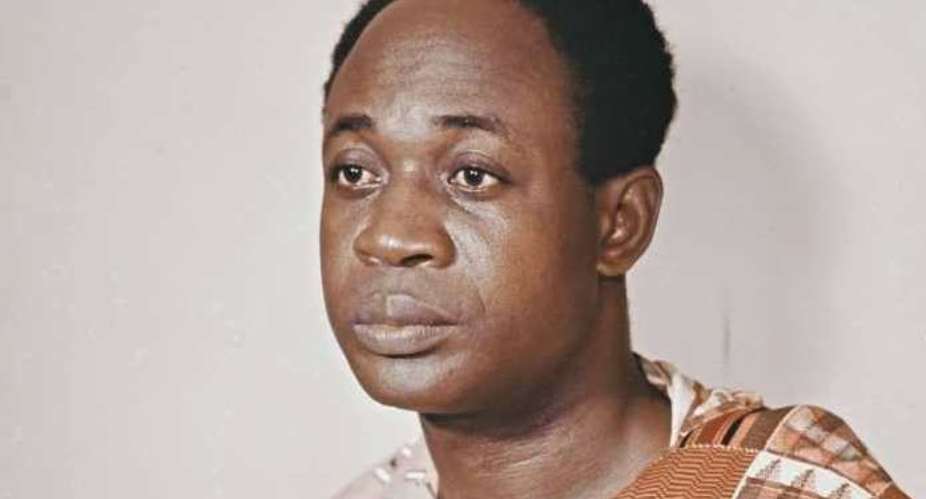
February 24, 1966, remains one of the darkest and most heartbreaking days in the history of Ghana and Africa. It was the day Ghana’s first President, Kwame Nkrumah, was overthrown in a military coup led by General Kotoka. That single act did not only disrupt Ghana’s steady progress; it struck a devastating blow to Africa’s dream of unity, independence, and true self-determination.
This was not just a change of government. It was the brutal interruption of a powerful vision — a vision to build a strong, self-reliant, industrialized, and united African nation. Ghana, which had become a symbol of hope and liberation across the continent, was suddenly pushed into uncertainty, instability, and decades of struggle.
After leading Ghana to independence in 1957 and making it the first country in sub-Saharan Africa to break free from colonial rule, Nkrumah moved boldly to transform the nation. His government invested heavily in education, infrastructure, and industrial development. Projects such as the Akosombo Dam were designed to power Ghana’s industrial future and lift the country into economic self-sufficiency.
Beyond Ghana, Nkrumah stood tall as one of Africa’s strongest voices for Pan-Africanism. He believed deeply that Africa could only be truly free if it stood united. His call for African unity inspired millions across the continent, but it also alarmed Western powers who saw his ideas as a threat to their political influence and economic control in Africa.
On that fateful day in 1966, while Nkrumah was on a peace mission to Hanoi to help mediate in the Vietnam War, senior military officers seized the moment to overthrow his government. They formed the National Liberation Council, suspended the constitution, dissolved parliament, and banned the Convention People’s Party.
Years later, declassified documents and historical research exposed the involvement of Western intelligence agencies, particularly the CIA, in encouraging and supporting the coup. In the tense climate of the Cold War, Nkrumah’s socialist leanings and firm rejection of imperial dominance made him a prime target. His dream of an independent and united Africa directly clashed with Western geopolitical interests.
What happened that day was therefore far more than internal politics. It was part of a wider global struggle in which Africa’s sovereignty was sacrificed to protect foreign power and influence.
The impact on Ghana was immediate and devastating. Development projects were abandoned, industries collapsed, and long-term planning was replaced with short-term survival strategies. Before long, the nation was caught in a cycle of political instability, economic hardship, and growing dependence on foreign aid.
The dream of rapid industrial growth and African unity slowly faded. Ghana, once the pride of Black Africa, became trapped in repeated political disruptions and economic uncertainty. Across the continent, the coup weakened bold leadership and strengthened neo-colonial forces determined to keep Africa dependent and divided.
This was a painful betrayal — carried out by Ghana’s own sons in partnership with foreign interests. Progress was halted. Vision gave way to fear. Hope was traded for temporary power and external approval.
Those who celebrated that day claimed to be patriots, yet their actions plunged the nation into decades of hardship. They rejoiced as if they had conquered the world, but history has since exposed the deep damage they inflicted on Ghana’s destiny.
So, what was Nkrumah’s crime? He dared to believe in real freedom.
He believed Africans were capable of governing themselves, managing their own resources, and shaping their own future. He rejected mental slavery and economic dependency. That bold conviction threatened powerful foreign interests and unsettled local elites who benefited from colonial structures. His push for equality challenged those who believed they were superior and entitled to rule.
Sixty years on, the scars of that dark day are still visible. Ghana continues to struggle with economic dependency, debt, and development challenges rooted in the destruction of Nkrumah’s long-term vision. Yet, his ideas continue to inspire generations of Africans who long for dignity, unity, and true independence.
February 24, 1966, will forever remind us of what Ghana lost — and what it can still reclaim. History will judge those who derailed Ghana’s destiny, just as it will forever honor Kwame Nkrumah as a visionary who dared to dream far beyond his time.
May the spirit of African liberation, unity, and self-determination continue to guide Ghana and the entire continent.
Alhassan Chahayilidoo, consistency deputy communication officer for the NDC-Nanton
Email: [email protected]


 Enforce surcharges, modernise audits to curb GHS100bn losses — Ghana Audit Servi...
 One third of world population exposed to harmful air pollution: monitor
 US forces leave Iraq, raising fears of Iran-backed militias amid power vacuum
 US Supreme Court lifts restrictions on third-country deportations
 'EOCO attempted arrest of Baffour Awuah was unprofessional' — James Agalga
 'Building a congregation of 20,000 will kill you' – Duncan-Williams tells young ...
 Shamima Muslim defends constitutional rights of women facing court over hate spe...
 September 29: Cedi finishes day selling at GHS12.20 on forex market, GHS11.67 on...
 ‘We’ll explore another constitutional option for narcotics probe’ – Minority on ...
 Speaker Bagbin adjourns Parliament indefinitely after rejecting narcotics probe ...


