




Ghana's development is poised for a significant leap forward with the implementation of the "Big Push" programme, a massive infrastructure initiative championed by the Mahama-led government. With a staggering GHc13.8 billion (approximately $1.2 billion USD) earmarked for its execution, the Big Push aims to overhaul key areas of the country's infrastructure, primarily focusing on transportation networks to stimulate economic growth and improve the quality of life for Ghanaians.
The programme's cornerstone lies in the rehabilitation and expansion of the nation's road network. The GHc13.8 billion investment is strategically directed towards 32 major road projects spanning the breadth of Ghana. These projects are not simply cosmetic touch-ups; they represent a commitment to constructing robust and durable arteries for the country's economy. The scope encompasses everything from upgrades to existing roadways to the construction of entirely new routes, all designed to streamline transportation of goods and services, reduce travel times, and connect previously isolated communities.
Among the 32 projects receiving attention under the Big Push is the long-suffering Ofankor-Nsawam road. This stretch of highway, notorious for its congestion and state of disrepair, has been a major source of frustration for commuters and businesses alike. Abandoned for far too long, its neglect has hindered economic activity and burdened the lives of countless individuals. The Big Push promises to breathe new life into this vital thoroughfare, transforming it into a modern, efficient transportation corridor. The rehabilitation of the Ofankor-Nsawam road will not only alleviate traffic congestion but also contribute to improved safety and reduced transportation costs, directly benefiting the businesses and residents who rely on it.
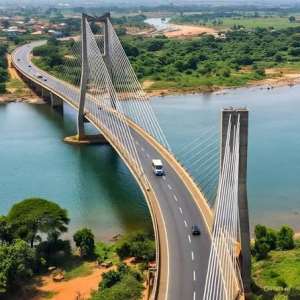
Beyond the rehabilitation of existing roads, the Big Push programme also envisions the construction of crucial new infrastructure. One such project is the planned construction of a new 1.6 km
bridge over the Oti River at Dambai which will be the longest in Ghana's history. This strategically important bridge will serve as a vital link connecting the Oti Region to the northern sector of Ghana fostering trade and economic development in the area. The Oti River has long been a barrier to seamless travel and commerce, forcing people to rely on ferries or lengthy detours. The new bridge will eliminate these obstacles, opening up new opportunities for economic growth and social interaction.
The significance of the Big Push extends far beyond mere infrastructural improvements. It represents a strategic investment in the future of Ghana. By creating a modern and efficient transportation network, the government aims to unlock the country's economic potential, attract foreign investment, and create jobs. Improved transportation also facilitates access to essential services like healthcare and education, particularly in rural areas, contributing to a more equitable and prosperous society.
While the Big Push programme is undoubtedly ambitious in its scope and scale, its potential benefits for Ghana are immense. The success of this initiative hinges on efficient project management, transparent procurement processes, and effective monitoring to ensure that the allocated funds are used wisely and that the projects are completed on time and within budget.
The commitment of GHc13.8 billion to the Big Push demonstrates the Mahama-led government's dedication to investing in the long-term growth and prosperity of Ghana. By focusing on critical infrastructure like roads and bridges, the programme lays the foundation for a more connected, efficient, and economically vibrant nation. The anticipated improvements to the Ofankor-Nsawam road and the construction of the Oti River bridge in Dambai are just two examples of how the Big Push aims to transform the landscape of Ghana and improve the lives of its citizens. As the projects take shape, the Big Push has the potential to become a transformative force, driving economic growth and fostering a brighter future for generations to come.
Anthony Obeng Afrane


 US fears wider Middle East escalation after Houthi attack Riyadh
 Pop star Ed Sheeran calls Gaza situation “unjustifiable” amid controversy
 'We have spent 60years arguing about Nkrumah and rather less time doing what he ...
 Judge recounts attempted MoMo scam on him moments after jailing scammer
 'Systemic failure due to NACOC removal from port inspections' – Inusah Fuseini o...
 Police uncover alleged network behind Ghana Jollof videos
 NACOC says cocaine suspects were under surveillance for up to two years
 Suhuyini assures Accra-Kumasi Expressway won’t miss December 2028 deadline
 Foreign Affairs Ministry releases 200-page RTI response on GH¢49.7m South Africa...
 Chartered flights account for GH¢27.18m of South Africa evacuation cost



Comments
After the completion of the Big Push, (lnfrastructure) Ghana will be regarded as one of the most Developed Countries in West Africa. Again, on all the Express Roads, Speed Limits and Kamera should be installed in order to fish Out those Dangerous Drivers who will be using that Road..