




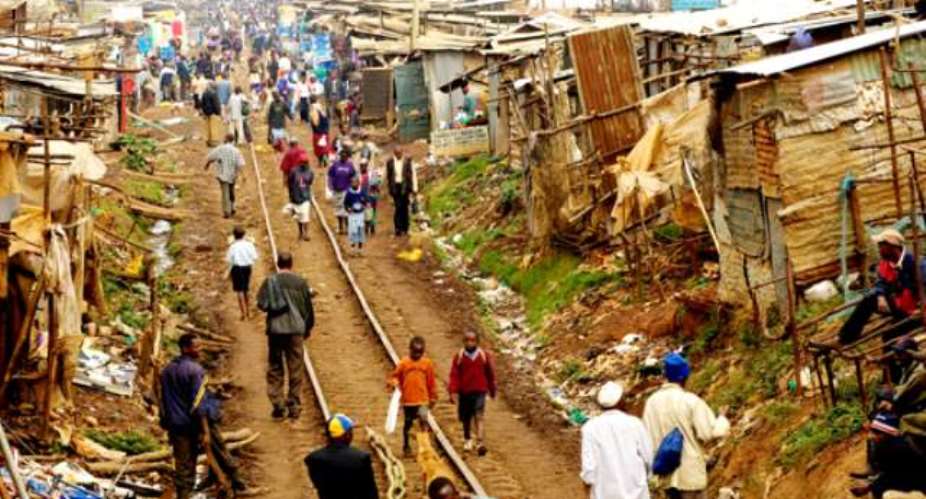
Ghana’s multidimensional poverty rate fell steadily in 2025, with nearly one million people moving out of poverty over the year, new data from the Ghana Statistical Service (GSS) reveals.
Presenting the findings, Government Statistician Dr. Alhassan Iddrisu said the proportion of people experiencing multidimensional poverty—which measures deprivation across health, education, living conditions, and employment—declined from 23.9% in the first quarter of 2025 to 21.9% by the third quarter.
The data also shows a notable improvement compared to 2024, when national multidimensional poverty stood at 24.9% in the fourth quarter. “This confirms a steady downward trend in poverty,” Dr. Iddrisu noted.
Between the second and third quarters of 2025 alone, over 360,000 people were lifted out of multidimensional poverty, while about 950,000 people escaped poverty between the third quarter of 2024 and the third quarter of 2025. The Statistician said the reduction reflects overall improvements in living conditions, though the underlying drivers of poverty remain largely unchanged.
According to GSS, health and living conditions remain the most significant sources of deprivation, with gaps in health insurance coverage, nutrition, overcrowding, and sanitation emerging as key pressure points in both 2024 and 2025.
The report also highlights sharp regional disparities. In both the second and third quarters of 2025, the Northeast and Savannah regions recorded poverty rates exceeding 50%, more than twice the national average. By contrast, Greater Accra and the Western Region reported rates below 20%, underscoring persistent geographical inequality.
A pronounced urban–rural divide is evident as well. In the third quarter of 2025, rural areas had a multidimensional poverty rate of about 32%, compared to approximately 14% in urban areas—a gap of roughly 18 percentage points.
Dr. Iddrisu emphasized that while the national decline in poverty is encouraging, rural communities continue to bear a disproportionate burden. He called for targeted policies that address the unique challenges of specific regions and localities rather than a one-size-fits-all approach, stressing that inclusive growth must reflect these realities.
 Fire Service rescues trapped victim after STC Bus, Taxi collision at Konongo
 Private SHSs in Free SHS pilot programme demand payment of outstanding governmen...
 Police foil planned robbery, recover weapons at Kukuom
 A 53-year-old mechanic remanded for allegedly stabbing another over car battery ...
 Asiedu Nketiah urges IGP to speed up justice for victims of election 2024 killin...
 Each family receives GH¢15,000 support after Accra Police Barracks Fire
 Mussa Dankwah urges ministers to focus on performance amid MoFA–finance minister...
 Selling single cigarette sticks illegal – FDA
 Hungry, unhealthy workforce cannot protect nation’s health – GRNMA
 Health Minister orders suspension of KATH CEO over Emergency admissions directiv...


