




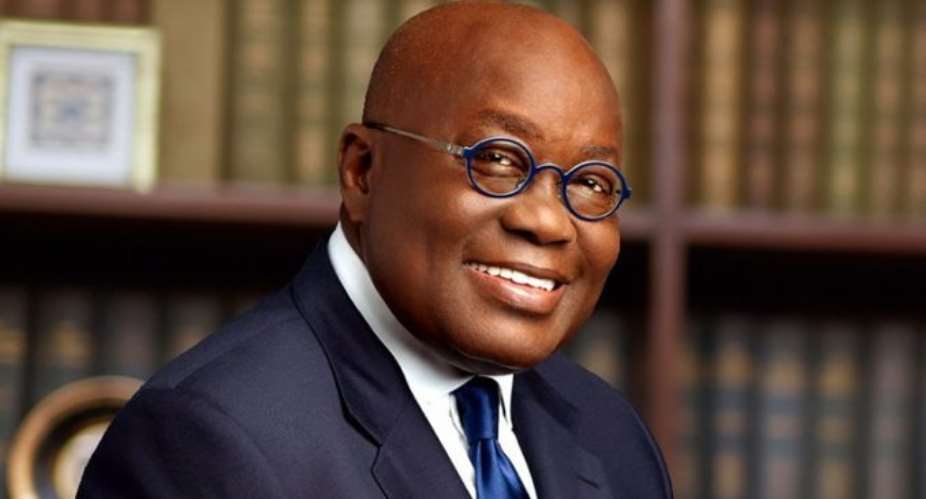
The question of whether former President Nana Addo Dankwa Akufo-Addo deserved to apologize to Ghanaians has sparked intense public debate, especially against the backdrop of economic hardship, governance challenges, and unmet expectations. To answer this question fairly, it is important to examine the context of his presidency, the expectations he set, the outcomes of his policies, and the principles of political accountability in a democratic society.
The Expectations and the Social Contract
When Nana Addo Dankwa Akufo-Addo assumed office in 2017, he did so on a wave of hope and strong public trust. His campaign was built on bold promises: restoring dignity to the Ghanaian people, protecting the public purse, fighting corruption, creating jobs, and transforming the economy through industrialization and sound governance. These promises formed an implicit social contract between him and the electorate.
In democratic governance, when leaders raise expectations so high, they also raise the standard by which their performance will be judged. An apology, therefore, is not merely about failure but about acknowledging gaps between promise and reality.
Economic Hardship and Public Frustration
Ghana’s recent economic difficulties high inflation, rising cost of living, unemployment, debt distress, and recourse to an IMF bailout have placed enormous pressure on ordinary citizens. While some of these challenges were influenced by global factors such as COVID-19 and international economic shocks, many Ghanaians believe domestic policy decisions, fiscal indiscipline, and governance lapses significantly worsened the situation.
For many citizens, the apology was seen as necessary not because every problem was entirely the president’s fault, but because leadership carries ultimate responsibility. In this sense, an apology functions as an acknowledgment of pain and suffering experienced by the people, rather than a legal admission of sole blame.
Governance, Corruption, and Accountability
Another major source of public disappointment was the perception that corruption persisted, and in some cases flourished, under Akufo-Addo’s administration despite his strong rhetoric about protecting the public purse. High-profile scandals, perceived selective justice, and the dismissal of corruption concerns by officials weakened public confidence.
In democratic leadership, moral authority is sustained not only by intentions but by outcomes. When public trust erodes, an apology can be a powerful symbolic act that reaffirms accountability and humility. Critics argue that the apology was overdue, while supporters contend that significant efforts were made through institutions and reforms.
Arguments Against the Need for an Apology
Supporters of the former president argue that Nana Addo Akufo-Addo implemented transformative policies such as Free Senior High School, infrastructure development, digitalization, and health system improvements. They maintain that unforeseen global crises severely disrupted economic progress and that no leader could have entirely avoided the consequences.
From this perspective, apologizing could be seen as unfairly accepting blame for circumstances beyond his control, potentially diminishing the genuine achievements of his administration.
Why the Apology Still Mattered
Despite these counterarguments, many Ghanaians welcomed the apology because it humanized leadership. An apology does not erase achievements, nor does it negate external challenges. Instead, it signals empathy, responsibility, and respect for citizens’ lived realities.
In African and global politics alike, leaders are often criticized for arrogance and detachment. By apologizing, Nana Addo Akufo-Addo aligned himself with democratic values where leaders acknowledge shortcomings and reaffirm their duty to the people.
Conclusion
Whether Nana Addo Dankwa Akufo-Addo “deserved” to apologize depends largely on one’s political perspective. However, from the standpoint of democratic accountability, public trust, and moral leadership, the apology was appropriate and necessary. It recognized the hardship Ghanaians endured, admitted that expectations were not fully met, and reaffirmed the principle that leadership is ultimately about service.
In the end, apologies do not solve economic problems but they can restore a measure of dignity, open the door to reflection, and remind both leaders and citizens that democracy thrives on accountability and humility.
Mustapha Bature Sallama
Medical Science communicator.
Private Investigator and Criminal
Investigation and Intelligence Analysis,
International Conflict Management and Peace Building. Alumni Gandhi Global Academy United States Institute of Peace.
[email protected]
+233-555-275-880


 Ghana announces visa-free travel to Maldives, Zambia and Antigua and Barbuda
 Mahama swears in three new Supreme Court justices, urges judicial independence
 'Aren’t you over dramatising after you advised Akufo-Addo to give us ugly financ...
 Hopeson Adorye urges security agencies to investigate Obiri Boahen’s warning to ...
 'Administer justice without fear or favour, affection or ill will' — Mahama tell...
 Tema Port congestion alone cannot justify GHS12 cement price increment – GPHA
 UTAG-KNUST threatens legal action over Pro-VC and Dean appointments
 NPP is recycling failed politicians in its upcoming national executive elections...
 30,000 job creation projection for Accra-Kumasi Expressway is even conservative ...
 'You can't use profits to finance the creature comforts of management and boards...



Comments
The only APPOLOGY Ghanaians will be happy to hear from him is to COMMIT SUICIDE. FOR RUNNING A CORRUPT GOVERNMENT THAT DESTROYED THE ECONOMY