




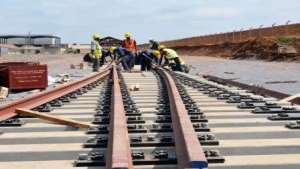
The Awaso bauxite mining site is a strategic pillar of Ghana’s ambition to build a competitive and integrated aluminium industry. From Awaso to the Takoradi port, a distance of about 240 kilometres, the movement of bauxite is not just a logistics exercise; it is a defining factor in the cost, efficiency, and sustainability of the entire aluminium value chain. Yet, despite this reality, Ghana continues to rely largely on road transport to move a heavy bulk commodity that was never meant to travel on truck tyres.
Currently, bauxite from Awaso is hauled mainly by road under the management of the Ghana Bauxite Company (GBC), supported by ongoing investments to expand production and meet rising international demand. The construction and rehabilitation of the Awaso, Takoradi road, including the involvement of the Ghana Armed Forces, reflects the urgency to improve logistics. However, road upgrades, while necessary in the short term, do not solve the fundamental problem: road haulage is an inefficient and costly way to move bauxite over long distances.
Bauxite is heavy, low in value per tonne, and produced in large volumes. Globally, such commodities are transported by rail because rail offers economies of scale, lower unit costs, and superior fuel efficiency. Persisting with road transport over a 240-kilometre mineral corridor imposes hidden costs on the economy, accelerated road deterioration, rising maintenance bills, increased accident risks, congestion, and higher carbon emissions. These costs are borne not by mining companies alone, but by the state and the Ghanaian public.
The ongoing rehabilitation of the Awaso section of the Western Rail Lines presents a rare opportunity to correct this structural inefficiency. A fully functional rail corridor would allow larger volumes of bauxite to move reliably and at significantly lower cost, while relieving pressure on Ghana’s road network. More importantly, it would align transport infrastructure with Ghana’s industrial ambitions.
If Ghana is serious about building an integrated aluminium industry, one that extends beyond raw exports into refining and manufacturing, then rail logistics are non-negotiable. Investors assess not only mineral reserves but also transport reliability and cost efficiency. A dependable rail link from Awaso to Takoradi would strengthen Ghana’s competitiveness and credibility as an industrial destination.
Road transport may serve as a stopgap, but it cannot be the foundation of industrialisation. History is clear: successful mineral-based economies move bulk resources on rails. Ghana already understands this logic; it is time to act on it. Bauxite cannot drive Ghana’s industrial future on broken roads; it must move forward on steel rails.
Joseph Fuseini


 Miracles Aboagye arrest: 'You looted and your reaction is that the tables will t...
 Police arrest two with 73 parcels of suspected cannabis, reject GH¢300,000 bribe
 NACOC traces 73 assets linked to suspected drug traffickers
 Government seeks financial clearance to recruit 400 scientists – Armah Kofi-Buah
 Ya‑Naa Abubakari II laid to rest at Gbewaa Palace
 NPP will reinstate workers unlawfully sacked by NDC government - Chairman COKA
 'Neglecting grassroots dangerous' – GFL warns NDC, NPP
 'No money, no vote' — Bongo NPP delegates tell contestants in constituency execu...
 NAM1 files witness statements in Menzgold trial, seeks to rely on seven defence ...
 Miracles Aboagye’s wife raises health concerns over husband's detention by EOCO

